
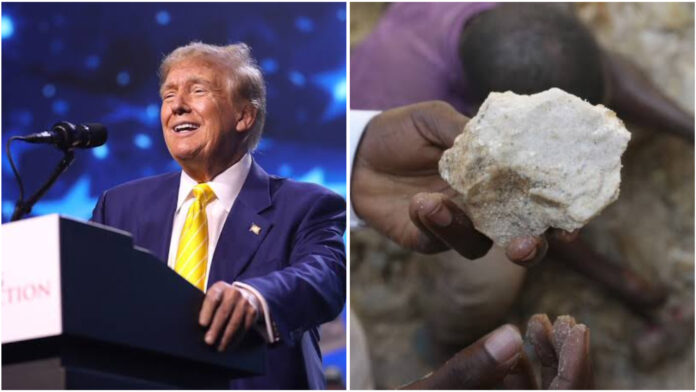
The Trump administration has expressed strong interest in Africa’s mining sector, signaling a potential shift in U.S. foreign policy toward resource-rich nations on the continent. On his first day in office for a second term, President Donald Trump signed an executive order emphasizing mineral extraction and processing, a move that extends beyond U.S. borders to include global partnerships.
Scott Woodard, the acting deputy assistant secretary of state for energy transformation, highlighted this focus during the recent African Mining Indaba in Cape Town, South Africa. He noted that while the executive order primarily addresses domestic mineral policies, it also acknowledges the importance of international collaboration.
During a panel discussion, Zainab Usman, director of the Africa Program at the Carnegie Endowment for International Peace, raised a critical question about Africa’s aspirations beyond mineral extraction. She emphasized that many African nations want to see value-added processing industries emerge, rather than continuing the long-standing model of exporting raw materials.
Also, read: Super Bowl Halftime Performer Detained for Palestine & Sudan Flag Protest
In response, Woodard stated that the administration is still shaping its policies, leaving room for potential strategies that could align with Africa’s industrialization goals. However, the specifics of how the U.S. intends to support value addition remain unclear.
The U.S. has already made key investments in Africa’s mineral supply chains, particularly for critical minerals needed in clean energy technologies. In 2022, agreements were signed with the Democratic Republic of Congo and Zambia to establish a supply chain for electric vehicle batteries, leveraging the region’s abundant reserves of copper, lithium, and cobalt.
Additionally, the U.S. has provided funding for the reconstruction of the Lobito Rail Corridor, which will facilitate mineral transport from Congo, Zambia, and Angola. Zambia’s Minister of Transport and Logistics, Frank Tayali, underscored the significance of such infrastructure projects, noting that Africa faces a staggering $350 billion infrastructure financing gap. He welcomed U.S. involvement, calling it “key to helping African economies improve and better serve their people.”
While the U.S. is expanding its footprint in Africa’s mining sector, China remains a dominant player. Beijing is investing in rehabilitating the Tanzania-Zambia Railway Authority (TAZARA), strengthening rail and sea transport links in East Africa.
Meanwhile, in South Africa, transport and logistics challenges continue to hinder mining operations.

