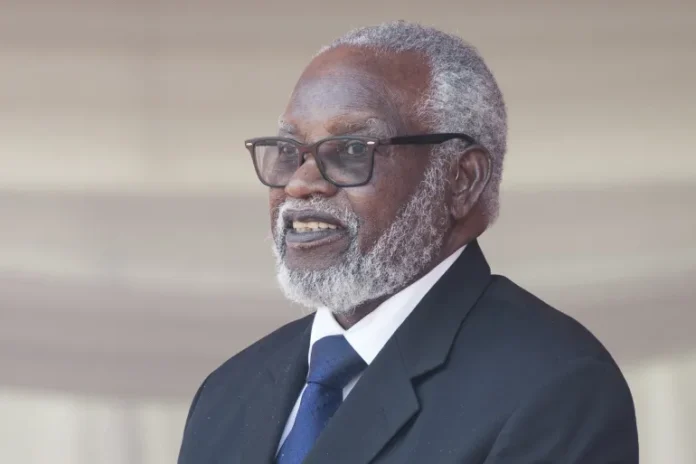
Namibia is mourning the loss of its first president, Sam Nujoma, the revolutionary leader who steered the country to independence from apartheid South Africa in 1990. Nujoma, widely regarded as the “founding father” of the nation, passed away on Saturday at the age of 95 after spending three weeks in a hospital in Windhoek, according to an announcement from the Namibian presidency.
Born in 1929 to a family of farmers in northern Namibia, Nujoma’s political awakening came at a young age. His early years in Walvis Bay exposed him to the struggles of Black Namibians under white-minority rule. Encouraged by Herero chief Hosea Kutako, he became active in resisting colonial policies, setting the stage for a life dedicated to the liberation struggle.
In 1960, Nujoma co-founded the South West Africa People’s Organisation (SWAPO) and went into exile, leaving behind his wife and children. From abroad, he built diplomatic alliances and mobilized military resistance against South African rule. His efforts, alongside international pressure, led to a United Nations-backed ceasefire and democratic elections in 1989. The victory of SWAPO in that election secured Nujoma’s place as Namibia’s first president when independence was officially declared on March 21, 1990.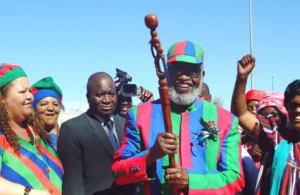
Nujoma led Namibia for 15 years, winning three consecutive terms before stepping down in 2005. During his presidency, he emphasized national unity, reconciliation, and economic stability, involving former political adversaries in government to foster peace. Despite early fears of radical governance due to his Marxist affiliations, he ensured Namibia remained a democratic state, laying down strong constitutional foundations.
Also, read: Ghana’s Gold Reserves Surge by Over 50% in One Year, Strengthening Economic Stability
However, his leadership was not without controversy. Known for his fiery anti-Western rhetoric, he often condemned homosexuality, calling it a “foreign and corrupt ideology.” Critics also pointed to his authoritarian tendencies, arguing that his dominance within SWAPO stifled political opposition.
Still, for many Namibians, his role in the country’s liberation and early governance outweighs his flaws. Political analyst Ndumba Kamwanyah described Nujoma’s presidency as “foundational,” acknowledging both his contributions and shortcomings.
Life After the Presidency
Unlike many former African leaders, Nujoma remained active after leaving office. He pursued a master’s degree in geology, convinced that Namibia’s mountains contained untapped mineral wealth. Though he officially stepped away from politics, his influence within SWAPO endured.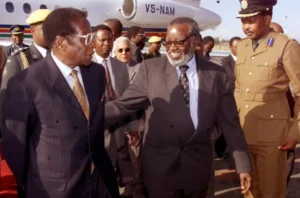
His passing marks the end of an era, as he was one of the last remaining African leaders from the generation that freed their nations from colonial or white-minority rule—a group that included Nelson Mandela (South Africa), Robert Mugabe (Zimbabwe), Kenneth Kaunda (Zambia), and Samora Machel (Mozambique).
As Namibia enters a period of national mourning, tributes continue to pour in. The presidency described him as a leader who “spared no effort” in building a nation that could stand proudly on the global stage.
While history will continue to debate his legacy, Sam Nujoma’s name remains inseparable from Namibia’s journey to independence and its early years as a sovereign nation.

