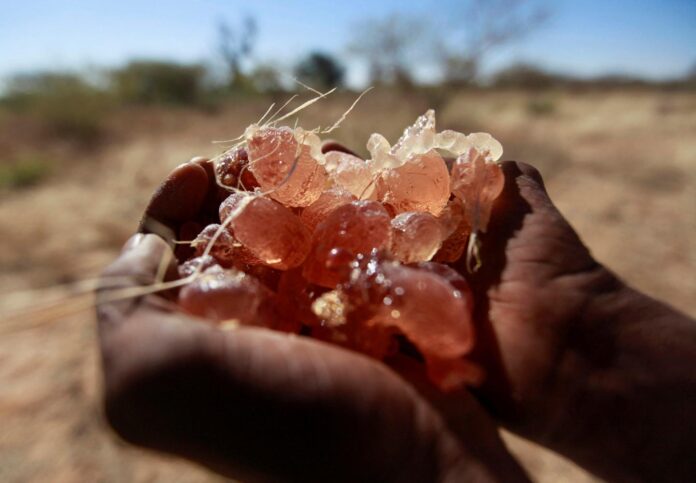
Gum arabic, a crucial ingredient in products like Coca-Cola, M&Ms, and even cosmetics, is increasingly being trafficked out of Sudan through unofficial channels, raising concerns for Western companies trying to maintain ethical supply chains. Industry insiders report that the ongoing war in Sudan has led to the illicit movement of this valuable commodity, complicating sourcing efforts for global manufacturers.
Sudan supplies about 80% of the world’s gum arabic, which is harvested from acacia trees and used as a stabilizer in food, beverages, and even pet food. However, since April 2023, the country has been engulfed in war between the paramilitary Rapid Support Forces (RSF) and the Sudanese army. By late 2023, the RSF had taken control of key gum-harvesting regions in Kordofan and Darfur, forcing Sudanese traders to pay fees to move their products.
According to industry sources, raw gum is now making its way to neighboring countries like Chad, Senegal, South Sudan, and Egypt without proper documentation, raising concerns about transparency in the global supply chain. Some traders in these regions, where gum arabic production is typically lower, are now aggressively selling the product at suspiciously low prices, making it harder for buyers to verify its origin.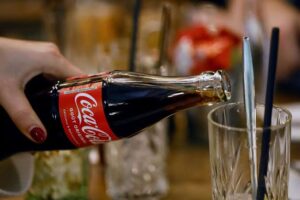
Western Companies Struggle to Ensure Ethical Sourcing
With Sudan’s official trade channels disrupted, the risk of conflict-linked gum infiltrating major supply chains has increased. Companies like Nexira, Alland & Robert, and Ingredion, which refine and sell gum Arabic to major brands, have had to adjust their sourcing strategies.
• Ingredion stated that it has diversified its supply by turning to alternative sources like Cameroon to ensure legitimacy.
• Nexira reported that it had cut its Sudanese imports and expanded sourcing to ten other countries.
• Alland & Robert, Nestlé, and Coca-Cola declined to comment on their current sourcing strategies.
• M&Ms maker Mars and beauty giant L’Oréal did not respond to requests for comment.
The Association for International Promotion of Gums (AIPG), an industry body, stated in January that it found no concrete evidence linking gum arabic to Sudan’s warring factions. However, traders and buyers involved in the business say otherwise, pointing to the increasing difficulty in verifying ethical sourcing.
Also, read: Rwanda Condemns Canada’s Trade and Business Suspensions Over Congo Conflict
Cheap Gum, No Certification
Industry insiders have reported unusually low-priced gum arabic being offered without the standard Sedex certification, which ensures ethical and sustainable sourcing.
Mohammed Hussein Sorge, a Sudanese gum trader who fled to Egypt after RSF forces seized his stock in 2023, revealed that he was approached by traders in Chad and Senegal offering hashab gum—a premium Sudanese variety—for just $3,500 per ton, well below the usual price of $5,000 per ton. Sorge declined the offer, suspecting it was smuggled out of Sudan.
Similarly, a buyer, who chose to remain anonymous for safety reasons, shared WhatsApp messages from traders offering seyal gum at $1,950 per ton, far below the usual $3,000 per ton. The messages revealed that shipments were already crossing into South Sudan and Egypt, further confirming the scale of smuggling.
RSF’s Role and Economic Retaliation
The RSF has denied wrongdoing, claiming that it only collects “small fees” for protecting the gum trade and dismissing allegations of illegal activities as propaganda. However, reports indicate that the paramilitary force banned exports of 12 goods, including gum arabic, to Egypt in October as a retaliatory move against what it described as Egyptian airstrikes against its fighters.
Despite these official bans, smugglers continue to move gum across the border, undermining regulatory efforts and deepening concerns over how global companies can ensure their supply chains remain conflict-free.
A Risky Future for the Industry
With Sudan’s war showing no signs of ending, the illicit gum arabic trade is likely to continue. While global companies work to secure alternative sources, the lack of transparency in the current market raises serious ethical concerns.
For now, as smugglers move Sudan’s most valuable agricultural export through unofficial channels, Western brands face an uphill battle in ensuring that their products are not inadvertently funding conflict in the war-torn nation.

