

The Malian government has suspended the issuance of artisanal mining permits to foreigners following a tragic mining accident that claimed the lives of over 40 people last month. The decision, announced by the Council of Ministers, comes as authorities move to strengthen safety regulations and hold officials accountable for the disaster.
The deadly incident occurred in the Kayes region, near Kéniéba, where an abandoned gold mine collapsed, burying dozens of workers—most of them women. The site had previously been operated by a Chinese company but was later taken over by artisanal miners. This marked the second mining-related disaster in Mali within a month, following a tunnel flood in January that killed at least ten people.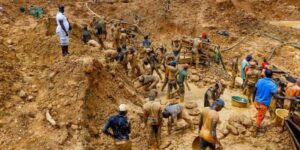
In response, the government has taken swift action, seizing equipment used in small-scale mining operations and dismissing local officials linked to the accidents. Authorities say the new restrictions on foreign miners will remain in place while investigations continue.
Mali, Africa’s second-largest gold producer, relies heavily on mining, with the sector playing a crucial role in the country’s economy. However, the industry has faced significant challenges, including disputes with foreign investors, safety concerns, and allegations of tax evasion.
Also, read: Malawi Halts Gemstone and Precious Mineral Exports To Foreigners Amid Sector Reforms
Since taking power in 2020, Mali’s military-led government has sought to reform the mining sector, aiming to increase state revenues and reduce reliance on foreign corporations. An audit revealed that multinational mining firms had been exploiting tax loopholes to shift profits elsewhere, depriving Mali of much-needed revenue.
To address this, President Assimi Goïta introduced sweeping changes to the country’s mining code, renegotiating contracts and implementing stricter regulations. These efforts have already unlocked over $1 billion in revenue, with projected annual gains of $950 million—funds that authorities say are being used to pay off debts and strengthen the country’s military.
Despite these reforms, foreign investors continue to dominate Mali’s mining landscape, with major companies such as Barrick Gold, B2Gold Corp, Resolute Mining, and Hummingbird Resources Plc maintaining a strong presence. However, the recent regulatory changes and safety concerns could reshape the industry’s future.
As Mali takes steps to balance economic benefits with worker safety, the government’s handling of this crisis will be closely watched—both by its citizens and international stakeholders. The ban on foreign artisanal mining permits signals a shift toward tighter controls, but whether this leads to long-term improvements remains to be seen.

