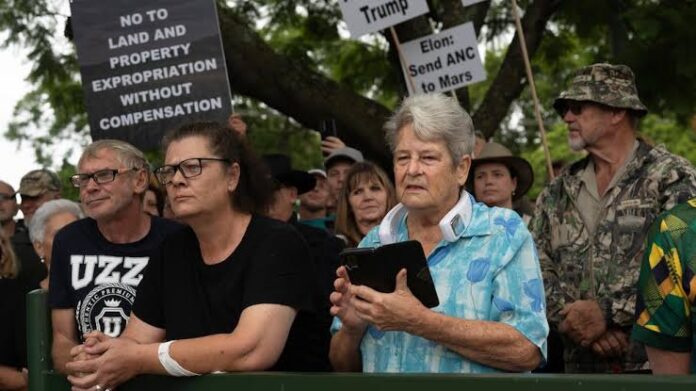
In the heart of South Africa’s arid Karoo region, a secluded town of 3,000 white Afrikaners is once again testing the boundaries of post-apartheid identity. Orania, a self-styled white-only settlement founded in 1991, is now making a bold appeal to the United States for recognition as an autonomous state—with hopes that U.S. President Donald Trump might be their key ally.
Leaders from Orania recently traveled to the U.S. on what they described as a diplomatic mission aimed at drumming up international support and investment. Their pitch? That South Africa, with its deep social divisions and complex racial history, is too diverse to be governed effectively under a centralized system—and that Orania offers a model of community-based self-reliance rooted in Afrikaner culture.
“We’ve seen a spike in American attention on South Africa recently, and we felt the time was right,” said Joost Strydom, head of the Orania Movement, during a visit to the U.S. where he met with conservative think tanks and Republican officials. “We’re not asking for handouts. We’re looking for partnerships—particularly in housing and energy infrastructure.”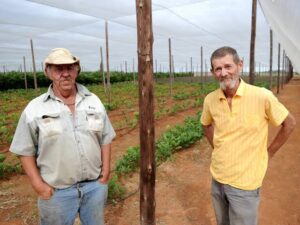
Orania, which sits on 8,000 hectares of land, operates like no other town in South Africa. From street cleaners to teachers, every resident is white. It has its own informal currency, and nearly half its power needs are met by solar energy. Though South African authorities recognize Orania as a local municipality with the right to levy taxes and provide basic services, the town’s separatist model remains deeply controversial.
South Africa’s foreign ministry has been quick to push back against the delegation’s appeal. “They are not a sovereign state. Orania is subject to the South African Constitution and its laws,” said ministry spokesperson Chrispin Phiri, who also highlighted the legacy of apartheid’s oppressive legal framework. “We had over 17,000 laws under the old system just related to land. Post-apartheid South Africa was built to dismantle that structure.”
Orania was originally purchased by a group of about 300 Afrikaners who envisioned a self-sustaining homeland exclusively for their ethnic group. Its founders and leaders, including Carel Boshoff—grandson of apartheid’s chief architect Hendrik Verwoerd—have long seen the enclave as more than just a community. “It’s the start of something bigger,” Boshoff once said, expressing his vision for a white Afrikaner territory stretching nearly 1,000 miles to the Atlantic coast.
During their U.S. visit, Orania’s leaders found limited political traction, discovering that many of their conservative interlocutors were more interested in immigration options to bring Afrikaners to the U.S. than supporting autonomy in South Africa. “We don’t want to export our people,” Boshoff said. “We asked them to help us build something sustainable here.”
Also, read: U.S. and DR Congo Move Forward with Groundbreaking Minerals-for-Security Talks
Back home, the reaction has been mixed. While some South Africans view Orania as an outdated relic of apartheid-era separatism, others—especially those facing poverty and high unemployment—see a community that appears to be functioning well under its own rules. In Soweto, 49-year-old Bongani Zitha, who has lived in a shanty town without running water or sanitation for decades, said he couldn’t help but notice the contrast. “People in Orania seem to be doing fine,” he said. “They have education, health, everything. That’s not how it is for us.”
But critics warn that Orania’s approach risks reigniting racial divisions in a country still healing from the wounds of segregation. The left-wing Economic Freedom Fighters (EFF) have accused the town of undermining national unity, a charge the town’s leadership firmly rejects.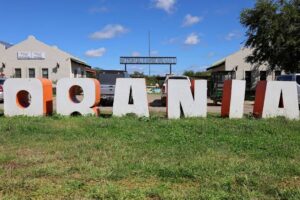
For others, like Hanlie Pieters—who moved to Orania after 25 years in Johannesburg and now runs marketing for the town’s technical college—the decision was driven by frustration with South Africa’s Black Economic Empowerment (BEE) laws. “Our children deserve opportunities too,” she said, as apprentices trained nearby in a makeshift workshop.
With political tensions simmering and socio-economic gaps still yawning across South Africa’s landscape, Orania’s quest for recognition—whether symbolic or real—raises uncomfortable questions about belonging, justice, and the meaning of autonomy in a post-apartheid era. Whether the international community, or Trump himself, will bite remains uncertain. But one thing is clear: Orania isn’t backing down from its dream.

