In a bid to restore confidence both at home and abroad, Guinea’s Prime Minister Amadou Oury Bah has declared December 2025 as the new date for long-awaited presidential and legislative elections. The announcement was made on Monday at the Africa CEO Forum in Abidjan, Côte d’Ivoire, as part of the government’s broader effort to assure investors and international stakeholders of the country’s slow, yet ongoing, transition to democratic rule.
“We’ve set September 21, 2025, for the constitutional referendum, and the presidential and legislative elections will follow in December,” Bah told attendees, many of whom have a vested interest in Guinea’s lucrative Simandou iron ore project. “And I can assure you—Simandou’s first train will be rolling before those elections take place.”
The Simandou project, one of the world’s largest untapped iron ore reserves, is viewed by the junta as a symbol of Guinea’s economic potential and a critical bargaining chip in attracting foreign investment during the transition.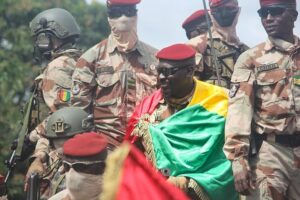
A Fragile Return to Democracy
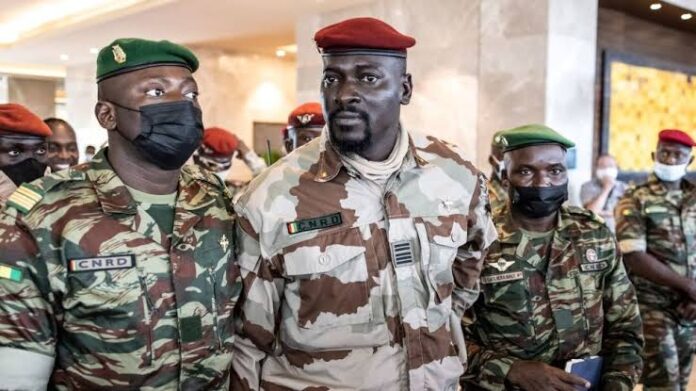
Guinea has been under military rule since September 2021, when General Mamadi Doumbouya ousted former President Alpha Condé, who had controversially modified the constitution to extend presidential terms and secure a third term in office. The coup was met with both local jubilation and international condemnation, and the junta initially committed to a two-year transition period starting in 2022.
However, as the original transition deadline of December 31, 2024, passed without meaningful political milestones, confidence in the military government’s commitment to a democratic handover waned. Monday’s announcement marks the first concrete electoral roadmap since then, but skepticism remains.
Also, read: First Wave of White South African Refugees Arrives in U.S.—Trump Calls It a “Human Rights Priority”
Despite the newly outlined timeline, observers and opposition figures are questioning whether the military government’s actions match its promises. Guinea’s political landscape remains heavily restricted. Two former ruling parties have been suspended, and the country’s main opposition force, the Union of Democratic Forces of Guinea (UFDG), continues to face intense surveillance. With such a tightly controlled political atmosphere, many fear that the forthcoming elections could be more performative than transformative.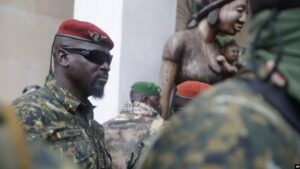
Investors Watching Closely
Guinea’s mineral wealth, particularly the Simandou iron ore reserve, has drawn international interest, making political stability a pressing concern for economic stakeholders. Bah’s appearance at the Africa CEO Forum was seen not just as a policy update, but a strategic move to reassure partners that Guinea’s political transition—though delayed—is back on track.
Still, the road ahead is uncertain. With less than eight months to go before the constitutional referendum and just over a year until the proposed elections, the government will need to show real progress if it hopes to regain public trust and international legitimacy.
Until then, Guinea stands at a crossroads—caught between military rule and the promise of democratic renewal, with both its people and the world watching closely.

