
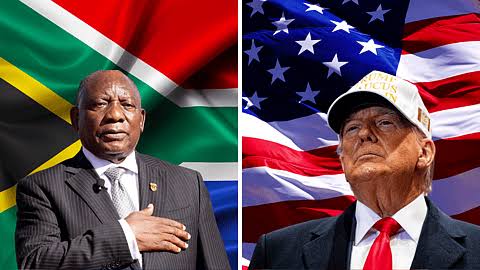
President Donald Trump has officially directed all U.S. government departments to disengage from the upcoming G20 Summit scheduled to be held in South Africa later this year—a dramatic move that deepens an already fragile relationship between Washington and Pretoria.
This decision, confirmed by senior U.S. officials, marks the first time in decades that America will abstain from participating in the G20, an international gathering of the world’s largest economies. The summit, set for November, carries the theme “Solidarity, Equality, Sustainability,” but Trump’s administration has made it clear that it won’t be part of the conversation unless what it calls “property rights abuses” in South Africa are addressed.
Behind the boycott is a growing political feud over South Africa’s land reform policy, specifically the controversial legislation signed earlier this year by President Cyril Ramaphosa that allows the government to expropriate land without compensation in cases deemed “in the public interest.” While the South African government insists that no land has yet been seized and that the policy aims to correct historical injustices rooted in apartheid, Trump has repeatedly labeled the reforms as discriminatory—particularly against the white minority, namely Afrikaner farmers.
“We do not support regimes that use race to justify seizure,” a senior White House official told reporters Tuesday evening. “Until these actions are reversed or clarified, we will not be sending a U.S. delegation to South Africa.”
The move follows weeks of escalating rhetoric from Trump, who recently welcomed a group of 59 Afrikaners to the U.S. under a newly introduced fast-track refugee program. The group, who arrived at Dulles International Airport on May 12, were granted asylum on the grounds of alleged racial persecution—a claim widely challenged by South African officials and human rights organizations.
At a recent event in the Free State province, President Ramaphosa slammed the narrative as politically fueled and outright false. “They are not being persecuted,” he said. “What we’re seeing is resistance to transformation, not persecution.”
But Trump’s decision to extend refuge to white South Africans, a group historically linked to privilege and land ownership during apartheid, has added fuel to the fire. Critics say the administration is playing politics with race and using South Africa as a backdrop for its larger ideological agenda.
“The same administration turning away asylum seekers from war zones is rolling out the red carpet for farmers from a democracy,” noted political analyst Tessa Montgomery. “It’s hard not to see the double standard.”
Back in South Africa, the G20 snub has sparked both concern and defiance. While government officials have expressed regret over the diplomatic fallout, Ramaphosa’s tone remains firm. “South Africa’s land belongs to all its people. We will not be bullied into reversing the course of justice,” he said in a televised interview.
Yet, the pressure is mounting. Trump has hinted he may take further steps—including trade reviews—if the South African government doesn’t “correct its direction.” Meanwhile, reports suggest that more than 10,000 white South Africans have already expressed interest in applying for asylum under the new U.S. policy.
Whether this standoff is a flashpoint or the start of a long diplomatic freeze remains to be seen. But one thing is clear: this G20 summit, with or without the U.S., will be remembered less for its theme and more for the global tensions it has come to represent.

