

Access to the social media platform X (formerly Twitter) has been throttled across much of Tanzania following a wave of alarming cyberattacks that targeted official government and private institution accounts.
The most serious breach came Tuesday, when hackers took over the Tanzanian police force’s official X account, posting pornographic images and a false claim that President Samia Suluhu Hassan had died—content that spread rapidly before the account was recovered. The police have publicly distanced themselves from the posts and announced that a formal investigation is underway to trace those behind the intrusion.
By Tuesday evening, independent watchdog group NetBlocks reported that X had become largely inaccessible on major internet service providers throughout the country. On Wednesday, users in Dar es Salaam—the nation’s bustling commercial capital—still couldn’t access the platform unless using a virtual private network (VPN), which is illegal in Tanzania without a government permit. However, some users in other regions reported intermittent access.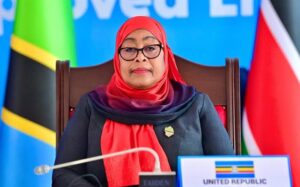
While the government has not officially confirmed a deliberate block of the platform, Information Minister Jerry Silaa addressed the hacking incident in parliament, assuring lawmakers that the affected accounts had since been secured. Government spokesperson Gerson Msigwa had earlier issued a stern warning to those responsible, saying swift action was already being taken.
This digital blackout comes at a particularly tense moment for Tanzania, as regional political controversies brew. Outrage has been mounting over the recent deportation of several high-profile Kenyans who had traveled to Tanzania to attend the court proceedings of Tanzanian opposition figure Tundu Lissu, who faces treason charges. Among those turned back was former Kenyan Justice Minister Martha Karua.
Also, read: British Tourist in Custody in Namibia for Taking Nude Photos of Local Children
President Samia, responding to the situation earlier this week, warned foreign activists against interfering in Tanzania’s internal affairs, insisting she would not permit any attempt to “create chaos” in the country.
Adding to concerns, prominent Kenyan activist Boniface Mwangi and Ugandan advocate Agather Atuhaire were reportedly detained in Dar es Salaam by men believed to be military officers. Their exact whereabouts remain unknown, and Tanzanian authorities have remained silent on the issue.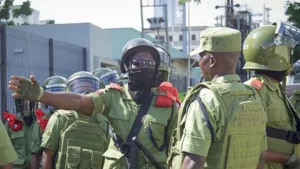
Mwangi’s wife, Njeri Mwangi, expressed deep concern in an interview with the BBC’s Newsday program. “I’m actually concerned for his life,” she said. “I know my husband. He would have found a way to reach me if he could. The silence is frightening.”
On Wednesday, Boniface Mwabukusi, president of the Tanganyika Law Society—the leading bar association for lawyers on the Tanzanian mainland—stated that the two activists were being held by the country’s immigration department, walking back an earlier claim that they had already been deported. “Our legal team is actively monitoring the situation and considering legal avenues to ensure a fair and timely resolution,” he posted on X.
As digital access tightens and tensions rise, the country finds itself at a critical crossroads—grappling with cybersecurity threats, international scrutiny, and rising concerns over transparency and civil liberties.

