
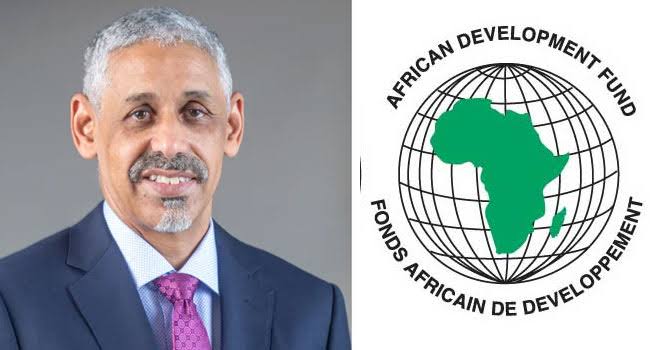
In a decisive moment for Africa’s economic future, Mauritania’s Sidi Ould Tah has been elected the ninth president of the African Development Bank (AfDB), a critical leadership shift that comes as the continent navigates complex development challenges.
The announcement was made during the Bank’s Annual Meetings held in Abidjan, Côte d’Ivoire, where finance ministers, central bank governors, and development experts gathered from across AfDB’s 81 member countries. The vote, conducted by the institution’s Board of Governors, sealed Tah’s victory after a competitive race involving four other candidates from Senegal, Zambia, Chad, and South Africa.
Tah will formally assume office on September 1, 2025, succeeding Dr. Akinwumi Adesina, whose decade-long tenure marked a period of expanded infrastructure investment, agricultural transformation, and the launch of the Bank’s now widely adopted “High 5” development strategy.
A Veteran Banker With a Reformist Track Record
Few would question Tah’s credentials. With more than 30 years of experience in economic policy and finance, he most recently led the Arab Bank for Economic Development in Africa (BADEA), overseeing a sweeping institutional revamp. Under his leadership, BADEA quadrupled its balance sheet and clinched a rare AAA credit rating, establishing itself as a powerhouse among development institutions focused on Africa.
Tah is also a former Minister of Economic Affairs and Finance in Mauritania, where he played a central role in shaping national fiscal policy. He’s no stranger to the demands of multilateral institutions either, having worked extensively on financial reforms and resource mobilization initiatives across the continent. One of his more notable achievements includes launching BADEA’s groundbreaking $1 billion callable capital program to support African development banks.
Also, read: ‘Unforgivable Betrayal’: South African Mother, Two Others Get Life for Trafficking 6-Year-Old Daughter
A Critical Moment for Africa and the AfDB
Tah’s arrival at the helm comes at a time of both promise and peril for the continent. Africa has weathered global economic storms, climate crises, and the reverberations of geopolitical shifts, yet urgent work remains. The new AfDB president inherits a to-do list that includes narrowing the infrastructure financing gap, addressing food insecurity, expanding access to clean energy, and fostering job creation for a booming youth population.
With just five years to make his mark, Tah will be under pressure to accelerate progress toward the African Union’s Agenda 2063 and the UN’s Sustainable Development Goals—targets that now hinge on strategic leadership, fiscal innovation, and cross-border collaboration.
In her remarks, Niale Kaba, Côte d’Ivoire’s Minister of Planning and Development and Chair of the Board of Governors, congratulated Tah on his win and emphasized the weight of the task ahead: “This moment is not only a celebration of leadership but a call to action for the future of Africa’s people.”
As Tah prepares to step into one of Africa’s most influential development roles, expectations are high. And in a world increasingly shaped by bold ideas and pragmatic execution, the AfDB’s next chapter will test not just his experience, but his vision.

