
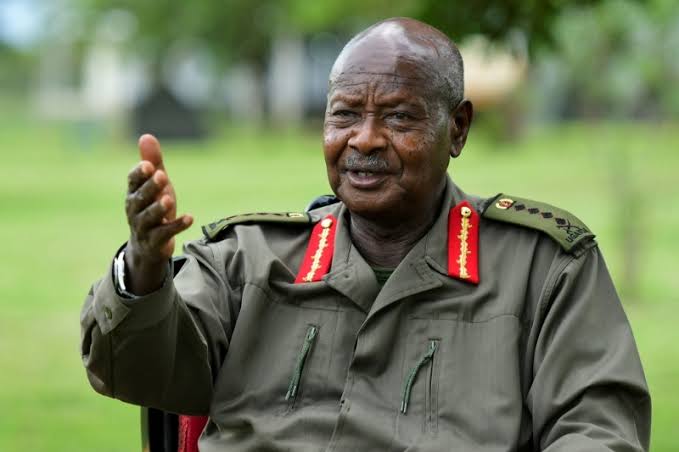
In a controversial move drawing sharp criticism from opposition leaders and rights groups, Ugandan President Yoweri Museveni has signed a new law reinstating military trials for civilians under specific conditions, despite the country’s Supreme Court declaring such trials unconstitutional just months ago.
The law, passed by parliament last month amid a heavy security presence and a boycott by opposition MPs, permits civilians found in possession of military-related items—such as firearms, ammunition, or even army uniforms—to be tried by military tribunals.
Museveni’s decision to approve the amendment follows the Supreme Court’s January ruling, which stated that military courts lacked the neutrality and judicial capacity to try civilians. At the time, the court stressed that such tribunals violated the principle of a fair trial and were being used to suppress dissent.
An Old Tactic, Repackaged
The new amendment appears to make some concessions to that ruling. It now stipulates that military court officials must possess formal legal qualifications and must operate with independence and impartiality while handling legal matters. However, the fundamental concern remains: civilians can still be subjected to military justice if found with military gear, raising fears of renewed political abuse.
Military spokesperson Col. Chris Magezi defended the law on social media, posting on X (formerly Twitter): “The law will deal decisively with armed violent criminals, deter the formation of militant political groups that seek to subvert democratic processes, and ensure national security is based on a firm foundational base. If it ain’t broke, don’t fix it!”
But not everyone sees it that way.
Also, read: Ghana Shuts Down Embassy in Tehran, Begins Evacuation Amid Rising Iran-Israel Tensions
Opposition leader Bobi Wine, who has long accused the government of using security forces to silence political challengers, warned that the law could be weaponized to further crack down on dissent. “All of us in the opposition are being targeted by the act,” he said in a statement to AFP.
For years, critics have argued that Uganda’s military court system has been exploited to intimidate and silence government critics, often under the guise of national security. Human rights lawyer Gawaya Tegulle, speaking on the BBC’s Focus on Africa podcast earlier this year, said, “If you are a political opponent then they will find a way of getting you under the military court and then you know your fate is sealed. Once there, justice will never visit your door.”
Tegulle also raised concerns about long pretrial detentions and the heavy penalties often handed down in military tribunals—more severe than what would typically be issued in civilian courts.
The debate isn’t theoretical. One of the most high-profile examples was the case of longtime opposition figure Kizza Besigye, who was arrested last November while in Kenya and brought back across the border to Uganda. He was charged in a military court with possession of pistols and allegedly attempting to buy weapons abroad—charges he denied. The case was later transferred to a civilian court after the Supreme Court’s ruling, and the original charges were dropped.
President Museveni, who has ruled Uganda since 1986, has shown little interest in backing down. He previously dismissed the Supreme Court’s decision as “wrong,” insisting that military courts were necessary to deal with “gun-wielding criminals and terrorists,” and criticized civilian courts for being too slow to handle such cases.
“The country is not governed by the judges,” Museveni declared shortly after the ruling. “It is governed by the people.”
Yet, to many observers, this new law signals a deepening of executive overreach and a shrinking space for political opposition.
International and local human rights organizations are already sounding alarms. They warn that Uganda risks sliding further into authoritarianism under the guise of national security, and that the revival of military trials could lead to an uptick in arbitrary arrests, abuse of power, and miscarriages of justice.

