
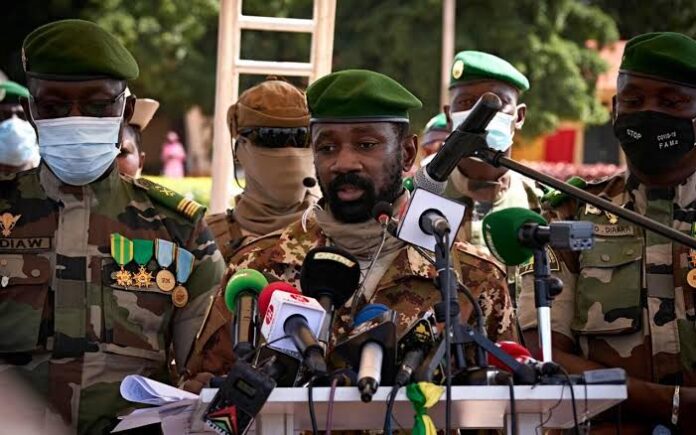
In a strategic move aimed at reshaping its gold industry and asserting greater sovereignty over natural resources, Mali has officially broken ground on a new gold refinery—with key backing from Russia. The announcement comes as part of sweeping economic reforms under the leadership of interim President Colonel Assimi Goïta.
The refinery, to be located near Bamako’s international airport, will be the country’s first facility capable of producing internationally certified gold with 99.5% purity. According to officials, the plant will have the capacity to process up to 200 metric tons of gold per year, four times Mali’s current refining capacity.
The project is a joint venture between the Malian government, which holds a controlling 62% stake, and Russian firm Yadran, which owns the remaining 38%.
Speaking at the launch ceremony, President Goïta described the refinery as a critical step toward ending Mali’s historical dependence on foreign refineries. Since the 1980s, Mali—despite being Africa’s second-largest gold producer—has exported nearly all of its gold in raw form to countries like Switzerland, the UAE, and South Africa. This, Goïta argued, has deprived Mali of significant economic benefits.
“Our country must no longer settle for being a supplier of raw materials,” Goïta said. “With this refinery, we reclaim control over our most valuable resource.”
He also stated that while no exact date has been set, new policies would soon require mining companies operating in Mali to refine gold domestically under an updated mining code introduced earlier this year.
Also, read: Tyler Perry Sued for $260 Million Over Alleged Sexual Misconduct and Retaliation
Mali is not alone in this pivot. Across the Sahel, nations like Burkina Faso, Niger, and Guinea are revising their mining laws to prioritize local processing and value addition. The move reflects a growing push across West Africa to reduce dependency on Western economies and maximize returns from mineral exports.
The refinery is projected to add nearly $950 million in revenue to the government annually—an amount equivalent to almost 20% of Mali’s national budget. Authorities say it will also improve gold traceability, helping curb illegal exports and smuggling.
The partnership with Russia also signals Mali’s continued drift away from Western alliances, particularly France and the U.S., and toward countries like Russia and China for economic and military collaboration. Since the 2020 coup, Mali’s military-led government has emphasized self-reliance and regional sovereignty in both security and economic matters.
While the refinery is being hailed by officials as a milestone, questions remain about transparency, operational timelines, and the role of Russian contractors in Mali’s broader economy.
Still, for many in Bamako, the refinery represents more than just a facility, it’s a symbol of a new era. “This is about dignity and economic justice,” said one government official. “For once, we want to process what we produce and benefit from it right here at home.”

