

Barely five months into Donald Trump’s return to the White House, his foreign policy doctrine appears to be heading in the opposite direction of his campaign pledge to end America’s “forever wars.” Instead of drawing back, the United States has intensified military engagement abroad, particularly in Somalia, where U.S. air strikes have more than doubled since last year.
The uptick is startling. According to data from the U.S. Africa Command (AFRICOM), 43 airstrikes have already been conducted in Somalia in 2025 — a sharp rise from the previous year and a move that contradicts the anti-interventionist rhetoric Trump and his allies echoed during the 2024 election season.
Just ten days after his inauguration in January, Trump took to X (formerly Twitter) to announce his first military move — airstrikes targeting ISIL (ISIS) leadership in Somalia. “These killers, who we found hiding in caves, threatened the United States,” he wrote. Since then, Trump has greenlit strikes not only across Somalia but also in Yemen, Gaza, and Iran — reigniting debates over the scope and intent of U.S. military power abroad.
A Familiar Battlefield, A New Intensity
Somalia has long been entangled in America’s counterterrorism efforts, but the current spike in military action is raising fresh questions. Over half of the 2025 strikes have hit targets affiliated with IS-Somalia, a growing faction of the Islamic State located in the northeastern Puntland region. The rest have been aimed at al-Shabab, the long-established al-Qaeda-linked group.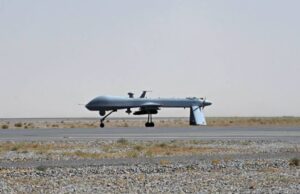
U.S. officials argue the operations are necessary. IS-Somalia has reportedly become a key node for global ISIS operations — a hub for financing and coordination. Meanwhile, al-Shabab has launched a sweeping counteroffensive this year, reclaiming lost territory and inching dangerously close to Mogadishu, Somalia’s capital.
But to many experts, Trump’s expanding air campaign reveals deeper motives — ones rooted not in strategy, but in spectacle.
“The Trump administration is once again leveraging Somalia as a stage for demonstrating U.S. firepower — high impact with low domestic backlash,” said Jethro Norman, a senior researcher with the Danish Institute for International Studies.
Norman argues that the current wave of drone attacks is less about defeating terror and more about projecting strength, particularly after Trump relaxed Obama-era restrictions that limited preemptive strikes. “It’s less about Somalia and more about shaping an image of toughness — one that avoids boots on the ground but delivers bombs from the sky.”
This pattern isn’t new. During Trump’s first term, Somalia saw 219 U.S. airstrikes — more than four times the combined total under Presidents Bush and Obama. If the current pace continues, his second term could see even more.
Also, read: Netherlands Joins Germany, UK in Returning Benin Bronzes as 119 Looted Artifacts Head Home to Nigeria
Yet for all the bombs dropped, critics say there’s little to no effort to address the roots of Somalia’s instability or to invest in long-term peacebuilding. “This is a one-sided conversation where drones speak louder than diplomacy,” Norman added.
The Cost of Collateral Damage
While the Pentagon insists that these operations are precise and coordinated with Somalia’s federal government, local voices tell a different story.
“These attacks kill civilians, destroy homes, livestock, and livelihoods. That breeds more resentment, which groups like al-Shabab exploit,” said Abukar Arman, a Somali analyst and former special envoy to the U.S. “Without a real partnership grounded in mutual respect and long-term goals, the U.S. is not solving anything. It’s just stoking the fire.”
Human rights organizations echo the concern. Amnesty International has previously accused the U.S. of committing possible war crimes in Somalia due to civilian deaths from drone strikes — many of which remain unacknowledged and uncompensated.
Eva Buzo, head of Victims Advocacy International, described the lack of accountability as “deeply disturbing.”
“The U.S. admits civilians were harmed, but there’s a pattern of avoiding compensation or even basic communication with affected communities,” she said. “Drone strikes don’t just end lives; they sever trust.”
Analysts say the resurgence of al-Shabab’s power in 2025 has complicated the picture even further. The group has seized dozens of towns in the Middle Shabelle region, territory that includes the home base of President Hassan Sheikh Mohamud. The advance has rattled Somali officials and increased calls for external military assistance.
David Sterman of New America notes that the recent U.S. strikes seem to respond directly to battlefield threats. “There’s a focus now on targeting high-ranking al-Shabab leaders and containing the group’s territorial gains,” he explained.
Still, many are left wondering if airstrikes alone can contain an insurgency that thrives on public discontent and government weakness. “You can’t bomb your way to peace,” said Arman. “Especially not when your bombs are part of the problem.”

