
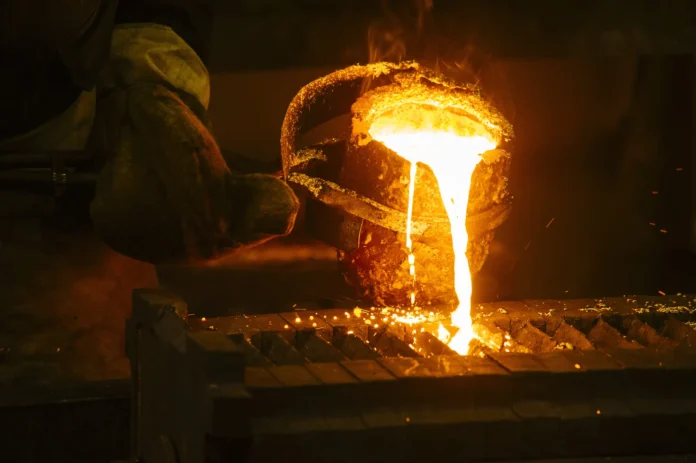
Africa’s gold is gaining fresh value, thanks to the gold refineries now popping up around the continent. From Mali’s massive new refinery project to Uganda stepping up for artisanal miners, refineries are transforming gold from raw exports into wealth that stays local.
For decades, Africans have had to watch as their major resources were taken out of their borders under the guise of being refined. Now, these refineries are changing the narrative and boosting confidence amongst locals as well as in the economy of major African countries.
These seven projects and facilities are rewriting how value is captured—and how Africa’s gold future looks.
1. Mali’s SOROMA-SA Refinery (Senou, near Bamako)
In a landmark move toward economic independence, Mali has broken ground on its first large-scale gold refinery, SOROMA-SA, in partnership with Russia’s Yadran Group. The government holds a controlling 62% stake. Once completed (expected by late 2026), it will have an annual capacity of 200 tonnes of gold. This is nearly four times Mali’s current refining output.
This refinery is more than infrastructure. Under Mali’s newly updated mining code, all mining companies will eventually be required to refine gold domestically. With this plant, Mali aims to keep more value, reduce smuggling, and create jobs in refining, assay labs, and traceability systems.
2. Euro Gold Refinery, Uganda
Uganda is making serious headway in gold value-addition, especially with the Euro Gold Refinery in Kampala. Officially licensed, this refinery offers clean, traceable services for small-scale and artisanal miners. It was established with foreign investment (UK, UAE, India) and aims to ensure that local miners receive fair value rather than losing out through informal channels.
For Uganda, this facility is part of a broader push: formalize trade, cut fraud, generate more export revenue, and build local capacity. It’s also deeply tied to mineral policy reforms including bans on export of unprocessed minerals.
3. Refineries in Uganda’s Licensing Network (Niton, African Gold Refinery, GAZHAS, Oasis, etc.)
Beyond one big name, Uganda has developed a network of several licensed refineries—Niton, African Gold Refinery, GAZHAS (U), Kenexa, Oasis among others. These facilities refine gold to high purities, provide assaying, bullion casting, and serve both domestic and regional supply chains.
This spread of capacity helps reduce bottlenecks, provide more reliable access for miners, and improve competition—factors that often bring down costs and raise quality across the board.
4. Gabon’s Nkok Gold Refinery
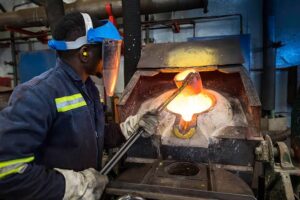
Gabon is pushing forward with its Special Economic Zone refinery at Nkok. While smaller in scale than some others, its design includes modern Italian refining technology, zero emission or acid recovery features, and the ambition to refine gold currently being exported raw.
Its benefit: enabling Gabon to apply downstream industrialization (like jewelry, local design), reduce value loss abroad, and position itself more strongly in regional gold markets.
5. Marena Gold (Artisanal Refinery in Mali)
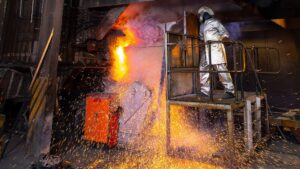
While SOROMA-SA aims at large industrial scale, Marena Gold in Mali has been contributing already via artisanal output. It operates at smaller capacity, sourcing gold from local artisans, offering refining services. For many small miners, access to a refinery that operates locally can mean the difference between being exploited by middlemen or getting fairer prices.
Marena’s role also highlights the importance of a mixed gold refining ecosystem—both large and small—so value is accessible at all levels.
Also, read: Kenya Airways Takes Off on Locally Made Jet Biofuel in Bid to Attract Green Investment
6. Policy-Driven Refineries Across the Sahel Region
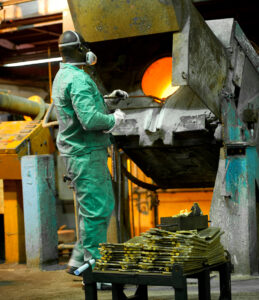
While not every country has a fully operational refinery yet, several nations in the Sahel (e.g., Burkina Faso, Niger) are adjusting their mining laws to mandate domestic refining. These policies are increasingly shaping investments in refinery infrastructure. Mali’s example is part of this pattern.
These reforms matter: they send signals to international investors that gold processing on-continent is no longer optional, but central to value creation. They also help local governments capture more revenue, reduce illicit exports, and improve oversight.
7. Certification & Standards: LBMA & Traceability Pressures
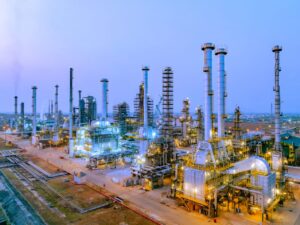
A critical theme connecting many of the top refineries is the push for international certification (e.g. LBMA or similar high-purity & ethical standards). For instance, Uganda’s new facilities are emphasizing transparency, environmental best practices, and purity for export credibility.
This matters because without certification, even refined gold might struggle to get premium prices or access certain global buyers. Refineries that invest in traceability systems, labs, and ethical sourcing (especially from small and artisanal miners) stand to gain competitive advantage.
What This Means for Africa’s Gold Economy
The rise of these refineries is transforming how Africa captures value from its gold. Instead of exporting raw or semi-processed gold and depending heavily on foreign refining centers, African nations are beginning to secure more of the value chain locally.
This shift brings multiple benefits: higher export revenues, job creation in regions beyond the mines, and increased economic sovereignty (especially tied to laws and government policies that mandate refining).
However, the path isn’t easy. Challenges remain: meeting global purity and environmental standards, securing constant supply (artisanal miners often work informally), financing these expensive plants, and keeping policy stable for investor confidence.

