
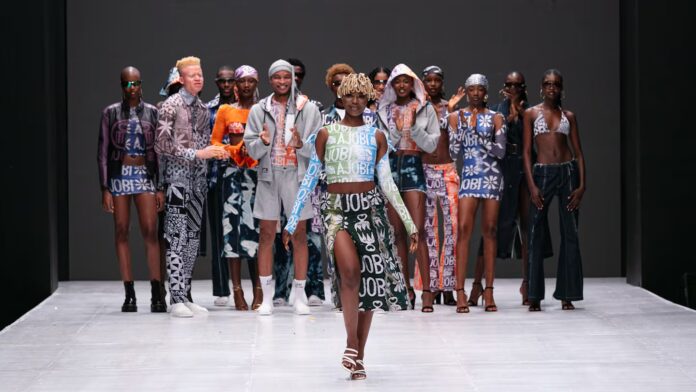
African fashion has long been a story of color, craftsmanship, and culture but in recent years, that story has found new stages. From Lagos to Dakar to Johannesburg, fashion festivals across the continent have evolved beyond spectacle. They’ve become the heartbeat of a contemporary African movement that’s rewriting what luxury, identity, and creativity mean to the world.
These festivals are more than seasonal events. They are platforms for reinvention, spaces where designers merge tradition with modern flair, and where the world finally looks to Africa not for inspiration, but for leadership.
Lagos Fashion Week: The Pulse of Modern African Design
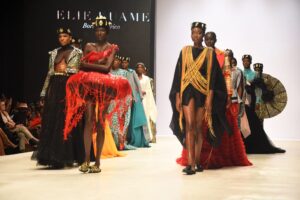
In Nigeria’s bustling commercial capital, Lagos Fashion Week stands as the continent’s creative lighthouse. Founded by Omoyemi Akerele in 2011, the festival has grown into one of the most influential fashion platforms in Africa, merging glamour with purpose. What began as a showcase of emerging talent has become a global conversation about African creativity and sustainable production.
At its heart, Lagos Fashion Week champions originality. Every October, designers fill the runway with collections that reinterpret African fabrics for modern tastes. Bold prints meet minimalist tailoring; traditional craft finds new life in futuristic forms. It’s a place where innovation thrives alongside culture. Beyond the runway, initiatives like Green Access promote ethical fashion and local craftsmanship, positioning Lagos as a hub where commerce and conscience walk hand in hand.
This evolution hasn’t gone unnoticed. With international editors, buyers, and influencers attending each year, Lagos Fashion Week has effectively placed African fashion on the global calendar. What once was a local celebration now drives cross-continental collaboration and business opportunities, proving that Africa’s style industry is not emerging—it’s ascending.
Also, read: Three African Countries Owe Nigeria $20 Million in Electricity Debts
Dakar Fashion Week: Where Heritage Meets Avant-Garde
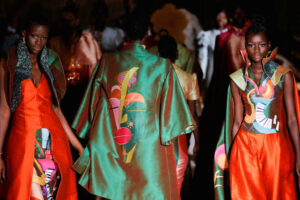
In Senegal, Dakar Fashion Week has turned the city into West Africa’s creative capital. Founded over two decades ago by Adama Paris, it’s one of the longest-running fashion events on the continent—and one of its most soulfully rooted. Dakar Fashion Week feels like an open-air museum of African expression, where fabric tells history and design becomes resistance.
Each show is a cultural statement. Set against backdrops like Gorée Island or the city’s sandy shores, the event captures the spirit of African modernism. Designers from across the region use it as a canvas to explore identity, heritage, and innovation. You’ll see Fulani embroidery sharing space with futuristic silhouettes; wax prints juxtaposed with metallic textures.
Dakar’s festival has also become a rallying point for inclusivity and representation. It prioritizes African models, promotes body diversity, and amplifies local artisans whose work sustains entire communities. As the global fashion world leans toward authenticity, Dakar’s approach—rooted in heritage yet open to the avant-garde—offers a blueprint for sustainable cultural growth.
South African Fashion Week: Innovation Meets Industry
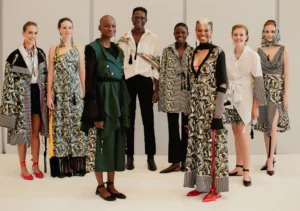
In southern Africa, South African Fashion Week (SAFW) stands as a testament to structure, professionalism, and artistic innovation. Held in Johannesburg, it bridges the gap between fashion and commerce, offering a platform that’s as business-savvy as it is creative.
Since its inception in the late 1990s, SAFW has cultivated a polished ecosystem that supports designers beyond the runway. It has formalized mentorship programs, trade shows, and partnerships that ensure African brands thrive long after the lights dim. Its runways feature everything from sleek urban minimalism to experimental couture, reflecting South Africa’s unique blend of global influences and local textures.
The festival’s forward-thinking stance on sustainability and design technology has made it one of Africa’s most progressive fashion hubs. From eco-conscious materials to AI-assisted pattern making, SAFW continuously pushes the continent’s fashion narrative toward the future. In doing so, it proves that African design is as vibrant as it is visionary.
Redefining Fashion from the Continent Outwards
Together, these festivals—Lagos, Dakar, and Johannesburg—represent Africa’s creative ecosystem in motion. They’ve transformed the perception of African fashion from something “inspired by the West” to something the world now aspires to emulate.
They connect local artisans to global markets, empower female entrepreneurs, and encourage cross-border collaboration. Most importantly, they allow Africa to speak for itself, through fabric, movement, and imagination.
As fashion capitals around the world begin to embrace African aesthetics, these festivals remind us that innovation doesn’t always come from Paris or Milan. Sometimes, it begins in the rhythm of Lagos traffic, the poetry of Dakar’s coast, or the pulse of Johannesburg’s streets.

