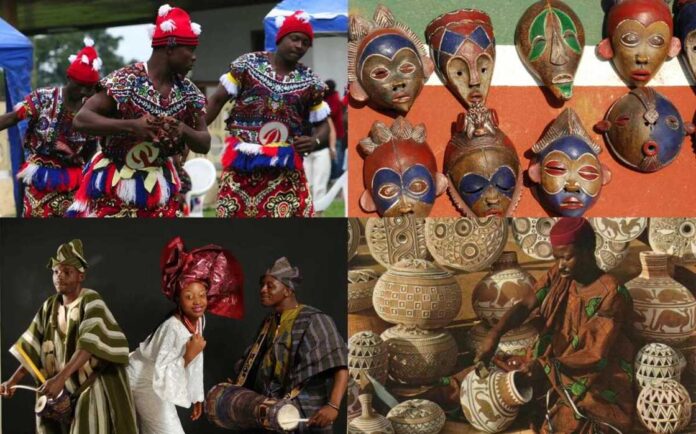
Nigeria is not simply Africa’s most populous nation; it is one of the most culturally explosive countries on the planet. With over 250 ethnic groups, 500 languages, and a history stretching back thousands of years, the culture of Nigeria Africa refuses to be summarized. It demands to be experienced.
The People Who Built Nigerian Culture
Yoruba — Artists, Philosophers and Spiritual Thinkers
The Yoruba people of southwest Nigeria are the architects of one of the most sophisticated cultural systems in Africa. Their Ifa divination system, a complete philosophical framework recognised by UNESCO crossed the Atlantic through the slave trade and gave birth to Candomblé, Santeria and Vodou. Yoruba culture is one of the most globally influential in human history.
Igbo — Community Leaders and Cultural Innovators
The Igbo people of southeast Nigeria developed a remarkably egalitarian society with no centralized king decisions were made through community consensus. Igbo culture is famous for its elaborate masquerade traditions, rich artistic heritage, and a fierce entrepreneurial spirit that has made Igbo people among the most dynamic communities across Africa and the diaspora.
Hausa-Fulani — Scholars, Traders, and Islamic Cultural Custodians
The Hausa-Fulani people of northern Nigeria built powerful Islamic emirates that were centres of scholarship, trade, and artistic production centuries before European colonization. Their culture produced architecture, embroidery, leatherwork, and extraordinary music. The Durbar festival elaborately dressed horsemen parading through ancient city streets is one of the most spectacular expressions of Hausa-Fulani identity.
Smaller Ethnic Groups with Giant Cultural Footprints
Beyond the three major groups, Nigeria’s hundreds of smaller communities each carry irreplaceable contributions to Nigerian culture. The Edo people of Benin City produced bronze sculptures in the thirteenth century so sophisticated that European colonizers refused to believe Africans had made them. The Efik, Ijaw, Tiv, and Urhobo peoples each add essential depth to the full picture of Nigerian cultural life.
Key Ethnic Groups in the Culture of Nigeria Africa
- Yoruba — southwest Nigeria, Ifa philosophy, Afrobeats roots, global cultural influence
- Igbo — southeast Nigeria, egalitarian values, masquerades, entrepreneurial culture
- Hausa-Fulani — northern Nigeria, Islamic scholarship, Durbar festival, fine craftsmanship
- Edo — Benin City, creators of the world-famous Benin Bronze artistic tradition
- Efik — Cross River, elaborate masquerades and sacred cultural societies
- Ijaw — Niger Delta, one of Africa’s oldest indigenous cultures with deep water traditions
500 Languages, One Nation — How Language Shapes Nigerian Culture
Nigeria is home to over 500 distinct languages, making it one of the most linguistically rich nations on earth. Each language is a complete cultural archive carrying proverbs, histories, and ancestral knowledge of the community that speaks it. When a Nigerian language disappears, an entire world of knowledge disappears with it.
Faith and Spirituality in Nigerian Culture
Three Religions, One Country
The culture of Nigeria Africa holds an extraordinary religious reality, Islam dominant in the north, Christianity in the south, and indigenous spiritual traditions woven through both. Nigerians pray in mosques, churches, and sacred groves sometimes within the same family. This coexistence makes Nigeria’s spiritual life one of the most complex in the world.
When Ancient Beliefs Meet Modern Faith
In the culture of Nigeria Africa, Islam and Christianity did not erase indigenous traditions, they created new cultural syntheses that are uniquely Nigerian. A Yoruba Christian may still consult a Babalawo for spiritual guidance. A Hausa-Fulani Muslim family may still perform traditional naming ceremonies rooted in pre-Islamic custom.
Birth, Marriage, and Death — Ceremonies That Mark Every Life
Naming Ceremonies Across Nigerian Cultures
In the culture of Nigeria Africa, a child’s name is a declaration, a prayer, and a connection to ancestry. The Yoruba Isomoloruko ceremony gathers family to taste symbolic foods, honey for sweetness, kola nut for long life before the child receives a name encoding the family’s hopes. Among the Igbo, names like Chukwuemeka, God has done great things announce the child’s spiritual identity from birth.
Bride Price and Traditional Marriage in Nigeria
Bride price in the culture of Nigeria Africa is not the purchase of a wife but a sacred acknowledgement of her value and a bond between two families. Traditional Nigerian marriage ceremonies are among the most elaborate cultural events in Africa, involving days of dancing, feasting, and rituals refined over centuries. It is one of the most joyful and community-centred expressions of Nigerian cultural life.
How Nigerians Honour Their Dead
Death in the culture of Nigeria Africa is a transition marked with ceremony and ancestral rites. Yoruba Egungun masquerade performances bring masked figures representing returning spirits of the dead to deliver blessings to the living. Among the Igbo, the second burial ceremony held years after death is one of the grandest expressions of how Nigerians honour those who came before them.
Key Nigerian Cultural Ceremonies
| Ceremony | Ethnic Group | Purpose |
| Isomoloruko | Yoruba | Naming ceremony on the 8th day after birth |
| Ime ego | Igbo | Bride price negotiation and traditional marriage |
| Egungun masquerade | Yoruba | Ancestral spirits returning to bless the community |
| Isa-aji | Igbo | Second burial ceremony honouring the deceased |
| Durbar | Hausa-Fulani | Royal procession marking Islamic festivals |
| New Yam Festival | Igbo | Harvest gratitude and ancestral offering ceremony |
What Nigerians Eat and Why It Matters
The Dishes That Define Nigerian Culture
Food in the culture of Nigeria Africa is never just nourishment, it is ceremony, community, and spiritual expression. Jollof rice is perhaps the most politically charged dish in West African cuisine, its preparation method debated with passion across Nigeria, Ghana, and the diaspora. Explore multicultural Afro cuisines and discover the stories behind every Nigerian dish.
Food as Ceremony, Prayer, and Community
Kola nut holds a sacred place in the culture of Nigeria Africa to offer it to a guest or ancestor is to invite them into a relationship of spiritual recognition. At every major Nigerian ceremony, preparing and sharing food is as ritually significant as any prayer or dance. The Nigerian kitchen is where cultural knowledge is quietly passed from one generation to the next.
Most Important Dishes in Nigerian Cultural Life
- Jollof rice — Nigeria’s most iconic dish and a symbol of national cultural identity
- Egusi soup — Igbo and Yoruba ceremonial dish served at ancestral gatherings
- Pounded yam — ceremonial staple expressing respect for elders and tradition
- Suya — spiced grilled meat that has become a pan-Nigerian street food icon
- Kola nut — sacred offering presented to guests and ancestors across all cultures
- Tuwo shinkafa — Hausa-Fulani rice pudding served at prayers and communal feasts
The Sound of Nigerian Culture — Music from Highlife to Afrobeats
How Nigerian Music Became Africa’s Biggest Export
The culture of Nigeria Africa has produced one of the most prolific and influential music traditions on the continent. From the highlife of the 1950s to Fela Kuti’s politically charged Afrobeat to the globally dominant Afrobeats of Burna Boy and Wizkid, Nigerian music has always been a vehicle for cultural expression and the declaration of African identity on a global stage.
Afrobeats as a Cultural Revolution Not Just a Genre
When Wizkid and Drake’s One Dance became one of the best-selling singles in history, it was the culture of Nigeria Africa announcing itself to hundreds of millions of listeners. Afrobeats carries within its rhythms the Yoruba drumming traditions, communal call-and-response structures, and philosophical values of a culture that has been creating world-class art for centuries.
Genres That Define the Sound of Nigerian Culture
- Afrobeat — Fela Kuti’s revolutionary fusion of Yoruba music, jazz, and political resistance
- Afrobeats — contemporary Nigerian pop music dominating global streaming charts
- Highlife — elegant blend of traditional rhythms and Western instruments from the 1950s
- Juju music — Yoruba traditional music modernized by King Sunny Ade for global audiences
- Fuji music — Yoruba Islamic musical tradition born from Ramadan night chanting
- Afrorap — Nigerian hip-hop fusing English, Pidgin, and indigenous languages
Nigerian Dance — Where the Body Speaks Culture
Traditional Dance Styles Across Nigerian Ethnic Groups
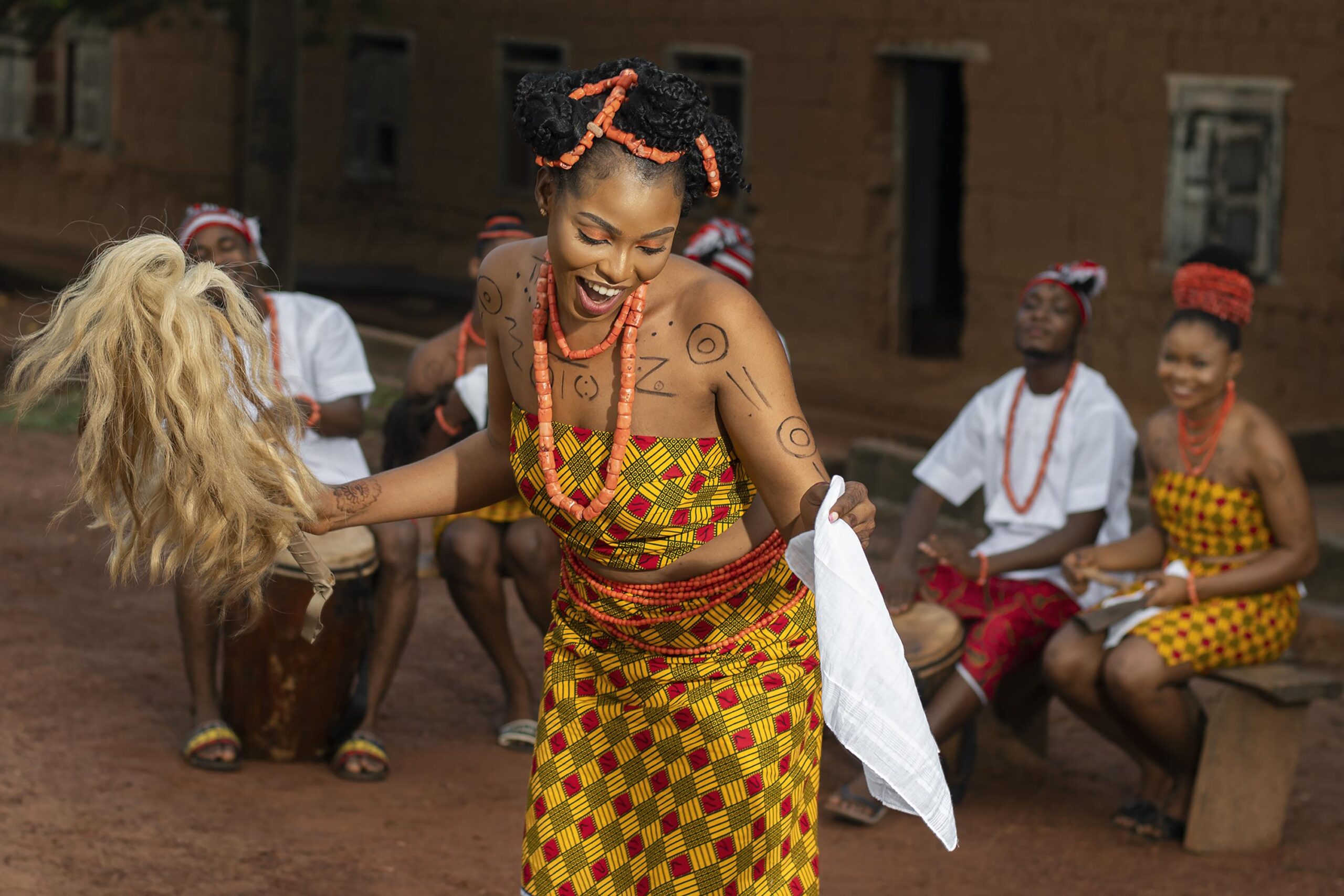
Dance in the culture of Nigeria Africa is a sacred language, a way of honoring ancestors, marking milestones, and binding communities together in shared movement. The Bata dance of the Yoruba is performed in honor of the Orisha deities, with drummers and dancers locked in a spiritual dialogue century old. Explore the living tradition of African cultural dance rooted in Nigerian culture.
Nigerian Traditional Dance Styles
- Bata — Yoruba sacred dance performed in honour of Orisha deities and ancestral spirits
- Atilogwu — acrobatic Igbo youth dance performed at celebrations and cultural festivals
- Ekombi — graceful Efik female dance performed at rites of passage and ceremonies
- Swange — communal Tiv dance that brings entire communities together in shared movement
- Koroso — energetic Hausa-Fulani dance performed at royal celebrations and festivals
Nigerian Art, Craft, and Storytelling
The Benin Bronze Legacy
The Benin Bronzes cast metal sculptures produced by Edo artists as far back as the thirteenth century are one of the greatest artistic achievements in the culture of Nigeria Africa. When British colonial soldiers looted over three thousand of these works in 1897, they encountered art so sophisticated that European museums struggled to accept Africans had created them. The campaign to return the Bronzes to Nigeria is a cultural reckoning with centuries of stolen heritage.
Nollywood — Culture Told Through Film
Nollywood is the world’s second largest film industry, producing over 2,500 films per year that explore the culture of Nigeria Africa with emotional honesty no outside perspective could replicate. It is the primary means through which Nigerian cultural stories, moral values, and social realities reach audiences across Africa and the global diaspora. Nollywood is Nigerian culture talking to itself and to the world simultaneously, on its own terms.
What Nigerians Wear — Clothing as Cultural Identity
Clothing in the culture of Nigeria Africa communicates identity, status, and occasion in a visual language every culturally literate Nigerian read immediately. The Yoruba agbada a voluminous ceremonial robe is a public declaration of social standing that commands immediate respect. Aso-ebi, the practice of wearing matching fabrics at celebrations, announces you’re belonging to that family and that cultural moment.
Key Nigerian Traditional Clothing
- Agbada — Yoruba three-piece ceremonial robe, a mark of status and cultural pride
- Aso-oke — hand-woven Yoruba fabric worn at weddings, funerals, and major ceremonies
- George fabric — Igbo women’s ceremonial dress worn at traditional weddings
- Aso-ebi — matching fabrics worn by family and friends at Nigerian celebrations
- Hausa-Fulani robes — flowing embroidered garments reflecting Islamic cultural identity
- Ankara print — pan-Nigerian fabric that has become a global symbol of Nigerian culture
Nigeria’s Greatest Festivals
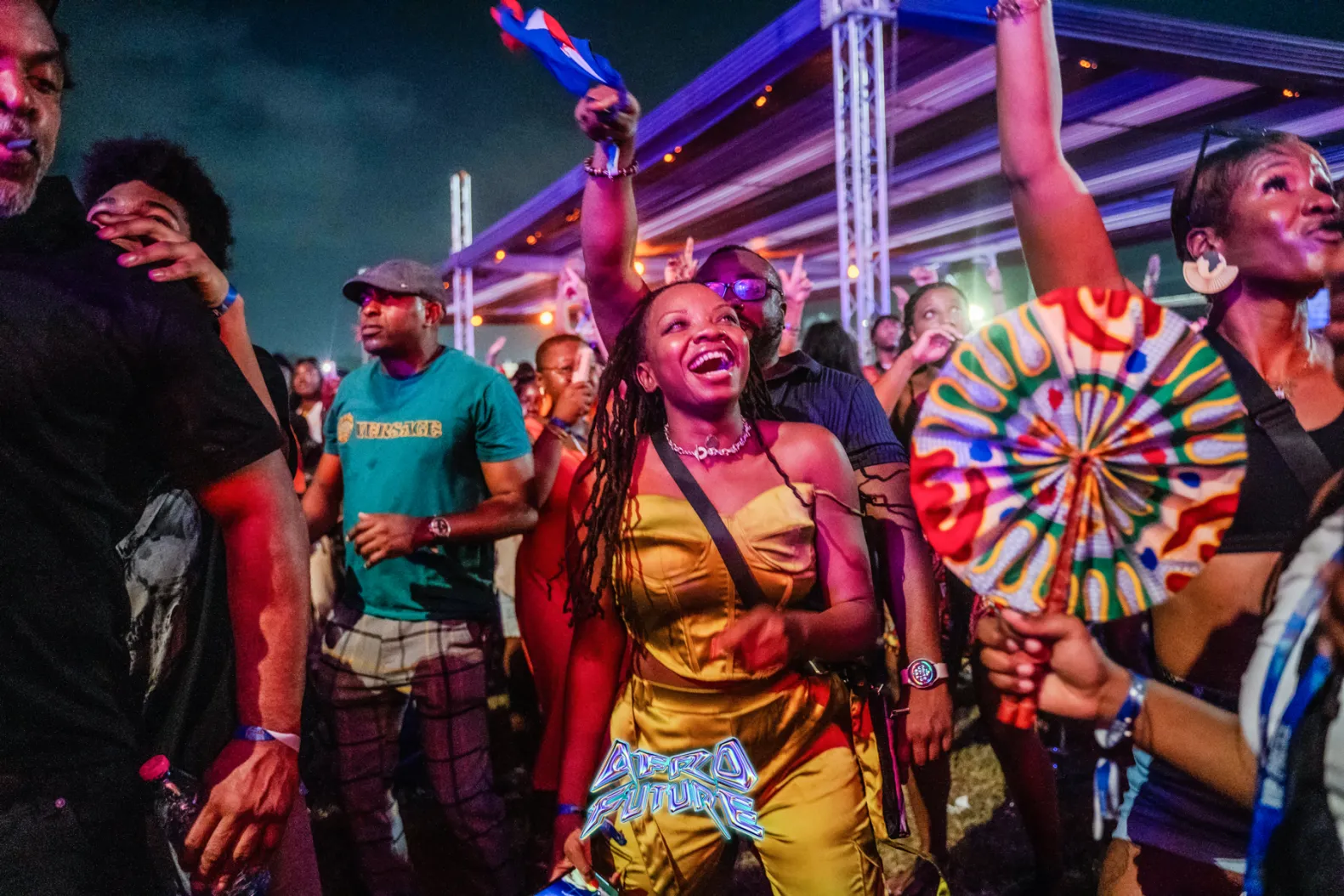
Nigerian festivals are when the culture of Nigeria Africa becomes most visible, when tradition announces itself through music, dance, dress, and ceremony. Each festival is a concentrated expression of a community’s deepest values and unbroken ancestral connection. To attend a major Nigerian festival is to experience Nigerian culture not as history but as a living, dancing reality.
Major Festivals in the Culture of Nigeria Africa
| Festival | Culture | Location | Significance |
| Osun-Osogbo | Yoruba | Osogbo, Osun State | UNESCO-listed Yoruba goddess worship festival |
| Durbar | Hausa-Fulani | Kano, Kaduna | Royal procession marking Eid celebrations |
| New Yam Festival | Igbo | Southeast Nigeria | Harvest gratitude and ancestral offering ceremony |
| Eyo Festival | Yoruba | Lagos Island | Yoruba masquerade honouring ancestral spirits |
| Argungu Fishing Festival | Hausa | Kebbi State | Cultural heritage and traditional competition |
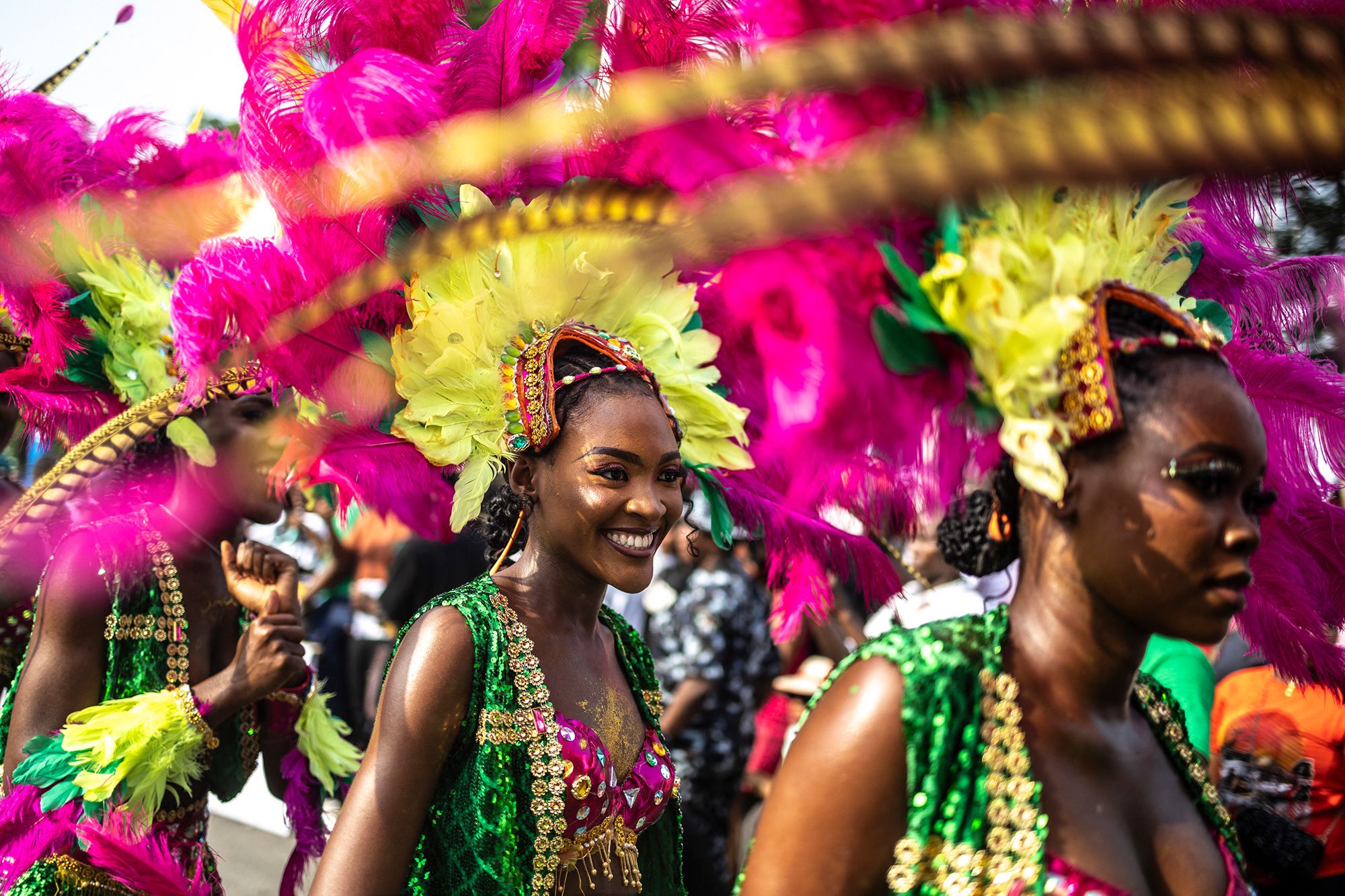
| Calabar Carnival | Efik/Pan-Nigerian | Cross River State | Nigeria’s biggest cultural street festival |
The Philosophy at the Core of Nigerian Culture
Ifa — Yoruba Wisdom That Shaped a Continent
The Ifa system of the Yoruba people is one of the most comprehensive philosophical frameworks in the culture of Nigeria Africa, addressing ethics, medicine, governance, and the nature of the universe. Babalawo priests spend entire lifetimes memorizing 256 chapters of oral scripture encoding Yoruba wisdom in poetic form. Recognized by UNESCO as an Intangible Cultural Heritage, Ifa challenges every assumption that African culture was ever primitive or unsystematic.
Community, Respect, and Ubuntu in Nigerian Life
At the heart of the culture of Nigeria Africa lies a profound philosophy of collective identity, the understanding that no individual flourishes in isolation from their community. The Yoruba concept “Eniyan ni aso mi” people are my clothing, expresses the belief that human beings are defined by their relationships, not their individual achievements. This communal philosophy is the invisible architecture that holds Nigerian cultural life together.
How Nigerian Culture Is Changing the World
The culture of Nigeria Africa is spreading across the globe through music, film, fashion, food, and the 17 million-strong Nigerian diasporas. Afrobeats is the fastest-growing music genre in the world. Nollywood is the world’s second-largest film industry. Nigerian fashion designers are showing in Paris, Milan, and New York. The culture of Nigeria Africa is not emerging; it has already arrived.
Nigeria’s Cultural Exports to the World
- Afrobeats — Nigerian music dominating global streaming and concert venues worldwide
- Nollywood — 2,500+ films per year making Nigeria the world’s second-largest film industry
- Nigerian fashion — Ankara, agbada, and Nigerian designers on international runways
- Nigerian food — jollof rice, suya, and egusi soup entering global restaurant culture
- Yoruba philosophy — Ifa and Nigerian communal values influencing global thought
Experience the Culture of Nigeria Africa Today
The best way to understand the culture of Nigeria Africa is to experience it through movement, food, music, and the people who carry these traditions every day. ILoveAfrica.com offers authentic access through African cultural dance classes, multicultural Afro cuisines, and the Afro School of Culture.
Begin Your Nigerian Cultural Journey Here:
- Join African cultural dance classes rooted in Nigerian traditional dance traditions
- Learn from African dance instructors who know Nigerian culture from the inside
- Explore multicultural Afro cuisines and taste the food culture of Nigeria Africa
- Enrol in the Afro School of Culture for structured Nigerian cultural education
- Visit ILoveAfrica.com and connect with the living culture of Nigeria Africa today
Frequently Asked Questions
What is the culture of Nigeria Africa?
The culture of Nigeria Africa is the rich and diverse collection of traditions, beliefs, languages, art forms, ceremonies, and ways of life developed by Nigeria’s 250+ ethnic groups over thousands of years. It encompasses Yoruba Ifa philosophy, Igbo masquerades, Afrobeats music, and Nollywood films making it one of the most culturally rich and globally influential cultures in the world.
How many ethnic groups are in Nigeria?
Nigeria has over 250 distinct ethnic groups, each carrying its own language, traditions, and cultural identity. The three largest are Yoruba, Igbo, and Hausa-Fulani but every smaller group contributes something irreplaceable to the full picture of the culture of Nigeria Africa.
What is the most important cultural tradition in Nigeria?
Community and family are the most fundamental values in the culture of Nigeria Africa. Every ceremony, tradition, and cultural practice is designed to strengthen bonds between people and between the living and their ancestors. The Yoruba concept that “people are my clothing” captures this philosophy perfectly.
What role does music play in Nigerian culture?
Music is one of the most powerful expressions of the culture of Nigeria Africa, serving as entertainment, spiritual practice, political resistance, and cultural archive simultaneously. From Fela Kuti’s Afrobeat to today’s globally dominant Afrobeats, Nigerian music reaches hundreds of millions of people worldwide.
What is Afrobeats and how does it connect to Nigerian culture?
Afrobeats is the contemporary Nigerian popular music movement now one of the fastest-growing genres in global music. It is a direct evolution of the culture of Nigeria Africa’s musical traditions rooted in Yoruba drumming and communal call-and-response fused with contemporary production to create a sound that is simultaneously ancient and completely modern.
Where can I learn about the culture of Nigeria Africa?
The Afro School of Culture on ILoveAfrica.com offers structured, immersive education on the culture of Nigeria Africa covering dance, food, history, clothing, music, and philosophy taught by people who carry these living traditions from the inside.

