
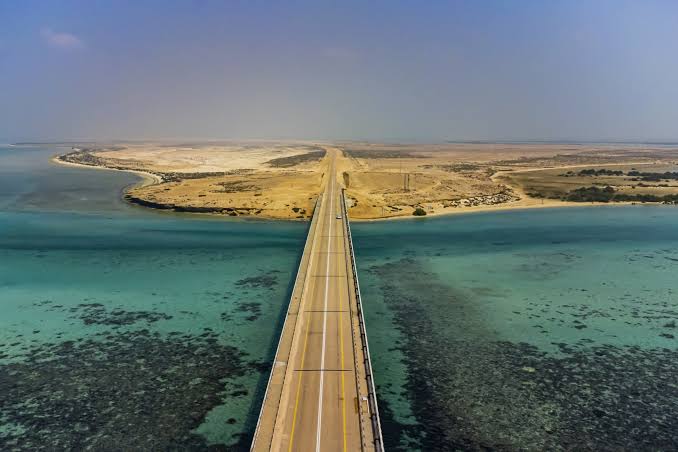
In a move that blends bold engineering with deep historical symbolism, Egypt and Saudi Arabia are officially ready to build a $4 billion bridge that will physically connect Africa and Asia across the Red Sea.
Dubbed the “Moses Bridge” by the public—though officially proposed to bear the name of Saudi Arabia’s King Salman bin Abdulaziz—the structure will span the Strait of Tiran, linking Ras Hamid in Saudi Arabia to Sharm El-Sheikh in Egypt.
Though first announced back in 2016 by King Salman himself, the massive project has now cleared one of its biggest hurdles: planning. Egypt’s Transport Minister, Kamel al-Wazir, confirmed that all preliminary work is done. “We have now completed the planning for the bridge between Egypt and Saudi Arabia and are ready to implement it at any time—whether as a bridge or a tunnel,” he said in a recent update.
That readiness marks a significant leap forward for a vision that’s been floating around in diplomatic circles since as far back as 1988. Back then, ideas of a Red Sea crossing were largely sidelined by political uncertainty. Today, the bridge finally feels real—and potentially transformative.
More Than Just Steel and Concrete
This isn’t just about infrastructure. This bridge will rewrite the region’s physical and economic map. Once completed, it will offer a direct, overland connection between two continents—a move expected to supercharge tourism, trade, and transport across the Red Sea corridor.
Currently, travel and cargo movement between the two countries rely heavily on maritime operations, managed by the Arab Bridge Maritime Company. The bridge could dramatically streamline that flow, creating new economic lifelines and logistical ease.
Also, read: Ethiopia’s Hasset Dereje, Makes History as Miss World Africa 2025 At 19-year-old
But the timing and placement of this bridge also align with Saudi Arabia’s bigger, shinier ambition—NEOM, the $500 billion mega-city that’s being built near the Kingdom’s northwest edge. The Moses Bridge would serve as a strategic artery to this high-tech metropolis, feeding its future with travelers, talent, and opportunity.
A Spiritual Route Reimagined
Perhaps one of the most culturally significant aspects of this bridge is its potential to support pilgrimage routes. With Mecca just hours away by road from Ras Hamid, the bridge could become a vital passageway for religious travelers—possibly serving over a million pilgrims annually. It’s a powerful nod to the deeply spiritual bond between both nations and the broader Muslim world.
The nickname “Moses Bridge” is more than poetic—it’s layered in meaning. This stretch of sea is believed, in biblical tradition, to be close to where Moses led the Israelites across the parted Red Sea. Now, centuries later, this very location will be bridged by one of the most ambitious construction projects in the region’s history.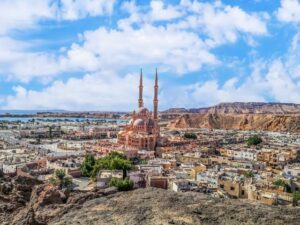
A Vision Bigger Than Politics
While NEOM continues to face global scrutiny over environmental concerns and human rights questions, the Moses Bridge appears to offer a more grounded vision of progress—one that reflects cooperation, continuity, and connection. It’s a rare kind of project, where geopolitics, religious heritage, and economic strategy all intersect in a single, sweeping gesture.
Whether this bridge ultimately becomes a steel icon of 21st-century diplomacy or simply a much-needed transport route, one thing is clear: Africa and Asia are about to get a little closer.

