
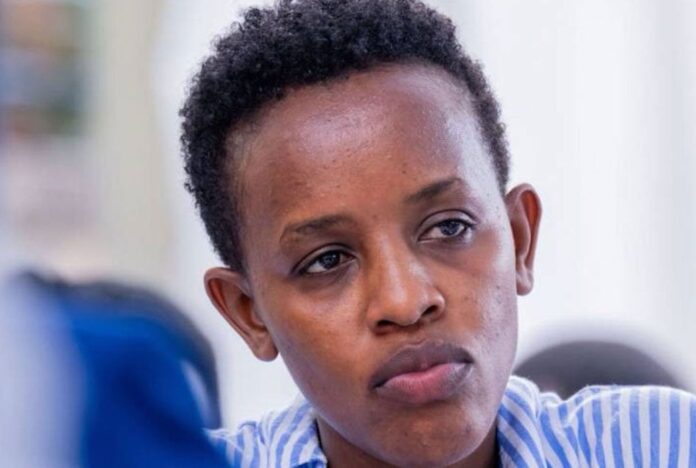
In a harrowing account that is sending shockwaves across East Africa, Ugandan activist Agather Atuhaire has accused Tanzanian authorities of subjecting her to rape and torture while she was held incommunicado earlier this month.
Speaking to the BBC after her release, Atuhaire said she was blindfolded, beaten, violently stripped, and sexually assaulted by men in plain clothes while detained in Tanzania. Her fellow activist, prominent Kenyan photojournalist Boniface Mwangi, was also detained and alleges that he too was tortured and threatened with genital mutilation.
Atuhaire, the executive director of Uganda’s Agora Centre for Research, said she had traveled to Tanzania to support opposition leader Tundu Lissu, who was facing treason charges in court. Though allowed into the country, both she and Mwangi were barred from attending the trial, detained, and eventually disappeared from public view—setting off an outcry from regional rights groups and international observers.
“The pain was too much,” Atuhaire told the BBC, showing a scar on her wrist she said came from handcuffs. Her voice broke as she recalled screaming during the assault—so loudly that her attackers reportedly had to cover her mouth. “I was completely helpless,” she said. “They took everything from me in that moment.”
The Tanzanian government has yet to issue a public comment on the allegations, even as international condemnation grows. The U.S. State Department’s Bureau of African Affairs, which previously honored Atuhaire in 2024 with an International Women of Courage award, called the reports deeply troubling and demanded an immediate investigation.
“We call for an immediate and full investigation into the allegations of human rights abuses,” the department said in a statement on X. “We urge all countries in the region to hold to account those responsible for violating human rights, including torture.”
Mwangi, in a separate post on X, shared his own disturbing account of their detention. “We had been tortured,” he wrote. “We were told to strip naked and to go bathe. We couldn’t walk and were told to crawl and wash off the blood.” He added that any attempt to speak to Atuhaire during their captivity was met with violence.
Also, read: Miss Namibia, Selma Kamanya Wins Africa’s Continental Title, Advances to Miss World Quarterfinals
Their ordeal appears to have begun on Monday when Tanzanian security forces detained them without charge. On the same day, President Samia Suluhu Hassan made a speech warning foreign activists not to “meddle” in Tanzania’s internal politics or cause “chaos.”
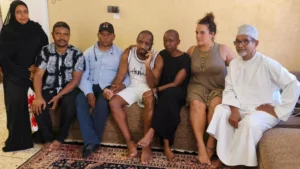
By Thursday night, both activists were mysteriously found dumped near their respective borders—Mwangi on the Kenyan side, Atuhaire on the Ugandan side. Each was physically bruised and visibly shaken. Uganda’s High Commissioner to Tanzania, Fred Mwesigye, confirmed that Atuhaire had returned safely and was “warmly received” by her family, though the trauma of her experience remains far from over.
Civil society groups across East Africa are now demanding accountability, urging Tanzania to uphold its commitments under regional human rights treaties. Several organizations have also called for medical and psychological support for both activists, who are expected to undergo further assessments in the coming days.
“This wasn’t just a violation of their individual rights—it was an attack on the very principles of human dignity and justice,” said a statement from Kenya’s Civil Liberties Network.
The silence from Tanzanian authorities has only deepened regional concerns, with many asking whether this could signal a growing crackdown on dissent that extends beyond its own borders.
For now, Agather Atuhaire and Boniface Mwangi are safe—but their stories raise troubling questions about how East Africa treats those who dare to speak truth to power.

