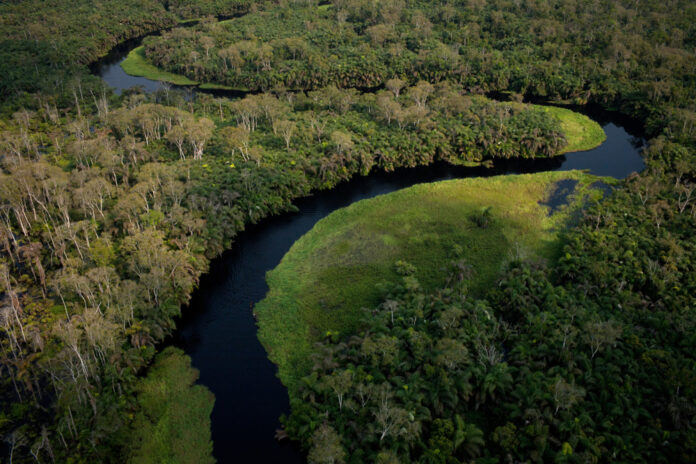
A new World Bank report has pulled back the curtain on what could be one of Africa’s greatest untapped treasures. Deep within the heart of Central Africa lies the Congo Basin, a lush expanse of tropical forest so vast it stretches across six nations. Yet, what’s truly remarkable isn’t just its natural beauty or ecological importance, but its staggering hidden value — estimated at over $23 trillion.
For decades, the Congo Basin has been spoken of in terms of conservation and climate. But this new study reframes it as an economic powerhouse waiting to be responsibly harnessed. It positions the region not only as the world’s second-largest rainforest after the Amazon but as Africa’s biggest chance to build a green economy that could redefine global sustainability and local prosperity.
The $23 Trillion Revelation
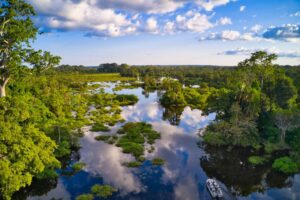
According to the World Bank–led report titled Congo Basin Forest Ecosystem Accounts, the value of the Basin’s ecosystem services — including carbon capture, water regulation, and biodiversity — has nearly doubled over the past two decades. Between 2000 and 2020, the total forest asset value surged from around $11.4 trillion to approximately $23.2 trillion. Yet, local governments collectively captured just about $8 billion in domestic benefits in 2020, a mere fraction of the Basin’s full worth.
The figures are staggering, but they also highlight a profound truth: Africa sits atop a mountain of green wealth that the world depends on, yet barely rewards. The Congo Basin absorbs billions of tons of carbon annually, playing a vital role in regulating global temperatures. And still, its contribution to the global climate fight remains largely unmonetized.
The report’s findings arrive at a time when conversations about climate justice, carbon markets, and sustainable investment are reaching fever pitch. It urges world leaders, investors, and African governments to move beyond symbolic pledges and recognize the Congo Basin’s hidden value as both an ecological necessity and an economic opportunity.
Also, read: Africa Safari Tours from Nigeria: How Nigerians Can Book the Wild Experience
The Uneven Reality Across the Basin
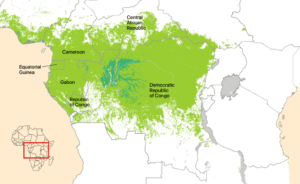
Stretching across the Democratic Republic of Congo, Republic of Congo, Gabon, Cameroon, Equatorial Guinea, and the Central African Republic, the Basin’s story is far from uniform. Gabon and the Republic of Congo have made notable strides, tightening forest governance and integrating natural capital into national planning. Cameroon and Equatorial Guinea are catching up, experimenting with sustainable development models and carbon finance. But the DRC and the Central African Republic remain constrained by weak infrastructure, informal industries, and limited data systems.
In many parts of the region, forests are still seen primarily as raw resources — cut, mined, or cleared to meet short-term economic needs. This short-sightedness not only erodes biodiversity but also chips away at the very foundation of Africa’s green wealth. It’s a paradox that the same forests sustaining the world’s climate are managed under frameworks that fail to capture their full economic value.
The Promise of a Green Renaissance
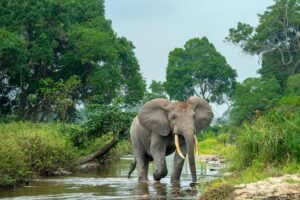
If managed wisely, the Congo Basin could become the cornerstone of Africa’s green growth revolution. Beyond conservation, it offers a blueprint for how environmental assets can power real economic transformation. Carbon markets could channel billions into local economies. Ecotourism could generate sustainable jobs. And industries centered on non-timber forest products — from medicinal plants to natural oils — could thrive under responsible management.
But unlocking this Congo Basin hidden value requires a seismic shift in governance. Transparency, accurate data, and fair value distribution must replace opaque systems that enrich a few at the expense of many. The World Bank’s call to “measure what we manage” is more than a slogan; it’s an urgent roadmap for a future where Africa owns and benefits from its natural wealth.
For too long, African nations have watched their resources extracted and exported with minimal returns. The Congo Basin’s forests offer a chance to rewrite that story — to align ecological preservation with financial empowerment. And perhaps, to prove that Africa’s most valuable exports need not come from beneath the soil, but from the thriving green above it.

