
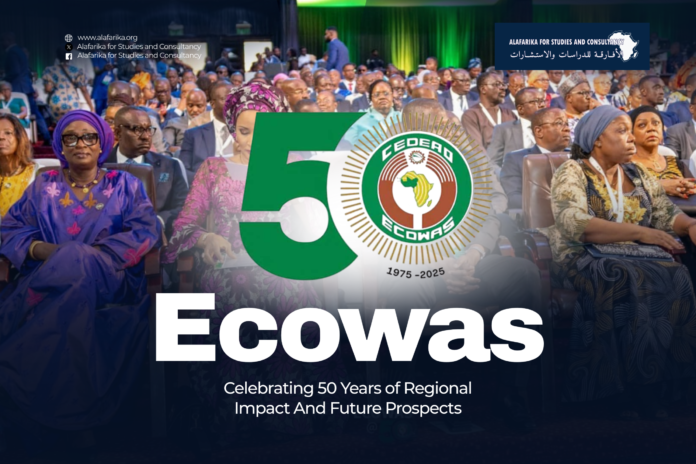
What should have been a golden jubilee celebration for West Africa’s premier regional bloc is now unfolding under the cloud of unprecedented internal division and regional instability. Leaders of the Economic Community of West African States (ECOWAS) are gathering in Lagos this Wednesday to mark the organization’s 50th anniversary—but not without a sober acknowledgment of the immense challenges ECOWAS currently faces.
This year’s milestone comes on the heels of a particularly turbulent period for the bloc. Three countries—Mali, Burkina Faso, and Niger—walked away from ECOWAS earlier this year, each led by military juntas that have shown increasing defiance toward traditional diplomatic norms. Their exit not only weakens the organization numerically but strikes at the very ideals it was built upon: regional solidarity, democracy, and peace.
For many observers, the timing of this anniversary couldn’t be more telling.
“Fifty years on, ECOWAS should be celebrating growth, strength, and unity,” said Dr. Kwesi Aning of the Kofi Annan International Peacekeeping Training Center. “Instead, we are seeing a retreat from those principles. The departure of these nations reflects a troubling erosion in governance and the inability of ECOWAS leadership to keep its house in order.”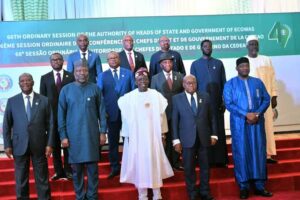
The disintegration has been further exacerbated by growing insecurity across the region. Terrorist violence continues to surge—particularly in the Sahel and Lake Chad regions—where armed groups have seized on political instability and diplomatic rifts to expand their control. Benin and Nigeria, once considered buffers to the unrest, have in recent months been increasingly targeted by extremist factions.
According to the Global Terrorism Index released in March, the Sahel was once again the world’s deadliest region for terrorism in 2024, accounting for more than half of all deaths globally linked to terrorist activity. These sobering statistics underline the pressing need for ECOWAS to recalibrate its security strategy and regain its footing.
Wednesday’s gathering in Lagos will feature Nigerian President Bola Ahmed Tinubu—who currently serves as ECOWAS chair—and retired General Yakubu Gowon, a founding figure of the organization. But even as Nigeria hosts this symbolic event, the country’s own internal issues cast a long shadow.
Also, read: Kenyan President Apologizes to Tanzania After Activist Deportations Spark Outrage
A report from SBM Intelligence recently described Nigeria’s leadership as compromised by a combination of economic hardship, persistent insecurity from Boko Haram, political volatility, and systemic governance failures. The report suggests that Nigeria, once poised to be a beacon for regional leadership, now struggles to live up to its potential.
This poses a serious dilemma for ECOWAS: how does a fractured and increasingly fragile bloc rally itself to face mounting external threats while its members are pulling in different directions?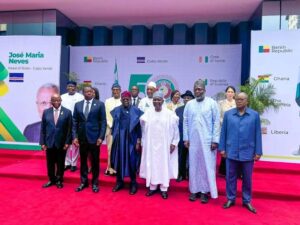
Still, some hope remains that this anniversary could serve as a turning point—or at the very least, a moment of reflection. Behind closed doors, leaders are expected to address the implications of mounting trade tariffs, worsening economic conditions, and dwindling foreign assistance—especially after recent aid cuts from the United States.
Whether these conversations translate into meaningful action is yet to be seen. But one thing is clear: ECOWAS, once a symbol of regional strength, now finds itself at a crossroads. And what its leaders decide next could shape the region for decades to come.
As Dr. Aning put it bluntly, “This isn’t just a test for ECOWAS. It’s a test of whether the dream of a united West Africa still has a future.”

