
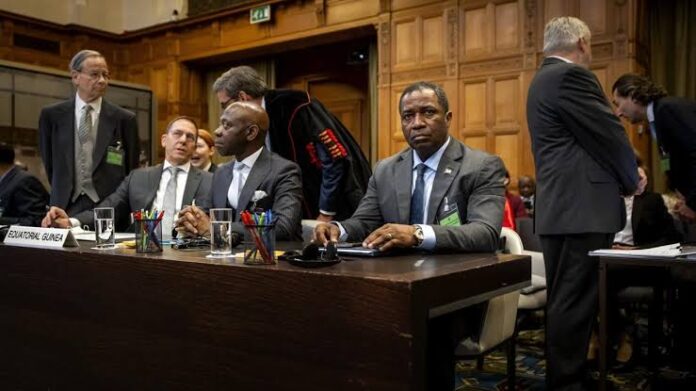
In a landmark judgment that could reshape maritime dynamics in the Gulf of Guinea, the International Court of Justice (ICJ) has ruled that Equatorial Guinea holds rightful sovereignty over three small but strategically significant islands long disputed with Gabon.
The case, which had simmered between the Central African neighbors for decades, reached a legal climax on Monday at The Hague. In its ruling, the ICJ awarded control of Mbanié, Cocotiers, and Conga islands to Equatorial Guinea, putting to rest years of contention over a sliver of land surrounded by potentially oil-rich waters.
At the heart of the dispute was the status of Mbanié, a 74-acre island located just off the Atlantic coast of Gabon. Though uninhabited, the island has held outsized importance due to speculation about oil reserves beneath surrounding waters—a factor that kept tensions quietly brewing for years even as the two countries pursued regional diplomacy.
Gabon had based its claim on a 1974 agreement it interpreted as recognition of its sovereignty. But the court found otherwise. In its judgement, the ICJ declared that the agreement Gabon cited lacked the legal substance required to be binding under international law.
“The title that has the force of law… is the title held by the Kingdom of Spain on 12 October 1968, to which the Republic of Equatorial Guinea succeeded,” the court noted, referencing colonial-era documentation that ultimately tipped the scales in Equatorial Guinea’s favor.
Also, read: South Africa Pursues Appeal Against Nigerian Pastor Acquitted of Rape Amid Controversy Over Exit
Interestingly, back in 1972—long before any court proceedings—Gabon’s military had already expelled Equatorial Guinea’s presence from Mbanié and stationed its troops there. Since then, the island has remained under Gabonese military occupation, even as both nations continued to develop diplomatic and economic ties.
The ICJ has now ordered Gabon to withdraw its troops from Mbanié, marking not only a shift in territorial control but a test of diplomatic maturity for both nations. Neither government has publicly resisted the court’s decision, and early indications suggest that both are prepared to accept the ruling without escalation.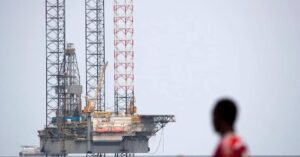
The ruling comes at a time when oil-producing nations in Central Africa are revisiting their resource strategies amid a changing global energy landscape. For Equatorial Guinea, gaining control of these islands might signal fresh economic prospects—especially if offshore exploration confirms long-held assumptions about petroleum deposits in the surrounding seabed.
While the islands themselves may be devoid of human settlement, they’ve long carried symbolic and economic weight. And now, with international law squarely on its side, Equatorial Guinea looks set to enter a new phase of opportunity in the Gulf of Guinea—this time, with the map officially in its favor.

