

The border town of Zalambessa became the stage for an emotional and long-awaited reunion on Sunday, as hundreds of Ethiopians and Eritreans embraced across a frontier that has remained closed for much of the last five years. Laughter, tears, and chants of “Enough of the past, let’s sit at the table of peace” echoed through the hills as relatives separated by war and politics finally met face to face.
The makeshift gathering wasn’t part of any grand diplomatic gesture. Rather, it was a grassroots initiative led by local elders, activists, and religious leaders — a people’s peace, forged not in presidential palaces but through shared pain and hope.
A Symbolic Crossing of Hearts
The town of Zalambessa, once a quiet connector between Ethiopia’s Tigray region and Eritrea, has been scarred by years of conflict. The eruption of the Tigray war in 2020 led to a total shutdown of the border and the militarization of both sides. Families who had once lived as neighbors were suddenly divided by trenches, checkpoints, and silence.
Sunday’s gathering, held without formal sanction but reportedly with quiet blessings from Tigrayan and Eritrean officials, marked the first cross-border event of its kind since the war. Elders from both sides presided over the meeting, urging unity and forgiveness.
“I am confident that the peace and reconciliation we started today will continue to grow,” said Nebiat Woldegergis, who traveled from Senafe in Eritrea to attend. His sentiments were echoed by many who see the reopening of the border — even unofficially — as a first step toward healing.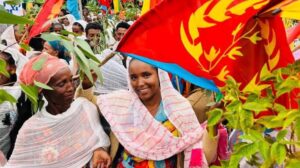
Among those present was Amleset, a mother who had lived for five years in a refugee camp in Adigrat after fleeing the fighting. On Sunday, she returned to Zalambessa for the first time in half a decade.
“I came to see my locked house,” she said. “From now on, I will return with my children and continue living on my land.”
Also, read: Three Fans Die in Stadium Fall During Football Match in Algeria
Stories like Amleset’s are common in this border zone. More than 55,000 people remain displaced in makeshift shelters in and around Adigrat, living without stable access to healthcare, water, or schools. While the end of active fighting in 2022 brought relief, most families still face major hurdles before they can resume anything close to a normal life.
The physical scars of war are everywhere. Electricity, phone lines, and banks remain non-functional. Schools and health clinics are in disrepair. Restoring these vital services will require more than just goodwill, it will take sustained investment from both governments and international partners.
Trade and Ties Reignited
Despite the challenges, the reunion has already sparked a revival of local trade. People from both sides of the border are once again exchanging goods, some using Ethiopian birr, others Eritrean nakfa. For these communities, cross-border commerce is more than economic activity; it’s a cultural link and a shared survival strategy.
“What we need is peace,” said one Tigrayan woman at the gathering. “Their siblings are here, ours are there. We want to eat, trade, and attend weddings like before.”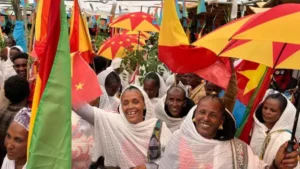
The sentiment was shared by others who remember when the border last opened, briefly, in 2018 after Ethiopian Prime Minister Abiy Ahmed signed a historic peace accord with Eritrean President Isaias Afwerki — a deal that helped earn Abiy the Nobel Peace Prize. But hopes of lasting peace were shattered by the Tigray conflict just two years later.
Sunday’s reunion may not yet signal a thaw between the central governments of Ethiopia and Eritrea, whose relationship remains tense. But for the people of Zalambessa and the surrounding areas, it was a chance to reclaim something more important than politics — a sense of shared humanity.
Both communities vowed to keep the momentum going. “Peace and reconciliation has begun,” one community leader declared. “Now is the time to return, to rebuild, to forgive.”
But even in celebration, the wounds of war remain visible. Many families returned to find their homes looted or destroyed. Services are lacking. And there is still no official word on whether the border will stay open in any formal capacity.
Still, for a few hours on a quiet Sunday afternoon, fences were crossed, old songs were sung, and hope was given room to breathe. And in this corner of the Horn of Africa, that alone felt like a miracle.

