
A group of 59 white South Africans touched down at Dulles International Airport this week, becoming the first officially processed under President Donald Trump’s renewed refugee policy, one that prioritizes what his administration calls “overlooked victims of racial violence.”
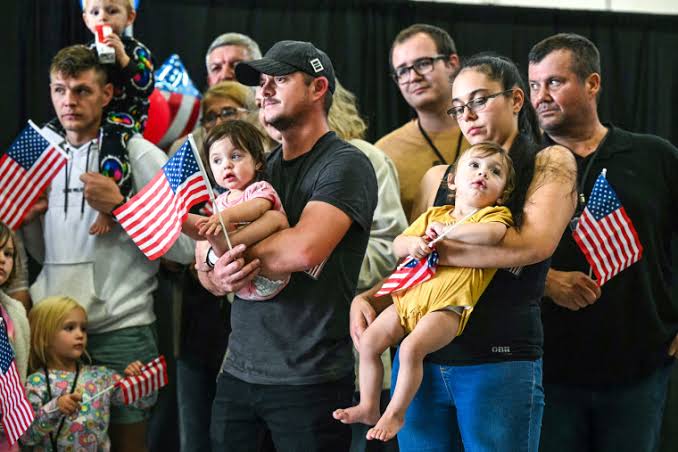
The arrivals, mainly Afrikaner families, were greeted by U.S. immigration officials with a warm welcome. Small American flags were handed out to children, and the airport’s arrival area was adorned with red, white, and blue decorations, marking what one official called “the beginning of a safer chapter for these families.”
This fast-tracked refugee process, reactivated under Trump’s second term in office, has sparked both celebration and criticism. The President defended the decision at a press briefing on Tuesday, saying the group was fleeing “racially targeted violence” in South Africa and should be granted protection.
“There’s a quiet genocide happening,” Trump said. “White farmers, hardworking people, are being killed and pushed off their land. We’re not turning a blind eye to that anymore.”
His comments echo longstanding claims from some corners of right-wing media, and even public figures like Elon Musk, that white South Africans—particularly landowners—face systemic violence. Critics, however, say the claims are exaggerated and politically motivated.
Also, read: Ghana Moves to Resolve $75 Million Gas Debt Owed to Nigeria
South African President Cyril Ramaphosa quickly responded, stating, “There is no genocide taking place. We do not deny that there are challenges in our country, but we reject the narrative being pushed by the U.S. government. These individuals are not political refugees.”
The United Nations refugee agency (UNHCR), which typically oversees and vets international asylum cases, confirmed that it was not involved in the screening of this group—a detail raising concerns about transparency. The White House, however, defended the move, claiming it was “an urgent humanitarian response.”
While the Trump administration has revived a pathway for this specific group, thousands of refugees from war-torn nations including Afghanistan, Sudan, and Syria, remain stuck in processing limbo. Human rights organizations have blasted the decision as racially biased and unjust.
“This isn’t just about policy, it’s about priorities,” said one Human Rights Watch official. “The same administration that’s blocking Black and brown refugees fleeing war is opening the doors for white asylum seekers under questionable claims.”
The controversy is tied closely to South Africa’s broader debate over land reform. Since the end of apartheid in 1994, the country has struggled to address vast land inequality. While Black South Africans make up over 90% of the population, they own just 4% of private farmland, according to a 2017 report. A recent law allowing land expropriation without compensation has deepened tensions, though the government insists no land has been seized under the measure so far.
As the 59 South African refugees settle into their new lives in the United States, their arrival opens a broader conversation—one not just about asylum policy, but about race, narrative, and whose suffering gets a response.
For now, the Trump administration has made its position clear: white South African farmers are welcome, and their resettlement is a priority.

