
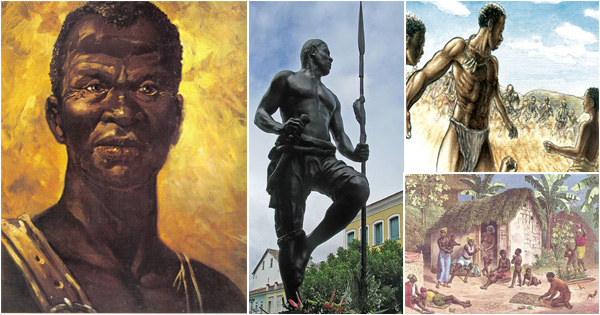
Ganga Zumba, also known as Ganazumba or Nganga Zumbi, was a legendary figure in the history of Brazil.
Ganga Zumba was an African royal who lived during the 17th century. He was born around 1630 in the Kingdom of Kongo, which is present-day Angola. His mother, Aqualtune, was a warrior princess and a member of the royal family.
He was a runaway slave who founded his own African state in the north-eastern region of Brazil in the late 17th century.
Ganga Zumba was a leader of the Quilombo dos Palmares, a community of runaway slaves who resisted Portuguese colonial rule for decades.
Ganga Zumba was transported to Brazil, where he was sold to a plantation owner in the state of Pernambuco.
However, he managed to escape and flee to the Serra da Barriga mountain range, which was located in what is now the state of Alagoas. There, he established a settlement for runaway slaves called Quilombo dos Palmares.
This article will explore the life of Ganga Zumba, the Quilombo dos Palmares, and their struggle for freedom.
Who was Ganga Zumba
Ganga Zumba was born in the late 16th century in the kingdom of Kongo, in present-day Angola. He was captured by Portuguese slave traders and brought to Brazil, where he was sold into slavery.
Ganga Zumba was owned by a sugar plantation owner in the captaincy of Pernambuco, in northeastern Brazil.
He was known for his intelligence and leadership skills, and his owner put him in charge of other slaves on the plantation.
Ganga Zumba was not content with his life as a slave, and he dreamed of freedom. He heard about the Quilombo dos Palmares, a community of runaway slaves who had established a settlement in the Serra da Barriga, a mountainous region in the present-day state of Alagoas.
Ganga Zumba decided to join the Quilombo and made the dangerous journey through the forests to reach the settlement.
Ganga Zumba quickly became a leader in the Quilombo dos Palmares. He was respected by the other members of the community for his wisdom and strength, and he was soon elected as the king of the Quilombo.
Ganga Zumba was not just a leader, he was also a visionary. He believed that the Quilombo could be a model society, where Africans could live freely and independently, and he set out to make this vision a reality.
The settlement grew over time and became a refuge for thousands of runaway slaves. Ganga Zumba was a respected leader who was known for his intelligence and strategic thinking.
He was able to negotiate with Portuguese authorities and secure a peace treaty that recognized the independence of Quilombo dos Palmares.
Under the terms of the treaty, Quilombo dos Palmares was allowed to exist as an independent state, and Ganga Zumba was recognized as its king.
The settlement of Quilombo dos Palmares was a remarkable society that stood as a symbol of resistance against slavery and oppression.
It was a place where Africans could live free of the violence and cruelty of slavery, and it was a model of what an independent African state could be.
The people of Quilombo dos Palmares practiced a form of agriculture that was sustainable and self-sufficient. They also developed a sophisticated system of government and justice.
However, the peace did not last long. Some members of Quilombo dos Palmares were not satisfied with the terms of the treaty and wanted to continue the fight against the Portuguese. Ganga Zumba was seen as too conciliatory by these rebels, who were led by his nephew, Zumbi.
In 1678, Zumbi staged a coup and overthrew Ganga Zumba. He took over as the leader of Quilombo dos Palmares and continued the resistance against the Portuguese authorities.
Zumbi was a skilled warrior and a brilliant strategist, and he was able to repel numerous attacks by the Portuguese army.
However, the Portuguese eventually succeeded in destroying Quilombo dos Palmares. In 1694, they launched a massive attack on the settlement, using thousands of soldiers and slaves.
The battle lasted for months, and the Quilombo was eventually overrun. Zumbi was captured and killed, and the survivors were sold back into slavery.
The legacy of Ganga Zumba and Quilombo dos Palmares is significant. They have inspired countless people around the world to fight for freedom and justice.
The story of the Quilombo has been told in books, movies, and music, and it continues to inspire artists and activists.
In Brazil, the memory of Quilombo dos Palmares is celebrated every year on November 20th, which is known as Black Consciousness Day.
This day is a national holiday in Brazil, and it is a time to remember the struggle of African people for freedom and equality.
The Quilombo dos Palmares
As mentioned above, Quilombo dos Palmares was a community of runaway slaves who had established a settlement in the Serra da Barriga in the late 16th century.
The Quilombo was named after the palmares, a type of palm tree that was common in the region. The settlement grew over time, as more and more runaway slaves joined the community.
The Quilombo dos Palmares was a remarkable society. It was a place where Africans could live free of the oppression and violence of slavery.
The community was self-sufficient, and the members worked together to grow crops, build houses, and raise families. The Quilombo had its own laws, customs, and traditions, and it was a haven for people who had been torn from their homes and families.
The Quilombo dos Palmares was also a thorn in the side of the Portuguese colonial authorities. The Portuguese saw the Quilombo as a threat to their authority, and they made repeated attempts to destroy the settlement.
The Quilombo was defended by a skilled army of warriors, who were trained in the art of guerilla warfare. The warriors of the Quilombo were led by Ganga Zumba and his nephew, Zumbi.
Ganga Zumba, resided in a palace with his three wives, ministers, and loyal subjects who all looked up to him as a king.
They were well known for their valiant defence against Portuguese forces, and capoeira played a key role in their plan of attack.
However, a devastating attack by Portuguese forces in 1678 left Ganga Zumba wounded and resulted in the kidnapping of some of his kids.
Ganga Zumba requested peace in a letter to the governor of Pernambuco in an effort to stop additional carnage.
On the condition that they relocate to Cuca Valley, which was closer to the colonial government’s watchful eye, the governor consented to release Ganga Zumba and his supporters. In addition, they had to give back all slaves of African descent who weren’t Palmares natives.
When one of his more prominent leaders, Zumbi, who opposed the relocation, allegedly poisoned Ganga Zumba, he had already agreed to the requirements and was in the midst of moving his troops to Cuca Valley.
Ganga Zumba’s leadership came to an end as a result of this tragic incident, but his legacy endured as a stand-in for those who oppose slavery and persecution.
The struggle for freedom
The Portuguese colonial authorities were determined to crush the Quilombo dos Palmares. They launched a series of attacks on the settlement, but they were unable to penetrate the defenses of the Quilombo.
The warriors of the Quilombo were fierce and determined, and they fought bravely to defend their community.
The Portuguese tried a different approach. They offered Ganga Zumba a deal. They promised him that if he surrendered, they would grant him and his followers amnesty and allow them to establish their own independent state.
The struggle for freedom continued even after Ganga Zumba was captured and killed by the Portuguese.
However, the Portuguese eventually succeeded in destroying the Quilombo dos Palmares. In 1694, they launched a massive attack on the settlement, using thousands of soldiers and slaves.
The battle lasted for months, and the Quilombo was eventually overrun. Zumbi was captured and killed, and the survivors were sold back into slavery.
The legacy of Ganga Zumba and the Quilombo dos Palmares
The Quilombo dos Palmares was a remarkable society that stood as a symbol of resistance against slavery and oppression.
It was a place where Africans could live free of the violence and cruelty of slavery, and it was a model of what an independent African state could be.
The legacy of Ganga Zumba and the Quilombo dos Palmares lives on today. They have inspired countless people around the world to fight for freedom and justice. The story of the Quilombo has been told in books, movies, and music, and it continues to inspire artists and activists.
Conclusion
In conclusion, Ganga Zumba’s legacy as a leader and freedom fighter is a testament to the resilience and strength of the human spirit.
His vision of an independent African state where people could live free of oppression and violence inspired the founding of the Quilombo dos Palmares, a remarkable community of runaway slaves who fought for their freedom.
Although the Quilombo was eventually destroyed, its legacy lives on as a symbol of resistance against oppression and a reminder that the fight for freedom and justice must continue.
Ganga Zumba’s story is an important reminder of the power of human courage and determination, and it continues to inspire people around the world to stand up against injustice and fight for a better future.
Source
https://talkafricana.com/ganga-zumba-the-runaway-slave-who-founded-his-own-african-state-in-brazil/

