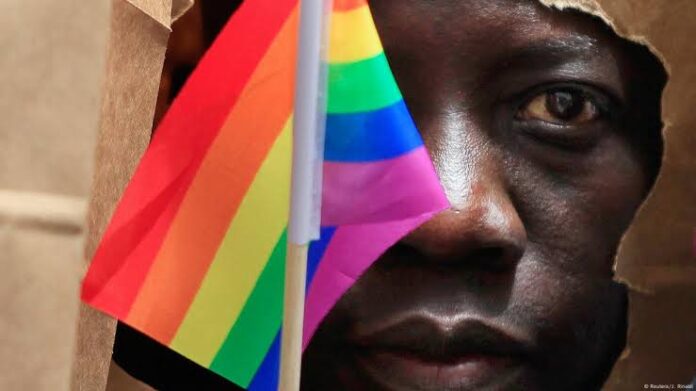
Lawmakers in Ghana have once again tabled an anti-LGBTQ+ bill that previously sparked widespread condemnation from human rights groups and the international community. The bill, which was initially passed by parliament last year but never enacted, has been reintroduced despite concerns over its economic and human rights implications.
The delay in signing the bill into law under former President Nana Akufo-Addo was attributed to a pending Supreme Court challenge, which was ultimately dismissed in December. With Akufo-Addo no longer in office following his electoral defeat, the bill has resurfaced under the administration of President John Dramani Mahama, who took office in January.
While Mahama has expressed his commitment to passing the legislation, he emphasized last week that the government should be the one to formally reintroduce it, rather than individual members of parliament. However, opposition lawmaker John Ntim Fordjour and nine other MPs took the initiative to reintroduce the bill last week, pushing back against the president’s stance.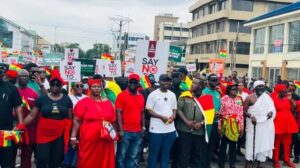
“He must be reminded that parliament is an independent institution and that the executive cannot dictate to parliament what it must do,” Fordjour stated, reinforcing the legislature’s autonomy in the matter.
A Bill with Far-Reaching Consequences
Currently, Ghana’s legal system already criminalizes same-sex relationships, with a maximum penalty of three years in prison. However, the proposed bill seeks to impose harsher punishments, including up to five years in prison for individuals or organizations that are found to be “willfully promoting, sponsoring, or supporting LGBTQ+ activities.” Supporters argue that the legislation is intended to protect vulnerable groups, particularly children, from exploitation.
Also, read: Mahama: Declassified US Documents Confirm CIA’s Role in Nkrumah’s 1966 Overthrow
Despite these justifications, critics warn that the bill could have serious economic consequences for Ghana. The Ministry of Finance previously cautioned that passing the law could jeopardize $3.8 billion in World Bank funding and potentially derail the $3 billion International Monetary Fund (IMF) bailout program that was agreed upon in 2023 to stabilize Ghana’s struggling economy.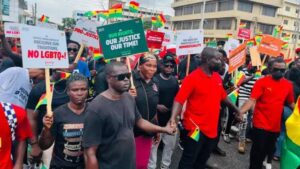
The financial risks are not merely hypothetical. In 2023, the World Bank cut off new funding to Uganda after it enacted similar anti-LGBTQ+ legislation, signaling the potential repercussions Ghana could face should the bill become law.
Human Rights Backlash
The legislation has already drawn sharp criticism from global human rights organizations, with the United Nations calling it “profoundly disturbing.” Ghana has historically been regarded as one of Africa’s more progressive nations in terms of human rights, but the reintroduction of this bill threatens to tarnish that reputation.
With Ghana still recovering from its worst economic downturn in decades, the decision to prioritize such a controversial bill over pressing economic and developmental issues is expected to remain a hotly debated topic in the coming weeks. Whether the government will intervene or allow parliament to push forward with the legislation remains to be seen.

