
In a world that’s rapidly changing, one quiet but powerful shift is happening in homes and hearts across the globe: people are having fewer children—not because they want to, but because they feel they can’t.
This week, a groundbreaking report from the United Nations Population Fund (UNFPA) has put a global spotlight on a trend once thought to be the concern of high-income nations alone. The report warns of an “unprecedented decline” in fertility rates, not just due to personal choice, but because of rising economic pressures, time poverty, and the search for stable relationships, all realities deeply familiar to millions of Africans.
From Lagos to Johannesburg, Nairobi to Casablanca, families are wrestling with the same question: Can we afford another child? And increasingly, the answer is no.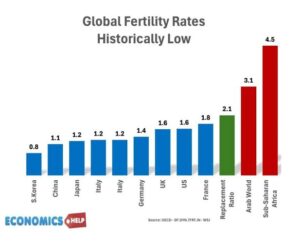
The report, which surveyed 14,000 people across 14 countries—including Nigeria, South Africa, Morocco, and India—found that 1 in 5 people either haven’t had or don’t expect to have the number of children they desire. In some countries, nearly 60% of respondents cited finances as the main barrier to expanding their families. In Nigeria, 14% of people also cited infertility as a factor—higher than the global average of 12%.
For many in Africa’s urban centers, the cost of parenting has ballooned far beyond food and clothing. School fees, transportation, extracurriculars, healthcare—all essentials for raising a child in today’s world—are increasingly out of reach for middle-class and working-class families. What used to be a shared community effort has slowly morphed into a lonely financial burden.
Namrata Nangia, a pharmaceutical worker in Mumbai, spoke for millions when she said, “We just used to go to school, nothing extracurricular, but now you have to send your kid to swimming, to drawing… It’s overwhelming.”
It’s a sentiment echoed across Africa, where aspirations for a better future often collide with the harsh realities of urban survival. In Lagos, a parent commuting three hours each day might return home too exhausted to fully engage with their child, adding emotional guilt to an already stretched existence.
Also, read: Israel Adesanya Earns His Spot in UFC Immortality with Hall of Fame Induction
According to Dr. Natalia Kanem, head of the UNFPA, this is not just a numbers issue—it’s a reflection of unmet dreams. “Most people surveyed want two or more children,” she noted. “Fertility rates are falling because many feel unable to create the families they want. And that is the real crisis.”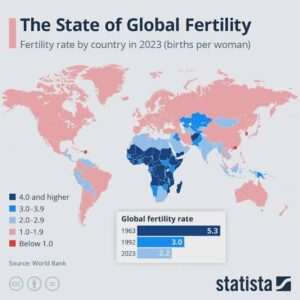
This new stance marks a shift for the UNFPA, which has traditionally focused on reducing high fertility and promoting access to contraception in regions like sub-Saharan Africa. But now, with fertility rates dropping globally—even in countries that once feared overpopulation—the conversation is changing.
And the warnings are clear: panic-driven policies aimed at pushing women to have more children or clamping down on migration can quickly spiral into nationalism and gender conservatism. “We’ve seen how fears of declining birthrates have been used to justify dangerous political responses,” says Prof Stuart Gietel-Basten, a leading demographer.
For Africa, the message is layered. While some countries on the continent still face high birthrates, urban regions and emerging middle classes are already reflecting the global shift. The challenge now is to ensure families have real choices—not just between one child or two, but between exhaustion and balance, between financial struggle and support.
As Namrata wisely puts it, “So, we’re just going to focus on one.”
Her words are not just personal—they’re part of a global chorus, singing a song of hope, limitation, and the deep desire for a life that can hold more than just survival.

