

The Kenyan government said Monday that Kenya would launch its first operational satellite next week, a historic achievement for the country’s space program.
Taifa-1, or a state in Swahili, is scheduled to launch April 10 aboard a SpaceX Falcon 9 rocket from Vandenberg Space Force Base in California.
“The mission is an important milestone,” the defense ministry and Kenya Space Agency said in a joint statement, adding that it would contribute significantly to the country’s “budding space economy”.

The statement said the observation satellite was “entirely designed and developed” by Kenyan engineers and will be used to provide data on agriculture and food security, among other things.
He added that the parts were tested and manufactured in cooperation with the Bulgarian aerospace industry.
Also, read; California legislator proposes ‘Ebony Alert’ bill to report missing Black children, young women
After five failed rainy seasons, the East African economic powerhouse Kenya is suffering from the worst drought in decades.
The launch of the satellite will give new impetus to scientific innovation and the development of space programs in African countries.
In 1998, Egypt became the first African country to send a satellite into space. In 2018, Kenya launched its first experimental nanosatellite from the International Space Station.
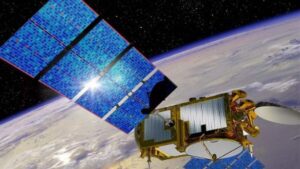
By 2022, at least 13 African countries will have manufactured 48 satellites, according to Space in Africa, a Nigeria-based company that tracks African space programs. These include Ethiopia, Angola, South Africa, Sudan and others.
More than 50 African satellites were launched in November 2022, according to Space in Africa, although none were launched from African soil.
In January, the Djibouti government announced a letter of intent with a Hong Kong-based company to build a $1 billion commercial spaceport that is expected to take five years to complete.

