
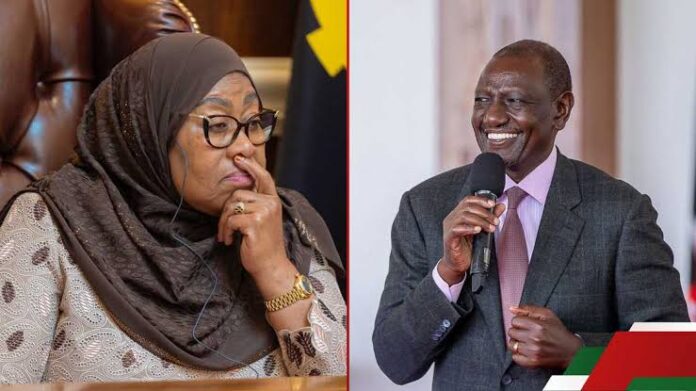
Kenya’s President William Ruto has publicly apologized to Tanzania following several days of escalating tension between the two East African neighbors—an olive branch that comes after a fierce diplomatic storm and online clashes triggered by the detention of regional activists.
Speaking with humility at a national prayer breakfast in Nairobi on Wednesday, President Ruto sought to calm the waters.
“To our neighbours from Tanzania, if we have wronged you in any way, forgive us,” he said. “If there is anything that Kenyans have done that is not right, we want to apologise.”
The president’s remarks came after Tanzanian lawmakers on Monday voiced strong disapproval of what they described as cyberbullying by Kenyan social media users targeting Tanzanian President Samia Suluhu Hassan. The backlash followed the controversial detention and deportation of two activists—Kenyan photojournalist Boniface Mwangi and Ugandan rights advocate Agather Atuhaire—who had traveled to Tanzania to attend the court hearing of opposition politician Tundu Lissu.
The activists allege they were detained without communication, tortured, and later dumped at the border by Tanzanian authorities—a move that drew sharp criticism from rights organizations and sparked public outrage across East Africa.
So far, Tanzanian officials have remained largely silent on the torture allegations. However, President Samia earlier warned that she would not permit foreign activists to “meddle” in the country’s internal matters or stir unrest. Kenya and Uganda both lodged formal protests, accusing Tanzania of obstructing consular access and mishandling the situation.
As news of the deportations spread, what began as political tension quickly morphed into a digital battleground. Young Kenyans—especially the vocal online community known as Gen Z—took to social media platforms to criticize the Tanzanian government’s actions, some directing their anger at President Samia personally.
In response, Tanzanian MPs condemned the online backlash, accusing Kenyans of overstepping diplomatic boundaries. Iringa Town MP Jesca Msambatavangu revealed that her WhatsApp inbox was flooded with messages after her number was circulated online.
Also, read: South Africa Mourns the Loss of Beloved Actor Presley Chweneyagae at 40
“I had to switch off my phone temporarily,” she said. Yet, she welcomed the exchange, calling on Kenyan youth to engage more constructively. “Let’s counter ideas with ideas,” she urged, even suggesting the creation of a cross-border WhatsApp group to foster dialogue and promising to hold a live session with Kenyans.
Despite Ruto’s apology, not everyone is ready to move on. Many young Kenyans, still deeply frustrated by recent events—including the government’s handling of anti-tax protests—greeted the president’s statement with skepticism. Some demanded accountability beyond words.
Ruto’s remarks were partially prompted by a message of reconciliation delivered at the event by visiting American preacher Rickey Allen Bolden, who called on leaders to prioritize healing and humility during moments of national and regional conflict.
As East Africa watches how this tension plays out, the president’s apology signals a step toward restoring calm. But with growing political awareness among the region’s youth and a hyperconnected digital landscape, reconciliation will take more than just polite words—it will demand honest conversation and mutual respect.
In the words of MP Msambatavangu: “Kenyans are our brothers. We cannot ignore each other.”

