
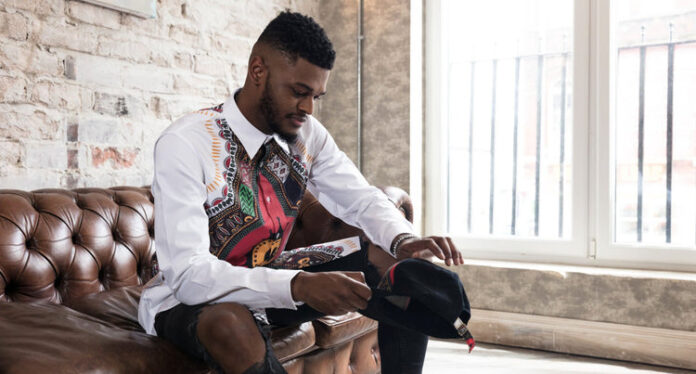

Africa is a land of style! Formal dressing aside, African men have a unique style of wear that distinguishes them from the rest of the world.
Being the second-largest continent, Africa is diverse when it comes to fashion trends, most of which are influenced by traditional cultures, colonial tradition, and showbiz. As such, the easiest way is to cluster Africa into regions and observe trends within the – South, North, East, West, etc.
Let’s explore some of the authentic Afrocentric fashion trends for African men that keep recurring – in refreshing designs.
Southern African Fashion Trends
Southern Africa doesn’t offer too-too much when it comes to authentic Afrocentric fashion trends. Nonetheless, there are certain common trends in Southern Africa such as Madiba Shirt and Skhothane fashion.
Madiba Shirt
This is one of the famous African shirts that hit fashion trends in the early 1990s due to them being frequently adorned by Nelson Mandela, South Africa’s liberation hero.
Madiba shirt is a loose-fitting casual shirt that hangs over the trouser. It can be comprised of cotton or silk with batik and vivid colors. The shirt is currently experiencing a new resurgence, although it is not necessarily being worn by prominent personalities.
Skhothane

Skhothane is not just a clothing style but a ‘street’ subculture of Soweto. Skhothane fashion comprises of brightly shining (often flowery) clothing that manifests some form of opulence among the poor suburban.
This fashion was dominant in Sowetan parts of South Africa in the mid-1990s. Towards the end of the millennium, the fashion started fizzling out. However, the trend has started regaining moment, albeit slowly among black South Africans.
North African Fashion Trends
North African fashion trends are rather conservative and broadly influenced by the Arabic and native Sahel inhabitants. Three common fashion themes that keep on recurring, albeit, with a drop of modernity, include Burnous, Jellabiya, and Kaftan.
Burnous

Burnous (alternatively, ‘burnoose’, ‘bournous’, or ‘barnous’) is a Maghrebi attire traditionally worn by the Berber people of North Africa, especially Algeria. It is a long cloak of comprising of coarse woolen fabric accompanied by a hood.
It is often white, although some other colors, especially shades of blue are also included these days. It is an attire of nobility often worn by the high-ranking in society during special events.
Burnous has undergone a tremendous transformation of late. While modern imitations have come up, its stylish essence still remains the same
Jellabiya
Jellabiya is a traditional Egyptian attire for men. This “man dress” is commonly worn by men along the Nile Valley and areas bordering it in Egypt, Sudan, Eritrea, and Ethiopia.
It is a gown that has no collar (obviously!), has a wider cut, and wider sleeves. Jellabiya comes in various colors. White is prevalent during the summer. But in winter, there are many choices, including grey, tan, blue, olive, among others.
Though commonly worn by men, Jellabiya is also worn by women. There are many trendy fashion designs that have sprung up, especially for women.
Kaftan
Kaftan, though common in Senegal, is more of traditional attire in the Sahel region, which also includes Mali, Mauritania, and southern parts of Algeria and Morocco, among others.
Senegalese Kaftan is also common in some parts of West Africa, especially those West African countries neighboring Senegal. Modern kaftan is made using the latest fabric blends that make it astounding.
East African Fashion Trends
Eastern Africa is relatively busy in terms of fashion trends compared to Northern and Southern Africa. However, it is still slightly less busy than its counterpart, West Africa. Some of the Afrocentric fashion designs that are authentic to East Africa include Kanzu, Kitenge (though predominantly female), and Kidan Hebesha.
Kanzu

Kanzu is a common Swahili men’s cloth. The Swahili people are found along the East African coast including Kenya, Tanzania and upper parts of Mozambique. Kanzu (tunic in English, and thawb in Arabic) is a white or cream-colored robe adorned by men in the East African region.
The Swahili people wear Kanzu with a blazer, suit jacket, or sports coat. A traditional kofia (hat) can also be worn on the head. Kanzu is commonly worn by the groom during wedding ceremonies in East Africa.
The groom’s party often wears a blazer. What makes kanzu trendy is how it is able to be accentuated with modern accessories that make it refreshingly stunning.
Kidan Hebesha – Ethiopia
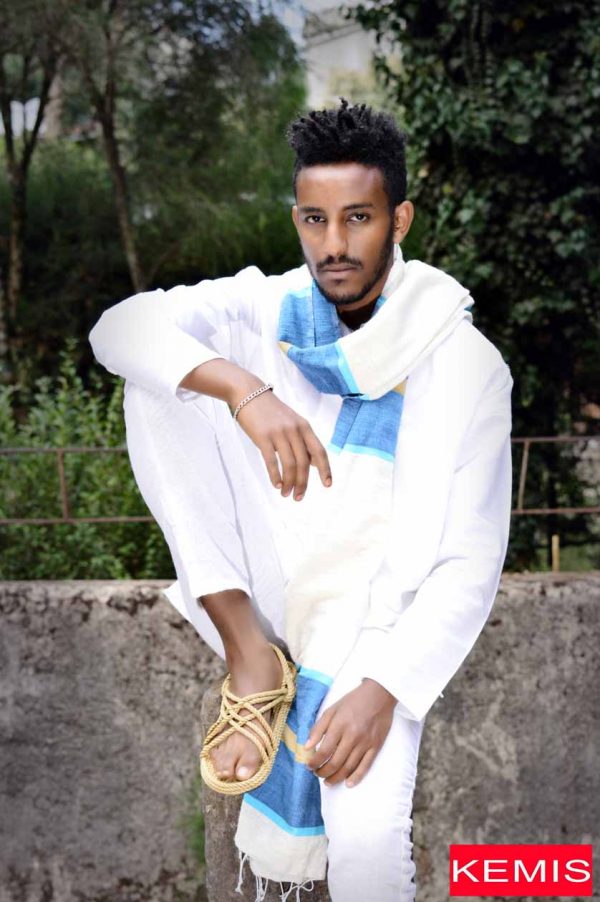
Kidan Hebesha is attire that is commonly worn by men in Ethiopia and Eritrea. It mainly comprises of a white shirt, a matching pair of trousers, and a light gauze-like fabric that is loosely wrapped around the chest and shoulders.

