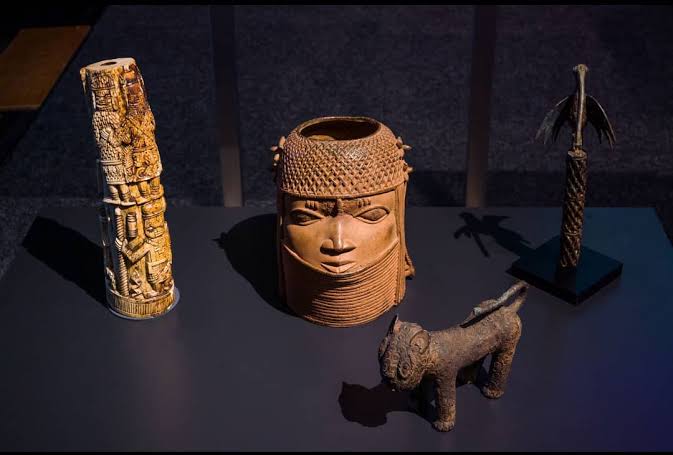
In a powerful moment of cultural restitution, the Netherlands has officially returned 119 looted Benin artifacts to Nigeria, joining a growing list of countries — including Germany, the United Kingdom, and the United States — that have begun repatriating priceless treasures stolen during the colonial era.
The returned pieces, widely known as the Benin Bronzes, include intricately cast plaques, regal sculptures, ceremonial bells, and depictions of humans and animals, all of which once adorned the royal palaces of the ancient Benin Kingdom in present-day Edo State, Nigeria.
At a formal handover ceremony in Benin City on Thursday, the artifacts were received by Oba Ewuare II, the current monarch of Benin. Addressing a crowd of dignitaries, historians, and local community members, the Oba called the return “a divine intervention,” and praised the determination and spiritual resilience of his people. “We always knew they would return,” he said, “because the spirit of our ancestors cannot be silenced forever.”
A Historic Repatriation
The artifacts had been held in museums in the Dutch city of Leiden, among other locations, and were looted by British soldiers during the 1897 punitive expedition led by Sir Henry Rawson, which saw the destruction of the Benin Kingdom and the exile of then-Oba Ovonramwen Nogbaisi. For more than a century, these artworks, which were symbols of sovereignty and spiritual heritage, were scattered across European institutions.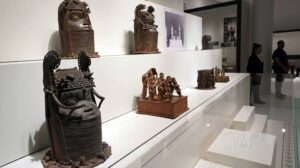
Their return, officials say, is part of a larger movement toward restorative justice in global museum collections. “This is the largest single repatriation of Benin Bronzes to Nigeria so far,” said Olugbile Holloway, director of Nigeria’s National Commission for Museums and Monuments (NCMM). “It’s a reminder that the tide is turning. We’re reclaiming not just our art, but our history.”
Also, read: Three Kenyan Police Officers Charged With Murder of Blogger Albert Ojwang Amid National Outcry
Netherlands Follows Global Trend
Marieke van Bommel, director of the Wereld Museum in the Netherlands, affirmed her government’s commitment to restitution, stating that “artifacts taken under duress or during acts of war do not belong in our museums. They belong with the cultures that gave them meaning.”
In recent years, Germany returned over 1,100 artifacts to Nigeria, while the Horniman Museum in the UK handed back 72 looted items in 2022. Institutions in Rhode Island and France have also returned pieces from their collections.
This growing wave of returns follows formal requests by the Nigerian government in 2022 for the return of hundreds of cultural objects from institutions worldwide. The NCMM continues to work with international museums to identify and negotiate the return of additional looted items.
While the return of the Benin Bronzes is a significant milestone, Nigerian cultural advocates emphasize that the artifacts are more than just historical objects, they are living symbols of identity, resistance, and sovereignty.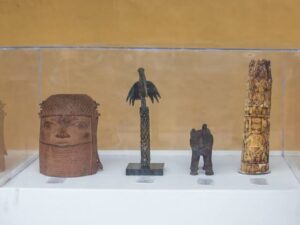
“These bronzes carry our bloodlines, our spiritual codes, and the memory of a thriving kingdom that colonialism tried to erase,” said a local historian in attendance.
But challenges remain. Some repatriated artifacts are being held in Nigerian national institutions, while debates continue about whether they should be returned to the Benin Royal Court, which many consider their rightful home. Oba Ewuare II has made it clear that the palace remains the spiritual and cultural custodian of the treasures.
As more nations respond to calls for restitution, Nigeria’s efforts to reclaim its stolen cultural heritage are gaining momentum. The return of the 119 artifacts by the Netherlands marks not just a diplomatic success, but a deeply personal victory for many Nigerians who have spent decades fighting for recognition and repair.

