
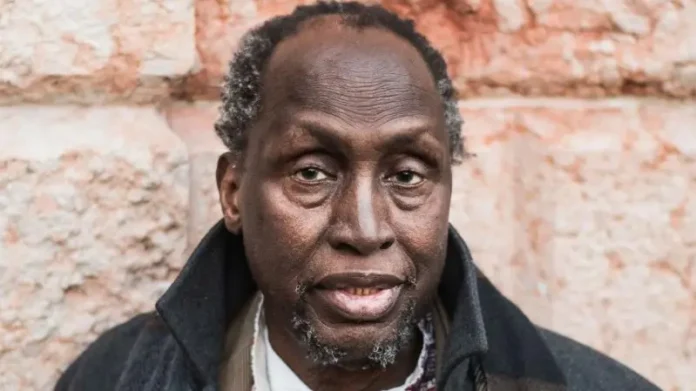
The literary world is in mourning following the death of Ngũgĩ wa Thiong’o, one of Africa’s most influential and unflinching writers, who passed away at the age of 87. Revered for his fierce intellect, courage, and lifelong devotion to African languages and justice, Ngũgĩ leaves behind a legacy that reshaped not only Kenyan literature but the global canon.
Born in 1938 under British colonial rule in Limuru, Kenya, Ngũgĩ’s life and work were profoundly shaped by the trauma of empire. As a boy, he watched his family endure forced removals, imprisonment, and violence during the Mau Mau rebellion—a bitter war for independence that scarred generations. His deaf brother, Gitogo, was tragically shot in the back by a British soldier, one of many events that would later echo throughout Ngũgĩ’s writing.
Yet even in the face of hardship, he rose with brilliance. A scholarship student at the prestigious Alliance High School and later Makerere University in Uganda, Ngũgĩ was already crafting prose that pulsed with truth. It was at a writers’ conference in Uganda that he first caught the eye of Nigerian literary icon Chinua Achebe, who helped publish Ngũgĩ’s debut novel, Weep Not, Child—the first major English-language novel written by an East African. It was a defining moment, not only for Ngũgĩ but for African storytelling.
His early work, including The River Between and A Grain of Wheat, helped chart Kenya’s transition from colonialism to uneasy independence. But by 1977, Ngũgĩ did what few would dare: he renounced his English name, James Ngugi, and vowed to abandon the English language in his literary work altogether. From then on, he would write exclusively in Kikuyu, his mother tongue—a bold rejection of linguistic imperialism that many celebrated, but others questioned.
His novel Petals of Blood, his last in English, took brutal aim at post-independence Kenyan leaders, accusing them of replacing colonial tyranny with their own corruption. The same year, Ngũgĩ co-wrote the play Ngaahika Ndeenda (I Will Marry When I Want)—a scathing critique of social inequality. The Kenyan government responded by imprisoning him for a year in a maximum-security jail without trial.
Also, read: ECOWAS Celebrates 50 Years Anniversary Amid Deep Divisions, Security Crisis, and Lost Members
But even behind bars, Ngũgĩ refused to be silenced. With no paper at hand, he wrote Devil on the Cross, his first novel in Kikuyu, on sheets of toilet paper—an act of literary defiance that would become legend.
Exile followed. While in London in 1982, Ngũgĩ learned of a suspected plot against his life if he returned to Kenya. He remained in exile for over two decades, living and teaching in the UK and later the U.S., where he held positions at top institutions like Yale and the University of California, Irvine. His return to Kenya in 2004 was both triumphant and traumatic. Though greeted as a hero, Ngũgĩ and his wife were attacked in their apartment. He called it politically motivated.
Ngũgĩ never stopped writing, teaching, or advocating. His influential essay collection Decolonising the Mind became a blueprint for African intellectual resistance. In it, he argued that African writers should not only speak truth to power but do so in their own languages. His essay took aim even at Achebe, his former mentor, for continuing to write in English—a rift that fractured their friendship.
Throughout his life, Ngũgĩ also navigated personal complexity. Married and divorced twice, he fathered nine children, several of whom followed in his literary footsteps. Yet his son, Mukoma wa Ngũgĩ, publicly accused him of domestic abuse toward his mother, a claim the elder Ngũgĩ never addressed.
Despite declining health—including heart surgery, kidney failure, and a cancer diagnosis in the 1990s—Ngũgĩ persisted. He outlived the cancer, as he had outlasted so many threats in life. His passing may not have come with the Nobel Prize that many felt he deserved, but it arrives with the recognition of millions who saw him as a literary lion, unbowed and unbending.
In one of his final interviews, Ngũgĩ said, “I write because I must. Because stories can resist bullets. Because languages carry memory.”
Ngũgĩ wa Thiong’o is gone—but his stories, his resistance, and his voice remain etched in the soul of African literature forever.

