
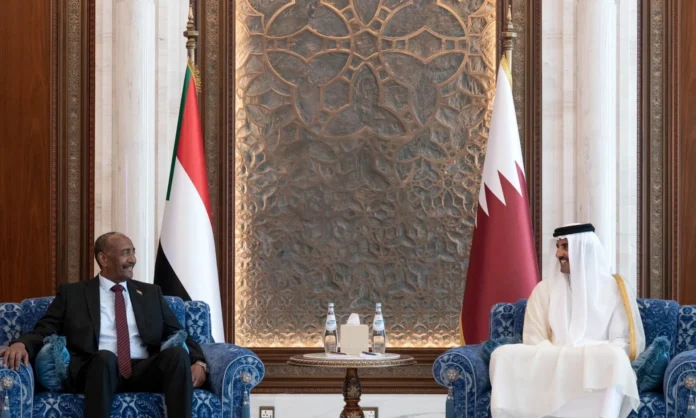
In a powerful speech in Doha, Sheikh Tamim bin Hamad Al Thani, Emir of Qatar, publicly condemned the horrific violence carried out in El Fasher, the capital of North Darfur State in Sudan, by the paramilitary group Rapid Support Forces (RSF). He used his remarks at the opening of the Second World Summit for Social Development to demand an immediate political resolution to end the war and safeguard Sudan’s sovereignty and unity.
El Fasher fell to the RSF on October 26 after an 18-month siege that had cut off food, water and humanitarian aid to tens of thousands of civilians. Witnesses and satellite imagery have flagged scenes of executions, abductions, looting and widespread sexual violence.
Sheikh Tamim’s intervention underscores an increasingly urgent diplomatic alarm over Sudan’s civil war and the rise of atrocities that risk branching into ethnic cleansing and famine.
A Moment of Reckoning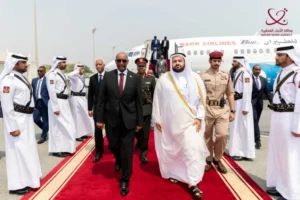
In his address, the Emir stated:
“We express our collective shock at the horror of the atrocities committed in the city of El Fasher in Sudan’s Darfur region, and reaffirm our condemnation of these acts in the strongest terms.”
He also urged the international community to back efforts to end the conflict through political dialogue, restore humanitarian access and uphold the territorial integrity and unity of Sudan.
Darfur’s Dark Return
The capture of El Fasher by the RSF has triggered fears of a return to the darkest chapters of the Darfur conflict. International monitors have noted that more than 21 million Sudanese face acute food insecurity and that famine has been declared in parts of Darfur and the adjacent South Kordofan region.
Reports describe civilians trapped behind 35-mile earthen berms, under siege, with journalists and aid workers among the casualties. One monitoring group stated the current situation “may rise to the level of genocide”.
Also, read: Uganda-Born Zohran Mamdani Set to Become New York City’s First Muslim Mayor
Why Qatar’s Voice Matters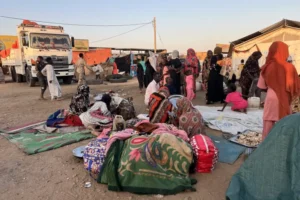
Qatar’s public condemnation carries weight for multiple reasons. As a Gulf-state with active diplomatic ties to Sudan, and as host of the summit at which the emir spoke, Doha’s message signals a shift — from low-profile mediation toward vocal advocacy.
For Africans and the diaspora watching from afar, it also illustrates how external actors are acknowledging the continent’s crises as urgent global concerns. Sudan’s war, while often overshadowed by other hotspots, remains one of the worst humanitarian disasters in the world.
What Comes Next
Sheikh Tamim’s call for a political solution bears a dual meaning — a ceasefire and a negotiated settlement that involves all factions, secures humanitarian corridors and restores state control. Yet the challenges remain enormous: the RSF and Sudanese Armed Forces each control large swathes of the country, millions are displaced, and the famine-and-siege tactics have already deeply scarred Darfur.
For ordinary Sudanese, the question is whether the world will step in before another mass atrocity occurs. The Emir’s statement offers some hope, but implementation will require sustained diplomatic pressure, aid delivery and accountability for those responsible.

