
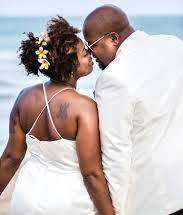
If you’re a romantic, you must have dreamt about your wedding day for so long. You must have imagined how it should look or how much of your identity should reflect in your wedding.
Truly, your wedding day is all about you and your partner. Hence, incorporating your tradition into your big day should be ideal. Adding some African wedding traditions would be a beautiful chance to honor your heritage and embrace your identity.
Rituals and Ceremonies Africans Follow on Their Wedding Day
African weddings have rituals unique to every region. Nonetheless, local ceremonies are commonly beautiful and solemn.
Common Rituals and Ceremonies
Many locals who prefer contemporary wedding rituals also try to incorporate a thing or two African wedding traditions. Jumping the Broom and Libation Ceremony are two of the most common.
Jumping the broom began as a way for enslaved African couples to wed legally—they weren’t allowed to legalize their union back then. Couples leaping over a broom symbolize sweeping away the past and leaping into the future as one. The act of jumping together marks the beginning of great possibilities for them.
On the other hand, the Libation Ceremony is a ritual of pouring a liquid into four cardinal directions. The practice honors the elderly guests present at the wedding or an African couple’s beloved ancestor.
Traditional Wedding Dress and Suit
As for the traditional attire, African couples don’t customarily wear the standard black suit and white dress for their wedding day. Betrothed couples and even wedding guests typically dress in traditional woven garments. Most times, particular fabric or detailing represents their native roots.
For instance, a bride may don brightly colored long gowns for a Zulu wedding and pair them with a traditional isicholo (a wide hat). Women wearing an ischolo is a clear sign that she’s about to get married.
The Zulu see leopards as the king of all predators. Hence, grooms would customarily put on animal skins and feathers—only the royalty can wear leopard skin. Men would also sport an isinene (front apron) and an ibheshu (rear apron) to conceal their genitals and buttocks.
Other brides would change their outfits at the Umabo—a special and traditional wedding ceremony of the Zulus. They’d wear an Isidwaba, Isicwaya, and an Inkehli for a Zulu wedding.

An isidwaba is a leather skirt made from the hide of animals that belonged to the woman’s father. Meanwhile, an isicwaya is typically an animal skin covering a bride’s bosom, and an inkehli is a hat covering the head. To complete their outfit, brides would also wear colorful beads.
Meanwhile, grooms customarily wear a shirt, long pants, and headdresses during the Umabo—everything with unique detailing representing their heritage.
Break Down of Different African Wedding Traditions
Infusing some of the age-old African wedding traditions—regardless of where you’re from—can add a lovely spin to your big day. So, before planning for it, learn about some underlying meanings and significance of a few common African wedding traditions. If you’re looking to learn more about African culture in general, our notes below should also help.
North Africa
North African Muslims comprise the vast majority of Africa’s Muslim population. Hence, North African wedding traditions usually stem from Islamic conventions. With this, it isn’t uncommon to see wedding guests dress conservatively—no showing of the legs or arms for both genders.
Before the big day, a North African bride would typically do a Hammam—a ritual bath. She and her bridesmaids will go to a public bath to “purify” themselves through hours of scrubbing and washing. Ultimately the bride and her “crew” bond well through the Hamman. This pre-wedding custom is basically a modern version of a bachelorette party.
North African locals—those from Algeria, Egypt, Libya, Morocco, and Tunisia—are some of the countries that practice this ritual.
East Africa
A few East African wedding traditions are comparable to those found in the North. And while some cultural practices are similar to those of the Islams, the majority of East Africans are Christians. Hence, weddings typically take place in a church.
Nonetheless, there are a few unique rituals natives practice before the big day. Swahili husbands, for example, get together for the fight-dancing festival, Kirumbizi. In Ethiopia, people dress elegantly and don clothing with intricate designs made of a Habesha fabric.
West Africa
West African wedding traditions are typically distinct, meaningful, and romantic, so much so that it has gained popularity worldwide.

