

South Africa’s governing coalition partner, the Democratic Alliance (DA)—the country’s second-largest political party—has set off a major policy flashpoint by announcing its plan to scrap key race-based economic-empowerment laws. The move, framed as part of the party’s broader “Economic Inclusion for All Bill,” seeks to replace the current framework that gives preference to Black-owned companies in government procurement and affirmative-action hiring.
The Proposal in Detail: A Shift Away from Race to Needs
On October 20‐21 2025, the DA revealed its intention to overhaul the longstanding Broad‑Based Black Economic Empowerment Act (B-BBEE), arguing that the system has largely failed its intended beneficiaries and instead enriched a politically connected few.
Under the DA’s proposed bill—dubbed the “Economic Inclusion for All Bill”—race would no longer be the primary mechanism by which empowerment is delivered. Instead, the focus would shift to poverty, job creation, skills development and measurable developmental outcomes. The party also plans to amend the Public Procurement Amendment Act 2024 to remove race-based preferential procurement provisions.
DA policy chief Mat Cuthbert described the new model like this:
“We aim to reform South Africa’s public procurement framework by aligning it with Section 217 of the Constitution … targeting real empowerment through job creation, poverty reduction, skills enhancement and sustainability.”
Also, read: West African Nations Unite to Launch Single Fuel Price Framework to Curb Inflation
Reaction: Fractured Coalition & Political Outcry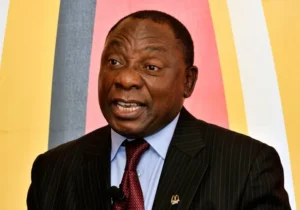
The announcement immediately sparked friction within the ruling Government of National Unity, where the DA shares power with the African National Congress (ANC). While the DA frames the change as necessary economic reform, the ANC dismissed the proposal as undermining transformation and accused the DA of aligning with white-minority interests.
President Cyril Ramaphosa reaffirmed that any amendments to B-BBEE must remain rooted in the Constitution and defended the policy’s role in redressing apartheid-era injustices.
What’s at Stake: Jobs, Inequality & Economic Growth
For South Africa’s battered economy—where unemployment remains higher among Black citizens (about 36 % in late 2024) compared to white citizens (about 7 %)—the policy shift offers both risk and hope. The DA contends that B-BBEE has failed to reduce poverty or create jobs and instead fostered corruption and elite enrichment.
Critics warn that the move could derail efforts to dismantle structural inequality. Supporters say it could unblock growth by making procurement more competitive and investment-friendly. The tension speaks to a deeper debate: how to address the economic scars of apartheid while ensuring policies improve opportunity for all South Africans.

