
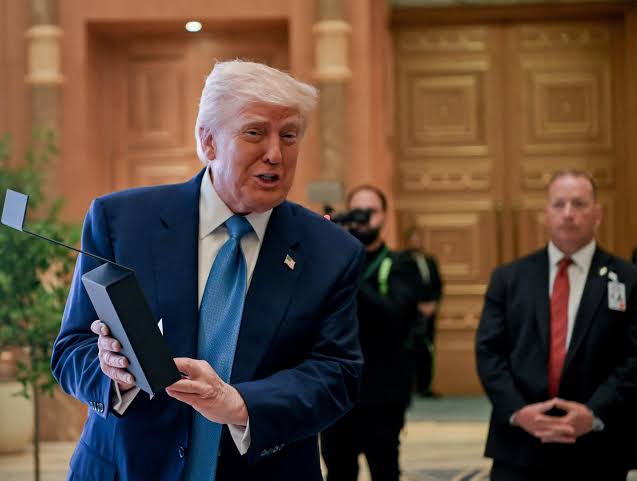
In what he has called one of his proudest foreign policy achievements, President Donald Trump announced a historic peace agreement between the Democratic Republic of Congo (DRC) and Rwanda, signaling an official end to a conflict that has ravaged central Africa for decades.
“After years of violent bloodshed, we’ve brought peace — real peace — to two great nations,” Trump declared in a statement released on his social media platform on Sunday. “With the help of Secretary of State Marco Rubio, we have crafted a beautiful treaty that puts an end to the war between Rwanda and the Congo, one of the deadliest and longest in the world.”
The treaty, which Trump said will be signed in Washington on Monday, is the product of months of behind-the-scenes diplomacy led by Massad Boulos, Trump’s senior adviser on African affairs, and Rubio. According to Trump, representatives from both Rwanda and the DRC are already en route to the U.S. capital to finalize and sign the agreement.
The war between Rwanda and the DRC has often flown under the global radar despite its devastating scale. At the heart of the crisis lies eastern Congo — a mineral-rich region plagued by rebel militias, mass displacement, and chronic insecurity. Kinshasa has long accused Kigali of backing rebel groups like the M23, a charge Rwanda has consistently denied.
Over the years, regional peace efforts have repeatedly faltered, but this latest breakthrough appears different, at least on paper.
“President Trump’s involvement gave it weight,” said a diplomatic analyst familiar with the negotiations. “For better or worse, when he pushes something, people listen. This time, that attention helped.”
The path to the agreement began in April 2025, when Boulos began a whirlwind round of shuttle diplomacy, visiting Kinshasa and Kigali to lay groundwork for trust-building. He focused on key issues: halting military support for militias, initiating troop withdrawals, and forging a path toward shared security.
The turning point came in May, when both governments submitted draft treaty proposals after signing a “Declaration of Principles” in Washington. By mid-June, the final terms were locked in.
Also, read: “Unlock or Be Denied”: U.S. Resumes Student Visas with Strict Social Media Checks Under Trump Administration
Under the agreement, both countries have pledged to:
• Withdraw troops from contested areas,
• Disarm and dismantle rebel groups like M23,
• Facilitate the return of displaced persons,
• And establish a minerals-for-security partnership with the U.S.
That last point may be the deal’s most ambitious feature. The framework will grant the United States access to critical resources — including lithium and cobalt, both essential for batteries and renewable energy — in exchange for American assistance in stabilizing eastern Congo.
The announcement has been met with cautious optimism across the diplomatic community. While many have applauded the achievement, others have warned that the region’s complex history demands sustained oversight.
“This is an important moment, no doubt,” said Claudine Muberwa, a peace activist based in Goma. “But the real test is not the signing ceremony in Washington, it’s whether the guns fall silent back home.”
Implementation remains fragile. Disarming well-entrenched militias and building lasting trust between two governments with deep-seated grievances is no small task. Still, the agreement marks one of the rare moments in recent history where peace seems within reach in Central Africa.
For President Trump, the treaty also represents a noteworthy foreign policy achievement as he reasserts American influence abroad during his current term. Critics have often accused him of neglecting the African continent, but this move could shift that narrative.
At Sunday’s announcement, Trump called the deal “one of the most beautiful things we’ve done in foreign policy,” and expressed hope that it would be remembered as a turning point in U.S.-Africa relations.
Whether history will agree is yet to be seen, but for now, the world watches as Rwanda and the DRC prepare to sign a peace pact many believed would never come.

