
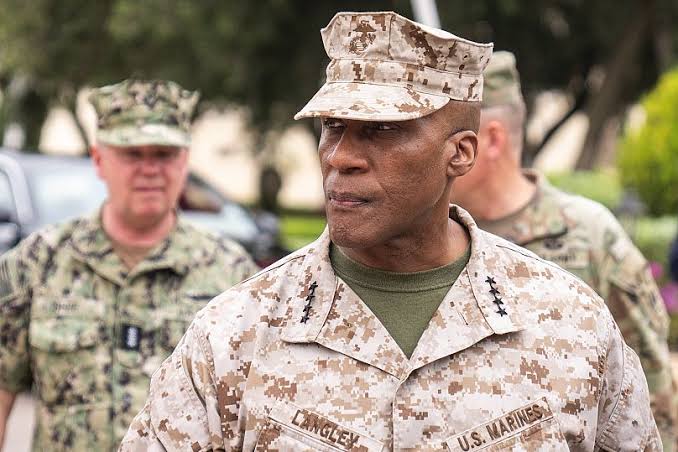
In a notable shift from its long-held approach, the United States military is signaling that it will no longer serve as the cornerstone of security efforts in Africa. Instead, Washington is encouraging its African allies to brace for greater self-reliance in countering insurgencies and stabilizing their regions.
That message was loud and clear during this year’s African Lion exercise—America’s largest joint military training on the continent. For four intense weeks, troops from over 40 nations gathered in the desert, flying drones, simulating urban combat, and firing satellite-guided rockets. It was an impressive display of coordination and firepower. But beneath the tactical drills was a deeper message: the U.S. is recalibrating its role.
“We need our partners to get to a point where they can operate independently,” said Gen. Michael Langley, the U.S. military’s top commander in Africa, during a sit-down with the Associated Press on the final day of the exercise. “There needs to be some burden sharing.”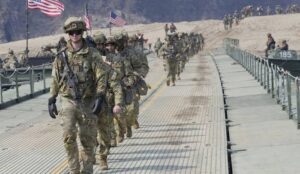
It’s a marked departure from the language that once defined U.S. military engagement in Africa. Not long ago, the strategy leaned heavily on the idea of “good governance,” development, and diplomacy as the bedrock of long-term stability. That narrative was also a selling point in differentiating the U.S. from rival powers like Russia and China.
But now, that messaging has mostly faded.
Instead, the new tone—grounded in pragmatism—acknowledges a more limited American footprint, and a desire to shift responsibilities to local forces. It’s a move Langley said aligns with broader Pentagon priorities under President Donald Trump’s defense strategy, which emphasized homeland security first and encouraged partners to take on more responsibility in volatile regions.
This shift comes at a moment of rising competition on the continent. Russia, through its network of private military contractors and diplomatic moves, has tightened its grip on security affairs in parts of North, West, and Central Africa. Meanwhile, China continues to roll out its own training programs and infrastructure investments, positioning itself as a long-term player.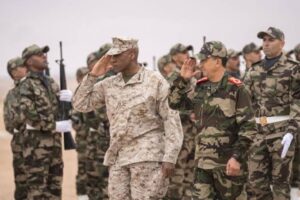
As these rivals deepen their reach, the U.S. is simultaneously looking to build a “leaner, more lethal force.” That could mean fewer boots on the ground and possibly scaling back military leadership positions across Africa—an unsettling prospect for countries grappling with insurgencies and civil strife.
Also, read: Uganda Halts Military Ties with Germany After Accusing Envoy of “Shady” Subversive Activities
A year ago, Langley championed what was then the backbone of the U.S. Africa Command (AFRICOM) philosophy: the “whole-of-government” approach. He openly rejected the idea that military might alone could fix broken systems. “Good governance is the enduring solution,” he said at the time, pointing to the layered threats from climate change, food insecurity, and extremism.
But even Langley now admits that while that holistic method has worked in places like Ivory Coast—where coordinated development and defense efforts have reduced attacks near the northern border—it hasn’t produced widespread results elsewhere.
“I’ve seen progression and I’ve seen regression,” he reflected, hinting at the fragile and uneven nature of gains on the continent.
As Gen. Langley prepares to step down from his post later this year, he leaves behind a region in flux—and a legacy defined by a strategic pivot. The U.S. military is no longer promising to lead from the front. Instead, it’s urging its African allies to hold the line themselves.
And in today’s shifting geopolitical landscape, that call for greater self-reliance may well be the most honest—and daunting—message yet.

