
In a sharp turn that’s already sparking global debate, the United States has officially resumed foreign student visa processing — but with a new catch: applicants must now give full access to their public social media accounts or risk being denied entry altogether.
The announcement, made Wednesday by the U.S. State Department, marks the end of a brief suspension on student visa interviews. But this reboot comes with heightened scrutiny, a policy shift driven by the Trump administration’s broader push for “enhanced digital vetting” of foreign nationals.
“This is about security, plain and simple,” a State Department spokesperson said. “We want to make sure every individual seeking entry through a student visa is not a threat to the American people or our way of life.”
According to the new directive, consular officers will now examine applicants’ social media for any signs of anti-American sentiment, including content that suggests hostility toward U.S. institutions, culture, or democratic ideals. Those who decline to share their accounts could be viewed as concealing intent — a red flag that could lead to visa denial.
The announcement has already set off a wave of concern and confusion, especially among international students racing against academic deadlines. Some have spent weeks refreshing appointment portals in hopes of securing a slot. For Chen, a 27-year-old Ph.D. candidate from Toronto, the stakes are personal. “I finally got an interview scheduled,” he said, asking to be identified by surname only due to fear of backlash. “It’s been really stressful. Every day, I was checking like 10 times.”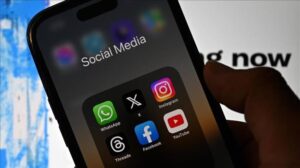
Online, international student communities from China to the Philippines have lit up with threads dissecting the changes, venting frustrations, and sharing tips on how to prepare for the new level of scrutiny.
But there’s another layer to the policy shift that critics say borders on institutional discrimination. According to internal guidance obtained by a government official, priority interview slots will now go to students enrolling at U.S. schools where international students make up less than 15% of the population. That quietly sidelines hundreds of institutions — including Ivy League schools and major public universities like Penn State — where international enrollment typically exceeds that threshold.
Also, read: Nigerian Musician, Adekunle Gold Launches ‘5 Star Care’ to Support 1,000 Sickle Cell Warriors in Lagos
“It’s deeply unfair,” said an admissions officer at a California university, speaking anonymously. “We’ve worked hard to build global diversity on campus, and now we’re watching it unravel.”
The move comes just months after the Trump administration’s now-reversed mass visa cancellations earlier this year, many of which were handed out for minor or unclear infractions. Combined with expanded grounds for disqualification and increasingly vague eligibility rules, the new policy adds to what some see as a coordinated tightening of U.S. borders — especially when it comes to academia.
Harvard, unsurprisingly, is in the spotlight again. President Trump recently called out the institution’s “excessive dependence” on foreign students and floated a cap to limit enrollment to 15% — a proposal many saw as a jab at elite universities perceived to lean liberal.
Beyond education, the administration’s posture reflects a wider diplomatic push. A leaked diplomatic cable over the weekend revealed the U.S. has asked 36 nations to ramp up their traveler vetting procedures or face the risk of being added to an expanded travel ban, now affecting 12 countries. Those governments have 60 days to respond.
The growing intensity of America’s immigration controls has ignited free speech concerns. Jameel Jaffer, executive director of the Knight First Amendment Institute at Columbia University, cautioned that requiring social media access opens the door to ideological policing.
“This policy essentially makes every consular officer an internet censor,” Jaffer said. “And the result will be a chilling effect on political speech, not just in the U.S., but globally.”
For now, thousands of foreign students are left in limbo, balancing dreams of studying in the U.S. with the unsettling reality that their tweets, posts, or even a meme could define their futures.

