
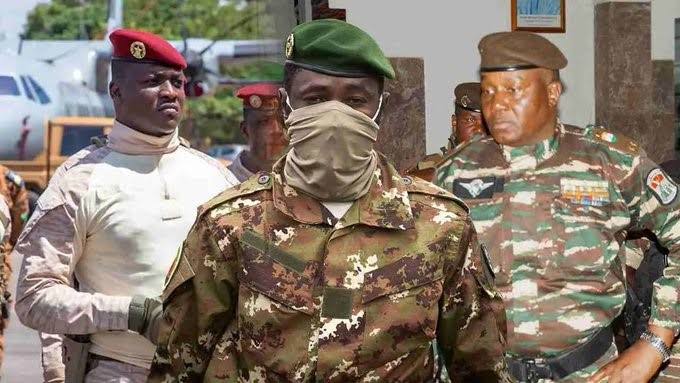
The rift between Mali, Niger, and Burkina Faso and the Economic Community of West African States (ECOWAS) has deepened as the three breakaway nations introduced a 0.5% import duty on goods coming from ECOWAS member states. However, the newly imposed tariff will not apply to humanitarian aid, a move likely aimed at mitigating some potential backlash.
This latest decision by the Alliance of Sahel States (AES)—a bloc formed by the three junta-led nations—marks another step away from ECOWAS. The trio had already cut ties with the regional body last year after their military-led governments faced sanctions and condemnation following coups in their respective countries.
Originally founded as a security alliance in 2023, the AES has since evolved into an entity with economic aspirations, including plans for a shared biometric passport and strengthened economic and military collaboration. In a joint statement, the alliance explained that the newly introduced levy is designed to generate revenue to support its activities and sustain its autonomy.
The introduction of the import tax, which took effect on March 28, signals a significant shift in regional trade dynamics. The once-seamless exchange of goods across West Africa will now face new financial hurdles, potentially driving up consumer prices and causing disruptions in supply chains. While this measure may provide immediate financial relief to the governments of Mali, Niger, and Burkina Faso, it also poses risks of long-term economic isolation and weakened regional integration.
Despite their formal withdrawal from ECOWAS, the regional body has stated that diplomatic engagement with the three states will remain open until July. This comes after ECOWAS officially confirmed their expulsion earlier this year.
Niger Withdraws from Regional Security Force
In a separate development, Niger has officially exited the Multinational Joint Task Force (MNJTF), a regional military coalition established to combat terrorist groups such as Boko Haram and the Islamic State’s West Africa Province (ISWAP) in the Lake Chad region.
Also, read: Nigerian Government Condemns Shooting of Immigration Officer by Chinese Businessman’s Security Guard
A bulletin aired on Niger’s state television announced the withdrawal, citing the need to reinforce security around the country’s oil assets. The MNJTF, which includes troops from Nigeria, Chad, and Cameroon, has been active since 2015, but internal challenges such as poor coordination have hampered its effectiveness against insurgents who continue to exploit the region’s vast and sparsely populated landscape.
The MNJTF has not yet commented on Niger’s withdrawal, leaving uncertainty about how the coalition will function moving forward. Security analysts fear that Niger’s exit could further weaken the fight against extremism in the region.
The Lake Chad area has been a hotspot for militant activity for over a decade, with thousands of lives lost in persistent attacks. Just last year, Chad considered pulling out of the MNJTF after losing around 40 soldiers in a deadly ambush.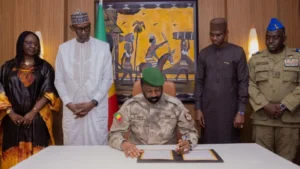
Meanwhile, Niger’s military government, which came into power in 2023 following the overthrow of President Mohamed Bazoum, has pledged to restore stability. Alongside its allies in Burkina Faso and Mali, Niger formally withdrew from ECOWAS earlier this year and has now outlined a five-year transition plan to return to constitutional governance. However, the security landscape remains grim, with insurgent groups still carrying out deadly attacks. Just this month, at least 44 civilians were killed and 13 others injured in an attack on a mosque in southwest Niger.
The country’s energy infrastructure has also come under threat, with militants targeting oil facilities, including the critical pipeline connecting the Agadem oilfield to Benin’s coastline.
As Niger navigates its path outside ECOWAS and regional security arrangements, the long-term impact of these moves remains uncertain. What is clear, however, is that the breakaway Sahel nations are forging a new and independent course—one that could reshape West Africa’s economic and security dynamics in the years to come.

