In a landmark ruling, a South African court has dismissed claims of an alleged “white genocide” in the country, stating that such notions are “clearly imagined” and “not real.” This decision effectively counters past statements made by U.S. President Donald Trump and billionaire entrepreneur Elon Musk, both of whom had previously spoken about what they perceived as the persecution of white South Africans.
The ruling also put an end to a controversial financial bequest from Grantland Michael Gray, a wealthy benefactor who sought to leave $2.1 million (£1.7 million) to the white supremacist group Boerelegioen. The court deemed the request invalid, vague, and in direct violation of public policy, preventing the funds from being used to further the group’s racially divisive agenda.
For years, the notion that white South Africans—particularly farmers—are being systematically targeted has been a point of contention, especially in far-right circles. Trump had previously cited the “large-scale killing of farmers” as justification for offering white South African farmers refugee status in the U.S., while Musk has described land ownership laws in the country as racist and has claimed that white people are victims of genocide.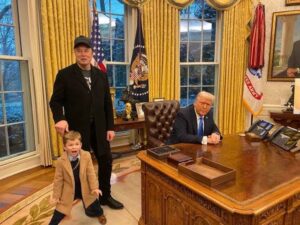
However, crime statistics do not support these claims. While South Africa continues to struggle with high levels of violent crime, the country does not release crime data based on race. Between October and December 2024, 6,953 murders were recorded nationwide. Among these, 12 were farm-related killings, with only one victim identified as a farmer. In contrast, 961 women and 273 children were murdered in the same period.
The legal challenge was brought forward by Gray’s four siblings, who also serve as trustees and beneficiaries of the family trust. According to court documents, Gray—who became paralysed at 26 following a military service accident—had, in the last decade of his life, become fixated on the idea of an impending genocide against white South Africans. This belief, the court found, was exacerbated by his exposure to online misinformation and was deeply intertwined with his personal prejudices.
Also, read: John Legend Defends Rwanda Concert Despite Backlash Over DRC Conflict
Judge Rosheni Allie, in her ruling dated February 15, emphasized that Gray’s conviction in a so-called white genocide was purely delusional. “The only expression of [Mr. Gray’s] intention that is evident is the intention for the funds to be used for ‘training’ as well as his own assertions that he wanted the funds used to benefit an organisation which he deemed to be one that would exterminate every black person in South Africa. This is based on a belief in white genocide, which is clearly imagined and not real,” the ruling stated.
Gray had first engaged with the Boerelegioen group in 2020, allegedly donating around $326,000 (£258,000) in gold coins to secure membership and support their activities. His will specified that a portion of his estate should be allocated to the group’s training programs, but the court found that the bequest was unclear, as multiple entities operated under the Boerelegioen name.
Beyond the issue of vagueness, the court found that the intended use of the funds violated public policy. Gray’s siblings argued that Boerelegioen aimed to promote racial hatred and separatism, contrary to the group’s own claims that it merely provided security and training services without racial discrimination.
Judge Allie ultimately ruled in favor of Gray’s siblings, preventing Boerelegioen from receiving the funds and ordering the group to cover the court costs.
This ruling comes amid broader geopolitical tensions, particularly between South Africa and the United States. Earlier this month, Trump signed an executive order freezing financial aid to South Africa in response to new land expropriation laws that allow the government to reclaim land under certain circumstances. The issue of land ownership and alleged persecution of white South African farmers has long been a rallying cry for right-wing and far-right figures in the U.S.
However, this court decision reinforces the reality that South Africa’s crime crisis is not racially targeted, and the myth of white genocide lacks factual grounding. By blocking Gray’s bequest, the court has also taken a firm stand against attempts to channel financial resources into groups that promote racial division and extremism.

