
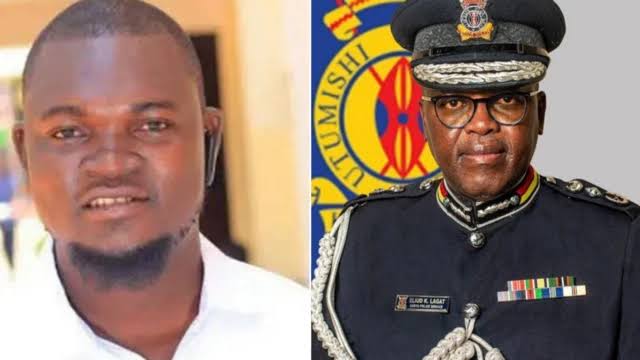
A wave of public anger and demands for accountability has forced Kenya’s Deputy Inspector General of Police, Eliud Lagat, to temporarily vacate his post pending an ongoing investigation into the controversial death of blogger Albert Ojwang while in police custody.
Ojwang, 31, was arrested on June 7 in his rural village of Kakoth, near Homa Bay in western Kenya, after Deputy Police Chief Lagat filed a complaint accusing him of online defamation. The blogger was later transferred to Nairobi, where he reportedly died just days later under suspicious circumstances.
Initial police reports claimed that Ojwang died from self-inflicted head injuries, allegedly sustained while banging his head against the wall of his cell. However, that narrative quickly fell apart after an autopsy revealed evidence pointing to blunt-force trauma consistent with physical assault. The Independent Policing Oversight Authority (IPOA) has since ruled out suicide as the cause of death.
Facing mounting pressure from human rights groups, opposition leaders, and civil society, Lagat released a statement on Sunday saying he would step aside “in good and conscious thought” while denying any direct wrongdoing.
“I undertake to provide any support required during the investigations,” he said. “I offer immense condolences to the family of Mr. Albert Ojwang for their great loss.”
Until the investigation is completed, Lagat will be barred from accessing his office, and his official duties will be handled by a subordinate officer.
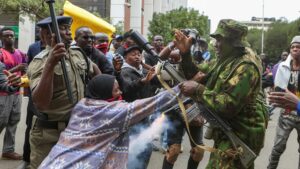
The tragedy has ignited a national conversation on police brutality, freedom of expression, and the dangers faced by outspoken citizens in the digital age. Demonstrations demanding transparency and justice are already underway, with more planned across several counties this week.
Ojwang’s death has reverberated far beyond his village. President William Ruto personally reached out to the late blogger’s father, Meshack Opiyo, expressing his condolences and pledging 2 million Kenyan shillings (approx. $15,500) to assist with funeral costs. Opposition leader Raila Odinga also contacted the family and committed half that amount in support.
Also, read: Tesla Opens First African Office in Morocco As Musk Continues To Eye Africa
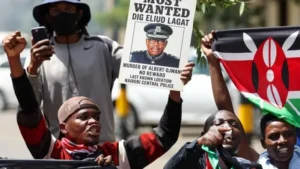
In a rare public apology, Police Inspector General Douglas Kanja admitted that the initial explanation for Ojwang’s death was based on “misinformation” from junior officers. The head of the Nairobi police station where Ojwang was detained, along with another officer and a technician accused of disabling CCTV cameras, has been taken into custody.
President Ruto, who campaigned on a promise to reform Kenya’s police force and end extrajudicial killings, has called for a swift and impartial investigation.
“This government will not tolerate rogue elements within the police. Justice must be served,” Ruto declared.
Despite the president’s pledges, concerns remain. The Kenya Human Rights Commission (KHRC) reported nearly 160 cases of extrajudicial killings and enforced disappearances in 2024 alone. In just the past four months, at least 20 people have died in police custody.
For many Kenyans, Albert Ojwang’s case feels tragically familiar; a young voice silenced in a system where speaking out often carries a deadly price. As the nation waits for answers, his name now joins a growing list of victims whose deaths demand more than condolences, they demand justice.

