

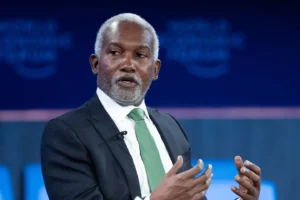
Nigeria has firmly rejected attempts by the United States government to offload Venezuelan deportees and third-country prisoners onto its soil, with Foreign Affairs Minister Yusuf Tuggar declaring that the country is not a dumping ground. In an unusually colorful rebuke, Tuggar quoted American rap legend Flava Flav, saying: “Flava Flav has problems of his own. I can’t do nothin’ for you, man.”
That sentiment, Tuggar explained, mirrors Nigeria’s current position: “We already have over 230 million people. It will be difficult for a country like Nigeria to accept Venezuelan deportees, some straight out of U.S. prisons. We have enough problems of our own.”
His comments come amid growing diplomatic tensions between Washington and several African nations over the Trump administration’s recent policy moves. Chief among them is a visa restriction that now limits most non-diplomatic Nigerian travelers to single-entry visas valid for only three months. Washington framed the move as part of a global “reciprocity realignment,” but officials in Abuja see it differently.
“We see this as a pressure tactic,” said Tuggar during an interview with Channels TV. “If we accept those deportees, people would criticize us. If we don’t, then we face retaliation. It’s not reciprocal diplomacy—it’s coercion.”
The U.S. State Department has denied any political motivation behind the visa changes, insisting they are based on security and technical compliance requirements. However, the context appears more layered. Reports suggest that Nigeria, along with countries like Liberia, Mauritania, Senegal, Guinea-Bissau, and Gabon, was approached to accept migrants deported from the U.S.—especially those whose home countries refused or delayed their return.
Nigeria’s name has surfaced repeatedly in diplomatic briefings and press reports, not because it has accepted such requests, but because it has refused. Minister Tuggar made it clear that any conversation about deportees must be rooted in shared interest and fairness, not threats or backroom deals.
Even more concerning to Nigerian officials is the Trump administration’s suggestion of additional economic penalties for countries aligned with BRICS, the bloc of emerging economies originally composed of Brazil, Russia, India, China, and South Africa. In recent months, the group expanded to include Egypt, Ethiopia, Iran, Saudi Arabia, and the UAE. While Nigeria is not a full member, it became a partner country earlier this year—another reason some suspect it’s in the U.S. firing line.
Also, read: Former Nigerian President Muhammadu Buhari Dies at 82 After Prolonged Illness
“They’re talking about tariffs and trade penalties, but that doesn’t mean it’s connected to BRICS,” Tuggar said. “Still, we must be careful not to trade our sovereignty for temporary relief.”
The Trump administration’s tone has only fueled skepticism. During a recent summit with five African leaders in Washington, President Trump expressed hopes to “bring down high visa overstay rates” and “make progress on safe third-country agreements,” hinting at the administration’s broader strategy to get other nations to take in deportees the U.S. no longer wants.
While the U.S. Embassy in Abuja maintains that its visa policy isn’t a form of retaliation, Nigerian officials aren’t convinced. “Let’s call it what it is,” said one senior diplomat who asked not to be named. “They’re making us choose between our dignity and their demands.”
Despite this diplomatic tug-of-war, Tuggar emphasized that Nigeria still values its relationship with the United States and is working toward more productive avenues of cooperation. “We have a lot of gas, rare earths, and critical minerals that American industries need. Let’s focus on mutually beneficial deals—not pressure politics.”
For now, Nigeria’s stance is clear: it will not become a holding bay for foreign deportees, no matter the diplomatic consequences.
“We’re not turning our backs on the world,” Tuggar concluded. “But no country—no matter how large—should be expected to absorb the burdens of others without regard for its own people.”

