

Nigeria is mourning the death of one of its most consequential and polarizing leaders, former President Muhammadu Buhari, who passed away in London on Sunday at the age of 82 following a long illness. His death was confirmed in an official statement released by the presidential press office.
President Bola Ahmed Tinubu, his successor and longtime political ally, paid tribute to Buhari’s life and legacy, calling him “a patriot, a soldier, and a statesman” whose leadership helped shape the course of modern Nigeria. Tinubu has dispatched Vice President Ibrahim Shettima to the United Kingdom to oversee the return of Buhari’s remains for a state funeral.
“President Buhari stood firm through the most turbulent times,” Tinubu said in a statement. “He led with quiet strength and an unwavering commitment to the unity and progress of Nigeria.”
Born in December 1942 in Daura, Katsina State, Muhammadu Buhari’s journey through Nigeria’s political landscape was anything but ordinary. A Fulani Muslim and trained military officer, Buhari studied in Nigeria, the UK, India, and the U.S., rising through the ranks before taking power in 1983 through a military coup. Just two years later, he was ousted in another coup.
After decades in political limbo, Buhari staged a dramatic comeback as a self-described “reformed democrat.” Running on an anti-corruption platform and national renewal, he won the 2015 presidential election in a historic landslide, becoming the first opposition candidate to defeat an incumbent in Nigeria’s democratic history. He was reelected in 2019.
During his presidency, Buhari tackled a long list of national challenges: a sluggish economy, systemic corruption, and multiple security threats including the Boko Haram insurgency in the northeast and clashes involving Fulani herdsmen across the country. While praised for his tough stance against graft and insurgency, critics argued he was slow to act, especially on economic reforms.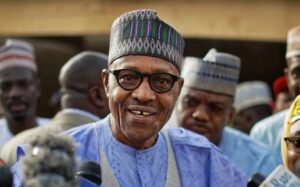
“He was a strong and principled leader,” said Bismarck Rewane, a prominent Nigerian economist and former advisor to Buhari. “Some saw his rigidity as a flaw, but I saw it as strength. He had a rare moral compass, even if he didn’t always get the economics right.”
Buhari’s administration, especially in his first term, was marked by delay and indecision. He took nearly six months to appoint ministers, and his refusal to devalue the naira amid global oil price drops frustrated investors and deepened economic turmoil. Analysts have long suggested that his resistance to free-market policies was rooted in distrust dating back to his first stint as military ruler in the 1980s.
Despite economic missteps, Buhari retained a loyal base that appreciated his supposed no-nonsense demeanor and nationalist message. His leadership style—often stoic and detached—stood in sharp contrast to the more flamboyant political figures of the day.
In his second term, Buhari faced growing dissatisfaction, particularly among young Nigerians. Protests erupted across the country in 2020 over police brutality, especially targeting the now-disbanded Special Anti-Robbery Squad (SARS). The demonstrations—known as #EndSARS—became a watershed moment in Nigeria’s civic activism, drawing sharp international attention. Dozens of youth were allegedly killed at the Lekki Tollgate protests with Buhari being blamed for neglect and incompetence. Although he promised reforms, many believed his response lacked urgency.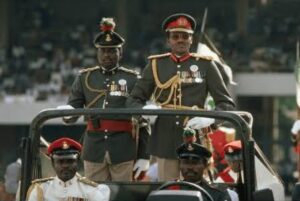
Still, in one of his final public appearances at the United Nations in 2022, Buhari warned against African leaders who manipulate term limits to stay in power, a clear reaffirmation of his decision not to seek a third term. He ended his presidency in 2023 by endorsing Tinubu, calling him “the best person for the job.”
Buhari leaves behind a complex legacy—one of discipline and duty, but also of missed economic opportunities and persistent insecurity. He is survived by his wife, Aisha Buhari, and their children.
As Nigeria reflects on his decades of service, the streets of Abuja and across the north have seen candlelight vigils and quiet prayers, a testament to the weight his name still carries.

