

In the heart of Senegal’s buzzing capital, a crowd roared—not for a football match or a pop star—but for the sleek, towering figure of a sheep named Prive. Draped in elegance and stature, this one-year-seven-month-old Ladoum ram strutted onto the stage like royalty, earning the coveted title of Best Adult Male in one of the country’s most extravagant and culturally rich competitions: the annual Ladoum Sheep Beauty Pageant.
Yes, you read that right. Beauty pageants aren’t just for humans in Senegal. Here, it’s the woolly elite who steal the spotlight.
“To win with Prive—it means everything,” said breeder Isaiah Cisse, beaming as he gently massaged the champion’s glossy coat. “I cherish him so much. This is more than livestock; this is legacy.”
Cisse estimates Prive’s value at over $100,000—no surprise for a Ladoum, often called the “Ferrari of Sheep.” Originating as a crossbreed in Senegal, Ladoum sheep are prized not for meat or sacrifice, but for their sheer grandeur: towering up to 4 feet, weighing up to 400 pounds, with coiled, symmetrical horns and velvety coats that glisten under the Dakar sun. These majestic animals are symbols of prestige and status—living trophies in a nation where livestock is both culture and currency.
This year’s event, held in a festive open arena in Dakar, featured more than a dozen Ladoums competing in three categories: adult male, adult female, and young/promising. Judges, armed with scorecards, rated each sheep’s beauty, height, horn symmetry, body texture, and size.
The sheep weren’t the only ones making an entrance. Each contestant was led to the stage to the sound of live Assiko music, as griots chanted their names like national heroes. Spectators cheered, phones snapped photos, and for a few hours, Senegal’s capital buzzed with woolen glamour.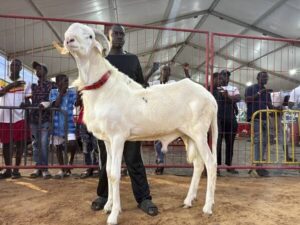
“You can’t see a sheep like this in Africa—or even the world,” said judge Elhadji Ndiaye, his voice filled with admiration. “Ladoum is special.”
Among the rising stars of the competition was 22-year-old breeder Musa Faye, whose sheep Diomaye—named after newly elected President Bassirou Diomaye Faye—competed in the young category. Faye sees his sheep not just as an animal but as part of the family.
“I spend a lot of time with him, play with him,” Faye said. “I’m already preparing him for next year’s competition. I know he’ll win.”
For many families, breeding Ladoum sheep is a passion passed down through generations. At just 12 years old, Ibrahim Diagne is already dreaming of bringing his own sheep to the pageant one day.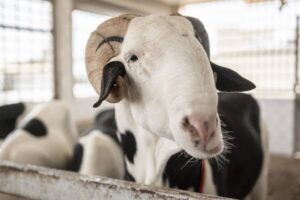
“My parents do this, and I love it too,” he said, watching the show in awe.
That tradition runs deep. This year’s Best Junior Male, Alou, is the son of a past champion. His proud breeder, Maniane Ndaw, said the win felt like a family triumph.
“It’s a great, great pleasure,” Ndaw said. “It shows the lineage is a good one.”
Luxury in Livestock
In a country where a regular sheep sells for around $250, the Ladoum breed operates in a different league. Older specimens often command prices north of $70,000. Buyers come from across the globe—drawn not just by the size and symmetry, but by the cultural significance.
Unlike the common sheep prepared for Eid al-Adha or sold at local markets, Ladoums are raised for glory. Their lives are marked not by sacrifice, but by ceremony, groomed for years, paraded like models, and revered like monarchs.
For Senegal, the Ladoum is more than an animal. It’s a canvas of heritage, a beacon of beauty, and a luxurious thread in the rich tapestry of its cultural life.

