
In the spring of 1994, Rwanda was plunged into one of the most devastating genocides of the 20th century.
Over the course of 100 days, an estimated 800,000 Tutsi and moderate Hutu were brutally murdered by extremist Hutu militias.
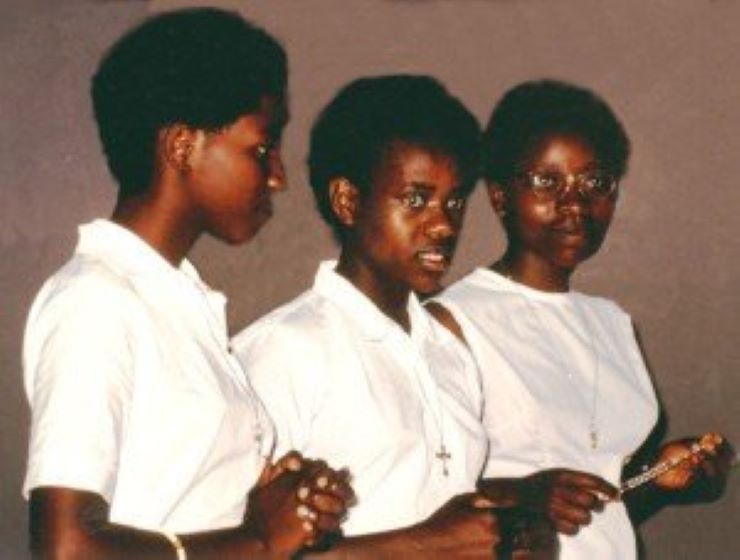
However, what is often not talked about is the incredible bravery of a group of schoolgirls who tried to warn the world about the impending genocide.
In the 1980s, three young girls in a small Rwandan village called Kibeho claimed to have had visions of the Virgin Mary, who identified herself as the “Mother of the Word”.
The girls reported that the Virgin Mary asked everyone to pray to prevent a terrible war. On August 19, 1982, the girls reported seeing visions of violence, dismembered corpses, and destruction. This is the account of the three teenage girls who claimed to have seen these visions.
The Beginning of the Genocide
The seeds of the Rwandan genocide were sown decades before the actual events took place. The country had been divided along ethnic lines for many years, with the Tutsi minority ruling over the majority Hutu population.
In 1959, a Hutu revolution overthrew the Tutsi monarchy and established a Hutu-dominated government.
The next few decades saw periodic outbreaks of violence between the two groups, with the Tutsi often facing discrimination and persecution at the hands of the Hutu government.
In 1990, a Tutsi rebel group invaded Rwanda from neighboring Uganda, sparking a civil war that lasted for four years.
In April 1994, the assassination of Rwandan President Juvénal Habyarimana, a Hutu, triggered the start of the genocide.
Extremist Hutu militias began to target Tutsi and moderate Hutu, accusing them of being traitors and enemies of the state.
Roadblocks were set up across the country, and anyone who was suspected of being a Tutsi was brutally murdered.
The Roots of the Genocide
The Rwandan genocide did not happen overnight; it was the culmination of decades of political, social, and economic tension.
Rwanda is a small country in East Africa that has a complex history of ethnic division. The Tutsi minority had historically held power in the country, while the Hutu majority had been oppressed and marginalized.
In 1959, a Hutu revolution overthrew the Tutsi monarchy and established a Hutu-dominated government.
Tutsi were persecuted and excluded from positions of power, and many fled the country as refugees. This led to a cycle of violence and reprisals, with both sides committing atrocities against the other.
In the 1980s, the Rwandan Patriotic Front (RPF), a Tutsi-led rebel group, was formed in neighboring Uganda. The RPF launched an invasion of Rwanda in 1990, sparking a civil war that lasted for four years. The war ended in 1993 with the Arusha Accords, which established a power-sharing government between the Hutu and Tutsi.
The Trigger for the Genocide
Despite the Arusha Accords, tensions between the Hutu and Tutsi remained high. On April 6, 1994, a plane carrying Rwandan President Juvénal Habyarimana, a Hutu, was shot down near Kigali, the capital of Rwanda.
The exact circumstances of the crash remain unclear, but it is widely believed that it was the result of an attack by the RPF.
The assassination of President Habyarimana was the trigger for the genocide. Within hours of the crash, extremist Hutu militias began to target Tutsi and moderate Hutu, accusing them of being traitors and enemies of the state.
Roadblocks were set up across the country, and anyone who was suspected of being a Tutsi was brutally murdered.
The international community was slow to respond to the crisis, with the United Nations criticized for its failure to intervene effectively.
The UN had a small peacekeeping force in Rwanda at the time, but it was vastly outnumbered and under-equipped.
The US and other Western countries also failed to act, with many reluctant to become involved in what was seen as an internal African conflict.
The Role of the Schoolgirls
Alphonsine Mumureke
Alphonsine Mumureke, a 16-year-old student at Kibeho College in Rwanda, claimed to have received a series of visions from the Virgin Mary between October 1981 and November 1989.
In one of her visions, Alphonsine saw a beautiful woman in a seamless dress and veil who identified herself as the “mother of the word”.
However, the vision also included a terrible warning that Rwanda would become a hell on Earth with rivers of blood. When Alphonsine reported the vision to her friends, teachers, and village, she was ridiculed, scolded, and shunned.
Nathalie Mukamazimpaka
Nathalie Mukamazimpaka was another girl who claimed to have had visions from January 1982 to December 3, 1983, following Alphonsine Mumureke’s experiences.
Her visions centered around the themes of constant prayer and expiation, with the Virgin Mary instructing Mukamazimpaka to perform penances and mortification of the flesh as a form of atonement.
Marie Claire Mukangango
Marie Claire Mukangango, who had previously harassed Alphonsine Mumureke in school due to her claims of seeing visions, went on to experience her own series of apparitions that lasted from March 2 to September 15, 1982.
During this time, the Virgin Mary appeared to Mukangango and instructed her that people should recite the Chaplet of the Seven Sorrows in order to obtain repentance.
The three girls, including Mukangango, Mumureke, and another classmate, came to be known as “the Trinity.”
The Legacy of the Schoolgirls
Despite their efforts, the schoolgirls were unable to prevent the genocide from happening. But their bravery and determination have not been forgotten.
In 2014, on the 20th anniversary of the genocide, the United Nations honored the schoolgirls for their courage and resilience.
They were awarded the UNESCO-Madanjeet Singh Prize for the Promotion of Tolerance and Non-Violence, and their story was finally given the recognition it deserved.
The legacy of the schoolgirls lives on today, serving as a reminder of the power of young people to effect change in the world. Their story is a testament to the fact that even in the darkest of times, there is always hope for a better future.
Lessons We Can Learn
The story of the schoolgirls who warned of Rwanda’s genocide is a powerful one, with many lessons that we can learn from. Here are just a few of them:
The power of young people: The schoolgirls were young, but they refused to stay silent in the face of injustice. Their story is a powerful reminder that young people can make a difference in the world, and that we should never underestimate their ability to effect change.
The importance of speaking up: The schoolgirls spoke out against the genocide, even when it seemed like nobody was listening. Their story is a reminder that it is always important to speak up against injustice, even if it feels like your voice is not being heard.
The dangers of division: The genocide in Rwanda was fueled by ethnic division and hatred. The schoolgirls’ story reminds us of the dangers of division and the importance of unity and understanding.
The need for international cooperation: The international community’s slow response to the genocide in Rwanda allowed it to continue for far too long. The schoolgirls’ story is a reminder of the need for international cooperation in times of crisis, and the importance of acting quickly and decisively to prevent atrocities from happening.
The power of hope: Despite the horror of the genocide, the schoolgirls never gave up hope that things could be better. Their story reminds us of the power of hope and the importance of never losing faith in a better future.
The Legacy of the Genocide
The Rwandan genocide left a deep scar on the country and its people. The violence and trauma of the genocide continue to affect Rwandans to this day, with many struggling to come to terms with the horrors that they witnessed.
The genocide also had a profound impact on the wider region, with refugees fleeing to neighboring countries and sparking a humanitarian crisis.
The aftermath of the genocide was marked by a period of national reconciliation and the establishment of the International Criminal Tribunal for Rwanda (ICTR), which sought to bring the perpetrators of the genocide to justice.
The ICTR indicted dozens of individuals for crimes against humanity, genocide, and war crimes, including high-ranking officials and military officers.
The legacy of the genocide also includes a renewed focus on human rights and the prevention of atrocities.
The United Nations has established a framework for the prevention of genocide and other mass atrocities, and many countries have taken steps to ensure that such atrocities never happen again.
The Responsibility to Protect (R2P) doctrine, adopted by the UN in 2005, emphasizes the need for the international community to intervene to prevent mass atrocities when a state is unable or unwilling to protect its citizens.
Rwanda itself has made significant progress in the post-genocide era, with a growing economy and a stable political system.
The country has also made efforts to promote unity and reconciliation, with initiatives such as the Gacaca courts, which were established to bring perpetrators and victims of the genocide together in a process of restorative justice.
While the scars of the genocide are still visible, Rwanda has shown that it is possible to move beyond such a traumatic event and build a better future for all its citizens.

