Indigenous Tribes in South Africa
South Africa is home to one of the most culturally diverse populations on earth a nation of 11 official languages, dozens of ethnic groups, and indigenous tribes with histories stretching back tens of thousands of years. The indigenous tribes in South Africa range from the ancient Khoisan hunter-gatherers, widely recognized as among the world’s oldest surviving peoples, to the Nguni and Sotho-Tswana groups whose kingdoms shaped the political and cultural landscape of Southern Africa for centuries. Understanding these tribes means understanding the deepest roots of South African identity, history, and cultural life.
Who Are the Indigenous Peoples of South Africa?
In the strictest sense, the term “indigenous peoples” in South Africa refers specifically to the Khoisan, the San and the Khoekhoe who were the first inhabitants of the land long before Bantu-speaking peoples migrated south. However, in common usage, “indigenous tribes in South Africa” refers broadly to all African ethnic communities whose cultural roots predate European colonization including the Zulu, Xhosa, Sotho, Ndebele, Venda, Tsonga, and many others. South Africa is often called the Rainbow Nation precisely because of this extraordinary tapestry of indigenous cultures coexisting within a single national boundary.
- The Khoisan are the First Nations peoples the oldest known inhabitants of South Africa
- Bantu-speaking Nguni and Sotho-Tswana groups migrated south over centuries and settled across the region
- South Africa has 11 official languages each connected to a distinct indigenous cultural community
- Indigenous tribes in South Africa make up most of the country’s 60 million population
- The 1996 South African Constitution enshrines the rights to culture, language and heritage of all indigenous groups
The San — Africa’s Oldest Indigenous People
Who Are the San People?
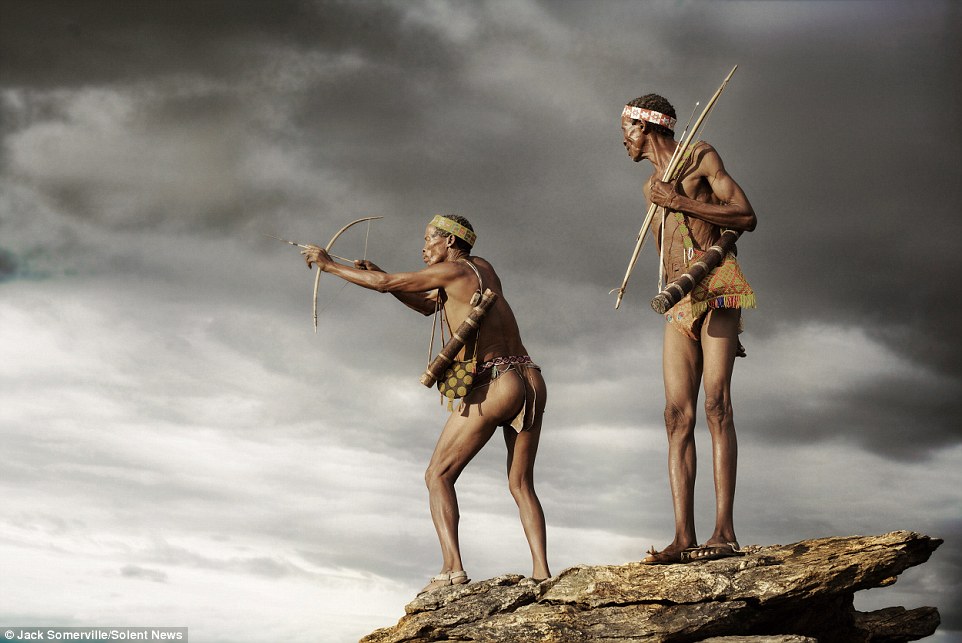
The San also historically known as Bushmen, though this term is now considered offensive are the oldest indigenous tribe in South Africa and among the oldest cultures in the entire world, with genetic ancestry tracing back to the very origins of modern humanity. Before the arrival of Bantu-speaking peoples and European colonizers, the San inhabited virtually the entire southern African subcontinent as nomadic hunter-gatherers with extraordinary ecological knowledge. Today, approximately 90,000 San people survive across Southern Africa, with smaller communities in South Africa’s Northern Cape and Kalahari region.
San Culture, Language, and Rock Art
The San speak languages belonging to the Khoisan language family famous for their distinctive click consonants, represented in writing as symbols like !, /, and ||. These click languages are among the most phonologically complex in the world and are considered by linguists to be among the oldest human languages still spoken. The San’s most enduring cultural legacy is their extraordinary rock art paintings and engravings found across South Africa’s mountains and caves that document their spiritual beliefs, hunting practices, and daily life in vivid detail dating back thousands of years. Learn about the continuation of these ancient traditions at the Afro School of Culture.
San Spiritual Beliefs and Healing Traditions
San spirituality centers on the concept of n/om a spiritual energy or potency that healers, known as n/om-kxaosi, enter a trance state to access during healing dances. The healing dance is one of the most important rituals in San culture a community ceremony in which drumming, singing, and sustained movement allow the healer to enter an altered state of consciousness and draw on spiritual power to heal the sick. African cultural dance has its ancient roots in exactly these kinds of sacred community ceremonies that the San have practiced for millennia.
The Khoekhoe — South Africa’s Ancient Pastoralists
Who Are the Khoekhoe?
The Khoekhoe historically known by the offensive colonial term “Hottentots” were the first South African indigenous people encountered by European sailors when they arrived at the Cape in the 15th century. Unlike the nomadic San, the Khoekhoe were pastoralists who herded large numbers of cattle and sheep across the Cape region a lifestyle that gave them significant economic power and social organization by the standards of the time. Together, the San and Khoekhoe are collectively known as the Khoisan, recognized as the First Nations peoples of South Africa.
Khoekhoe Subgroups in South Africa
The Khoekhoe people of South Africa are not a single community, but several distinct groups spread across different regions of the country. The Nama reside primarily in the Northern Cape, the Korana in Kimberley and the Free State, and the Griqua across the Western Cape, Eastern Cape, and other provinces. The Cape Khoekhoe, who bore the full brunt of early European colonization, were severely decimated by smallpox epidemics introduced by settlers a devastating loss from which their communities have never fully recovered.
- Nama — Northern Cape, still speaking the Khoekhoe language widely
- Korana — Kimberley and Free State region
- Griqua — mixed heritage community across multiple South African provinces
- Cape Khoekhoe — Western and Eastern Cape, most severely affected by early colonization
The Zulu — South Africa’s Largest Indigenous Tribe
History and Origin of the Zulu People
The Zulu are the largest single indigenous tribe in South Africa, with a population of approximately 11 million people, and among the most internationally recognized African cultures in the world. The Zulu kingdom rose to prominence under the legendary military leader Shaka Zulu in the early 19th century, a period of extraordinary political and military transformation known as the Mfecane, in which the Zulu nation expanded dramatically and reshaped the political geography of Southern Africa. The Zulu people trace their origins to the Great Lakes region of Central Africa, migrating south over centuries before establishing their kingdom in present-day KwaZulu-Natal.
Zulu Culture, Dance, and Traditions
Zulu culture is famous worldwide for its warrior tradition, elaborate ceremonies, and striking cultural expressions. The Zulu Reed Dance Umkhosi woMhlanga is one of South Africa’s most celebrated annual ceremonies, in which thousands of young Zulu women present reeds to the Queen Mother in a display of cultural pride and communal identity. African cultural dance in the Zulu tradition is inseparable from identity the Indlamu war dance, performed in full traditional regalia, communicates strength, precision, and cultural pride simultaneously. Experience this living tradition with expert African dance instructors.
Zulu Traditional Attire and Beadwork
Zulu traditional dress is one of the most visually distinctive and culturally rich in all indigenous South Africa. Animal skins, feathers, and elaborately coded beadwork communicate social status, age, and marital status in a visual language that every Zulu community member reads instantly. Beadwork in Zulu culture carries an extraordinary depth of meaning, the famous “love letters” created by young Zulu women encode emotional messages through specific color combinations that communicate their feelings without a single written word.
The Xhosa — The Nation of Nelson Mandela
Who Are the Xhosa People?
The Xhosa are South Africa’s second-largest indigenous tribe, with approximately 8 million people primarily in the Eastern Cape province. They are perhaps most internationally known as the ethnic group of Nelson Mandela and Desmond Tutu, two of the world’s most celebrated advocates for human dignity and democratic governance. The Xhosa are closely related to the Zulu culturally and linguistically, sharing Nguni language roots that include the distinctive click sounds that make isiXhosa one of the most phonologically remarkable languages in the world.
Xhosa Initiation Rites and Cultural Traditions
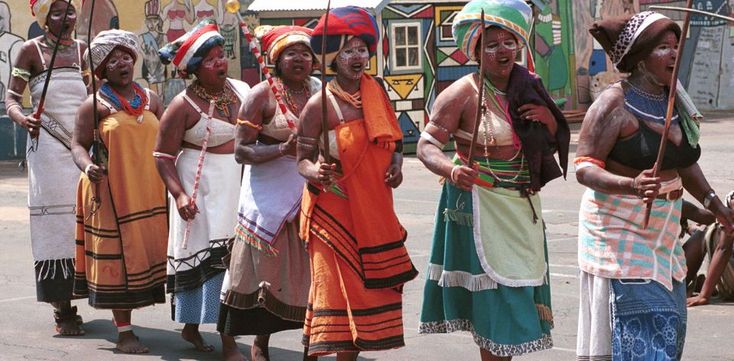
The most important cultural practice of the Xhosa people is Ulwaluko the male initiation ceremony that marks the transition from boyhood to manhood and is considered the most significant rite of passage in Xhosa cultural life. During this ceremony, initiates undergo circumcision, spend weeks in seclusion in the bush, and emerge as men fully prepared to take their place in Xhosa society a process so sacred and so culturally central that it has been maintained continuously for centuries despite urbanization and modernization. Female initiates undergo a parallel process called Intonjane, celebrating their transition to womanhood with community ceremony and the teaching of cultural values by elder women.
Xhosa Language and Click Sounds
IsiXhosa is famous globally for its three distinct types of click dental, palatal, and lateral that are represented in writing by the letters c, q, and x respectively. These click consonants, inherited from ancient Khoisan languages through centuries of cultural contact, give isiXhosa a musical quality that distinguishes it from virtually every other language in the world. Nelson Mandela’s ability to speak isiXhosa fluently clicks and all was a source of immense cultural pride for the Xhosa people and a powerful symbol of his rooted connection to his indigenous cultural heritage.
The Ndebele — Masters of Geometric Art and Color
Ndebele Culture and Artistic Tradition
The Ndebele people of South Africa are internationally renowned for one of the most visually striking artistic traditions of any indigenous tribe in South Africa their extraordinary geometric wall paintings that decorate the exterior walls of their homes in bold, precise patterns of black, white, and vibrant primary colors. This art form is exclusively practiced by women and represents far more than decoration, it communicates cultural identity, social status, and community belonging in a visual language that is immediately recognizable as distinctly Ndebele. The Ndebele are concentrated primarily in the Mpumalanga and Limpopo provinces and are classified as part of the Nguni language group.
Ndebele Beadwork and Traditional Dress
Ndebele traditional dress is among the most elaborate and culturally significant of any indigenous tribe in South Africa. Married Ndebele women traditionally wear brass rings called idzilla around their necks, arms, and legs rings that are added to throughout a woman’s life and are never removed while her husband is alive, making them a living record of her marital status and cultural identity. Ndebele beadwork uses geometric patterns in brilliant colors to communicate life stage, marital status, and regional identity making every garment a wearable cultural document.
The Sotho-Tswana Group — Builders of the Highveld
Basotho, Tswana, and Pedi Peoples
The Sotho-Tswana group comprises three major related peoples the Basotho of the Free State and Lesotho, the Tswana of the Northwest province, and the Pedi (BaPedi) of Limpopo who together represent the second-largest African language group in South Africa with approximately 7 million speakers. These communities were historically characterized by settled agricultural lifestyles on the high level, constructing substantial stone-walled settlements and developing sophisticated systems of governance and trade that predate European contact. The Basotho blanket worn as a royal garment and cultural symbol is one of the most iconic items of traditional dress associated with any indigenous tribe in South Africa.
Sotho-Tswana Cultural Traditions
The initiation school known as lebollo for girls and bjale for Pedi speakers is one of the most important cultural institutions among the Sotho-Tswana peoples, marking the transition to adulthood through months of cultural education in the bush under the guidance of elders. Music and dance in Sotho-Tswana culture is characterized by distinctive harmonic singing, foot-stamping dances, and the morabaraba a traditional board game that have been practiced as community social activities for generations. Discover how these African cultural dance traditions survive and thrive in the modern world.
The Venda, Tsonga, and Swazi — South Africa’s Diverse Smaller Tribes
The Venda People
The Venda people of Limpopo province are one of the most culturally distinct of all indigenous tribes in South Africa, with a unique cultural identity that blends East African, Central African, Nguni, and Sotho influence in ways found nowhere else. Venda culture is particularly known for its sacred Lake Funduzi believed to be the home of the python god Zwivhanda and the Domba or python dance performed by young women as part of their initiation into womanhood. Venda traditional music, featuring the tshigombela communal dance and the mbila xylophone, represents one of the most musically sophisticated traditions among the indigenous tribes in South Africa.
The Tsonga (Shangaan) People
The Tsonga people also known as Shangaan are a diverse ethnic group concentrated primarily in Mpumalanga and Limpopo provinces, with a cultural identity that blends Tsonga, Zulu, and Mozambican influences into something distinctly their own. Tsonga culture is famous for its xitsonga language, its spectacular traditional dance called xibelani in which women wear enormous grass skirts that spin dramatically during performance and its rich musical tradition featuring marimbas and percussion. The xibelani dance is one of the most visually striking examples of African cultural dance performed by any indigenous tribe in South Africa.
The Swazi People
The Swazi people of South Africa are closely related to the Zulu and inhabit primarily the Mpumalanga province, with most Swazi people living across the border in the Kingdom of Eswatini. Swazi culture is perhaps most internationally known for the Incwala the sacred kingship ceremony and the Umhlanga Reed Dance, in which tens of thousands of young women gather to pay tribute to the Queen Mother. These ceremonies represent some of the most spectacular and well-preserved royal cultural traditions among all the indigenous tribes in South Africa.
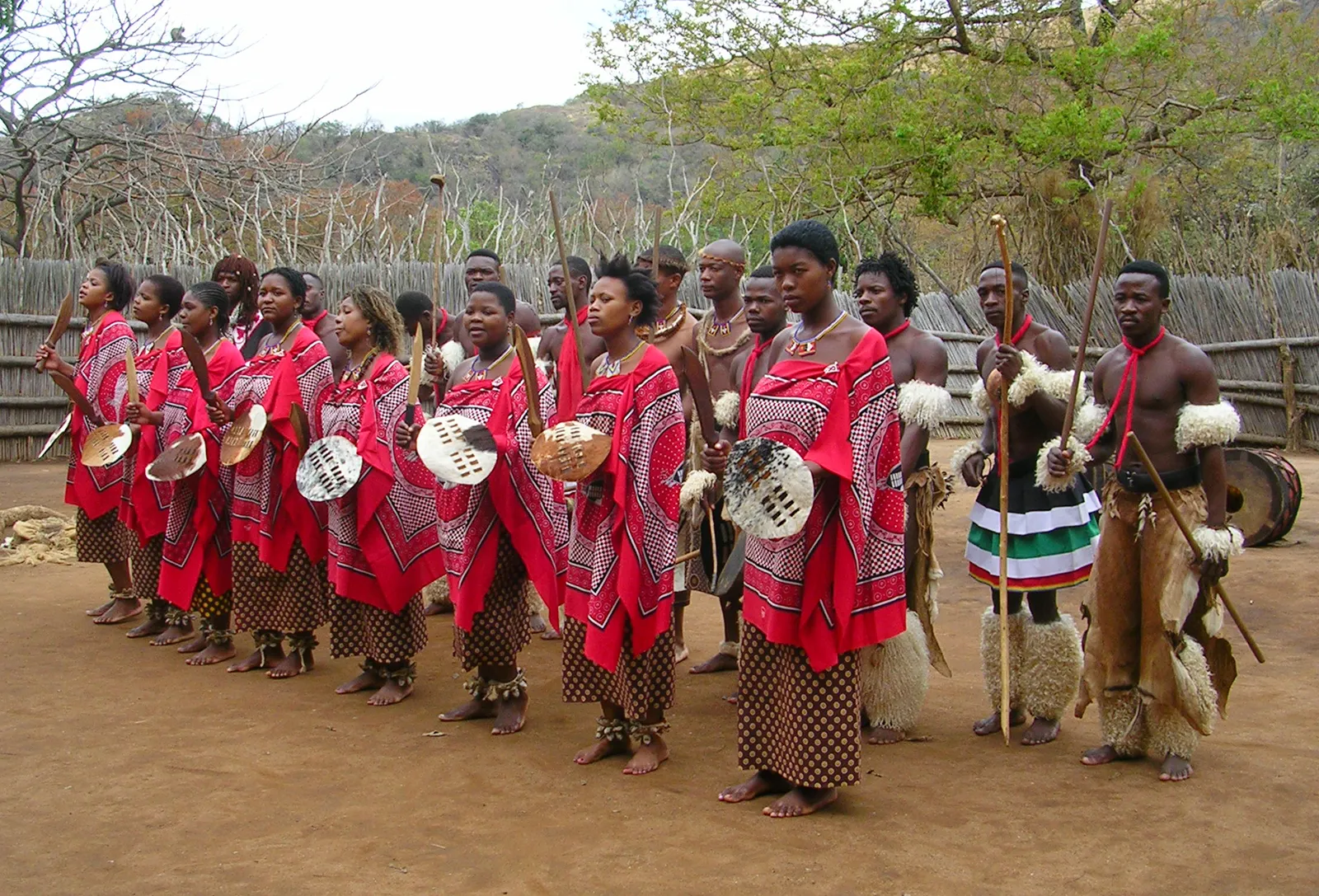
Indigenous Tribes in South Africa — Cultural Traditions They Share
Ancestor Veneration and Spirituality
Across virtually all indigenous tribes in South Africa, a shared belief in the power and presence of ancestral spirits known as amadlozi in Zulu, izinyanya in Xhosa and similar terms across other groups forms the spiritual foundation of cultural life. Ancestors are believed to remain active in the lives of their descendants protecting, warning and occasionally punishing and must be regularly honored through ceremony, offerings, and proper ritual behavior. The figure of the traditional healer sangoma or inyanga plays a crucial role in facilitating communication between the living and the ancestral world across most indigenous tribes in South Africa. Learn about this spiritual tradition at the Afro School of Culture.
Music, Dance, and Oral Tradition
Music and dance are central to the cultural life of every indigenous tribe in South Africa used at initiations, weddings, funerals, harvests, healing ceremonies, and royal events as the primary language of community celebration and spiritual expression. Each tribe has its own distinctive musical tradition from the Zulu Indlamu war dance to the Xhosa umngqokolo throat-singing to the Venda tshigombela communal dance, but all share the understanding that music is never purely entertainment but always a form of cultural communication and spiritual practice. Explore these living traditions through experienced African dance instructors who carry authentic knowledge of South African tribal dance forms.
Initiation Ceremonies and Rites of Passage
Initiation ceremonies marking the transition from childhood to adulthood are among the most important cultural practices shared across indigenous tribes in South Africa. For men, these ceremonies typically involve circumcision, a period of seclusion in the bush away from the community, and the learning of cultural values, responsibilities, and adult identity under the guidance of elders. For women, parallel ceremonies celebrate physical maturity and transmit cultural knowledge about community values, domestic responsibilities, and social identity. These rites of passage have been maintained for centuries and continue to be practiced across South Africa as essential cultural institutions.
Major Indigenous Tribes in South Africa at a Glance
| Tribe | Language Group | Region | Known For |
| San | Khoisan | Northern Cape, Kalahari | Rock art, click language, healing dance, oldest culture |
| Khoekhoe | Khoisan | Northern Cape, Western Cape | First Nation pastoralists, cattle herding tradition |
| Zulu | Nguni | KwaZulu-Natal | Warrior kingdom, Indlamu dance, Reed Dance, beadwork |
| Xhosa | Nguni | Eastern Cape | Click language, Ulwaluko initiation, Nelson Mandela |
| Ndebele | Nguni | Mpumalanga, Limpopo | Geometric wall art, brass ring dress, beadwork |
| Basotho | Sotho-Tswana | Free State, Lesotho border | Basotho blanket, highveld agriculture, initiation schools |
| Tswana | Sotho-Tswana | Northwest province | Settled agricultural communities, communal governance |
| Pedi (BaPedi) | Sotho-Tswana | Limpopo | Bjale initiation, harmonic singing, traditional dance |
| Venda | Venda | Limpopo | Sacred Lake Funduzi, Domba python dance, mbila music |
| Tsonga (Shangaan) | Tsonga | Mpumalanga, Limpopo | Xibelani spinning dance, marimba music, diverse culture |
| Swazi | Nguni | Mpumalanga | Incwala ceremony, Umhlanga Reed Dance, royal culture |
Colonial Impact on Indigenous Tribes in South Africa
The arrival of European colonizers first the Portuguese in the 15th century, then the Dutch in 1652, and finally the British had a catastrophic and lasting impact on the indigenous tribes in South Africa. The San and Khoekhoe bore the earliest and most devastating effects smallpox epidemics introduced by settlers decimated their populations, their lands were seized, their languages suppressed, and their people forced into farm labor or driven from traditional territories. Apartheid the formal system of racial segregation enforced by the South African government from 1948 to 1994 classified the Khoisan as “colored” rather than indigenous, denying them the political recognition their First Nations status deserved.
Indigenous Tribes in South Africa Today
In post-apartheid South Africa, the indigenous tribes in South Africa are actively reclaiming, preserving, and celebrating their cultural heritage with a pride and confidence that previous generations were often denied. The 1996 Constitution guarantees the rights to culture, language, and heritage of all South African communities, and cultural institutions, schools, and community organizations across the country are working to preserve and transmit indigenous knowledge systems, languages, and traditions to younger generations. South Africa’s position as the Rainbow Nation is not just a political slogan it is a daily lived reality in which the traditions of its indigenous tribes continue to shape national identity, music, food, dance, and spiritual life. Explore these living traditions through ILoveAfrica.com and the Afro School of Culture.
- San and Khoekhoe communities actively asserting their First Nations identity and land rights
- Traditional initiation ceremonies maintained across Zulu, Xhosa, Sotho, and other communities
- Indigenous languages preserved through South Africa’s 11 official language policy
- Cultural dance, music, and beadwork traditions taught in community schools and cultural centers
- Tourism built around authentic indigenous cultural experiences supporting tribal communities
Discover the authentic food traditions of South Africa’s indigenous tribes through multicultural Afro cuisines and experience their living dance heritage through African cultural dance at ILoveAfrica.com.
South Africa’s indigenous tribes are not museum pieces they are living, evolving, fiercely proud communities whose cultural traditions have survived colonization, apartheid, and globalization and emerge stronger, more celebrated and more globally recognized with every passing year.
FAQs — Indigenous Tribes in South Africa
What are the indigenous tribes in South Africa?
South Africa’s major indigenous tribes include the San, Khoekhoe, Zulu, Xhosa, Ndebele, Basotho, Tswana, Pedi, Venda, Tsonga, and Swazi. The San and Khoekhoe are the First Nations peoples the original inhabitants of the land while the Nguni and Sotho-Tswana groups are Bantu-speaking peoples who settled across the region over centuries.
Which is the oldest indigenous tribe in South Africa?
The San people are the oldest indigenous tribe in South Africa and among the oldest cultures in the entire world with genetic ancestry tracing back to the very origins of modern humanity. They inhabited the southern African subcontinent for at least 20,000 years before the arrival of Bantu-speaking peoples or European colonizers.
What is the largest tribe in South Africa?
The Zulu are the largest indigenous tribe in South Africa with approximately 11 million people, making up around 22% of the country’s population. They are primarily concentrated in KwaZulu-Natal province and are among the most internationally recognized African cultures in the world.
What language do South African indigenous tribes speak?
South Africa has 11 official languages reflecting its indigenous tribal diversity isiZulu, isiXhosa, Sepedi, Setswana, Sesotho, Xitsonga, siSwati, Tshivenda, isiNdebele, Afrikaans, and English. The San and Khoekhoe speak Khoisan languages famous for their distinctive click consonants.
What traditions do South African indigenous tribes share?
Most indigenous tribes in South Africa share ancestor veneration, initiation ceremonies marking adulthood, communal governance through elder councils, and the centrality of music and African cultural dance in ceremony and daily life. The Ubuntu philosophy “I am because we are” reflects a communal worldview shared across most South African tribal cultures. Learn more at the Afro School of Culture.

