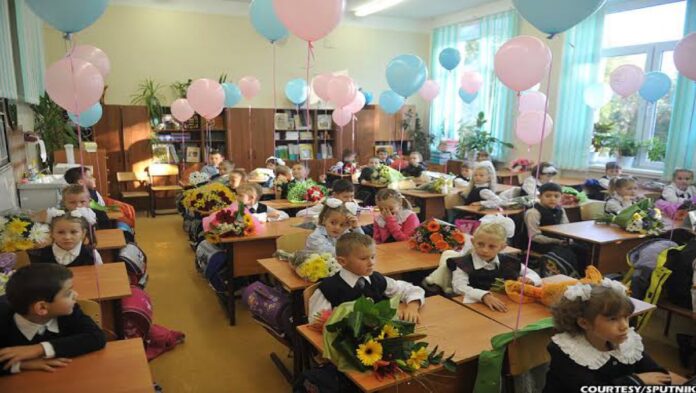
In a bid to strengthen its ties with the African continent, the Russian government has unveiled plans to introduce instruction in three major African languages in selected Moscow schools.
Beginning in September 2023, four undisclosed schools in Moscow will offer classes in Swahili, Amharic, and Yoruba.
This initiative comes at a time when Russia is facing increased international isolation following its invasion of Ukraine.
Swahili, widely spoken in Eastern Africa, along with Amharic and Yoruba, spoken in Nigeria and neighboring countries, have been chosen for their regional significance.
The teaching of African languages in Russian schools will be implemented as part of a special program by the Institute of Asian and African Studies at Lomonosov Moscow State University (IAAS-MSU). The objective is to foster stronger connections with Africa and promote cultural exchange.
The announcement was made during a Sputnik international roundtable on Russia-Africa relations, attended by academics from universities in both Russia and African countries.
The focus of the discussion was the prospects for economic cooperation between the two regions. If successfully implemented, Russia will become the first European nation to introduce African language instruction in public schools.
The news has been met with enthusiasm in both Russia and Africa. The Russian embassy in Uganda joyfully tweeted about the initiative, stating that starting in September, students in four Moscow schools will begin learning Swahili, Amharic, and Yoruba.
Alexei Maslow, director of the Institute of Asian and African Studies at Lomonosov Moscow State University, emphasized the importance of this decision.
Also, read; Kenya Rewards Runner Kipyegon with $35,000 and House for Breaking 2 World Records
He stated that an “abrupt turn to Africa” requires a new generation of specialists who can directly engage with the economy and political elites, understanding the diverse national, ethnic, religious, and linguistic traditions present on the continent.
Swahili, spoken by over 200 million people, is one of the most widely used languages in Africa. It is the official language of Kenya and Tanzania and has been adopted as the common language of the African Union.
Yoruba, spoken by over 50 million people, is primarily found in Nigeria, Benin, and Togo, while Amharic, spoken by over 50 million people, is prevalent in Ethiopia and Eritrea.
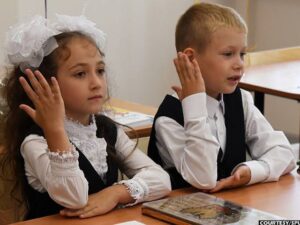
Russia’s efforts to attract African students have been gaining momentum, with more than 100,000 African students expressing interest in studying in Russia and approximately 30,000 currently enrolled in Russian universities.
The country’s recruitment drive has capitalized on factors such as affordability and quality, with Russian universities receiving around $110 million in tuition fees annually from 22,000 African students.
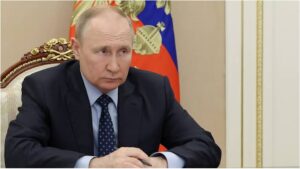
Russian President Vladimir Putin has praised the education cooperation between Russia and Africa, describing it as being “at a traditionally high level.” He also highlighted that his government supports 5,000 out of the 27,000 African students studying in Russia through scholarships.
With the introduction of African language education in Moscow schools, Russia is taking a significant step toward fostering deeper cultural and educational ties with Africa, paving the way for enhanced economic and diplomatic collaborations between the two regions.

