Introduction
South Africa is one of the most culturally rich countries on earth. With 11 official languages, dozens of ethnic groups, and centuries of layered history, the country earns its nickname the Rainbow Nation for good reason. African cultures in South Africa are not relics of the past. They are living, breathing expressions of identity that continue to shape daily life from the smallest rural village to the busiest city center.
Why South Africa Is Known as the Rainbow Nation
Archbishop Desmond Tutu coined the term Rainbow Nation after apartheid ended in 1994, describing a society built from many different peoples, languages, and traditions. South Africa’s constitution recognizes this diversity and actively protects cultural rights, indigenous languages, and communal heritage. The rainbow is not just a metaphor. It reflects the genuine mosaic of identities that coexist in this remarkable country.
Importance of Cultural Diversity
Cultural diversity is more than a talking point in South Africa. It influences how people greet each other, how families celebrate milestones, how communities resolve disputes, and how traditions are passed from one generation to the next. Understanding this diversity is key to understanding the country itself.
Understanding Cultural Diversity in South Africa
Historical Background
South Africa’s cultural landscape was shaped over thousands of years by indigenous communities long before colonial contact. The San and Khoikhoi peoples were among the earliest inhabitants, leaving behind cave paintings and oral traditions that survive today. Later migrations brought Bantu-speaking groups southward, establishing the cultural foundations of the Zulu, Xhosa, Sotho, and other major groups we know today.
Indigenous Communities
Indigenous communities across South Africa developed sophisticated systems of governance, trade, agriculture, and spiritual practice entirely independent of outside influence. These societies were not primitive. They built stone cities like Great Zimbabwe, maintained complex clan structures, and created art forms that continue to inspire the world. To learn more about the civilizations that laid this cultural foundation, explore the story of ancient African civilizations.
Influence of Colonialism and Modernization
European colonialism from the 1600s onward brought profound disruption to indigenous cultures. Languages were suppressed, land was seized, and traditional practices were often criminalized during apartheid. Yet South African cultures proved resilient. Today, a new generation is reclaiming ancestral traditions while also navigating modern life, creating a dynamic blend that is uniquely South African.
Major African Cultural Groups in South Africa
Zulu Culture
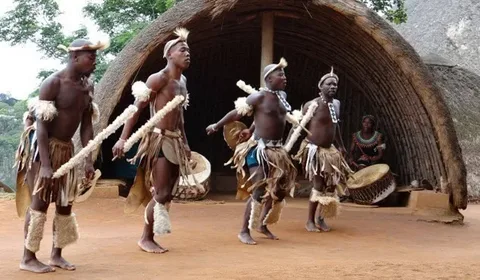
The Zulu are South Africa’s largest ethnic group, with a population of around 12 million people concentrated mainly in KwaZulu-Natal province. Zulu culture is built on a strong sense of community, respect for elders, and pride in warrior heritage. The annual Reed Dance (Umkhosi woMhlanga) is one of the most famous Zulu ceremonies, where thousands of young women gather to celebrate cultural identity and pay tribute to the royal family.
Traditions
Zulu traditions include lobola (bridewealth negotiations), ukweshwama (first fruits ceremony), and elaborate coming-of-age rituals. Ancestor reverence is central to spiritual life, with families regularly holding ceremonies to honor those who have passed. The Zulu people are also known for their fierce historical legacy. For a deeper look at South Africa’s warrior culture, read about African warrior tribes.
Clothing
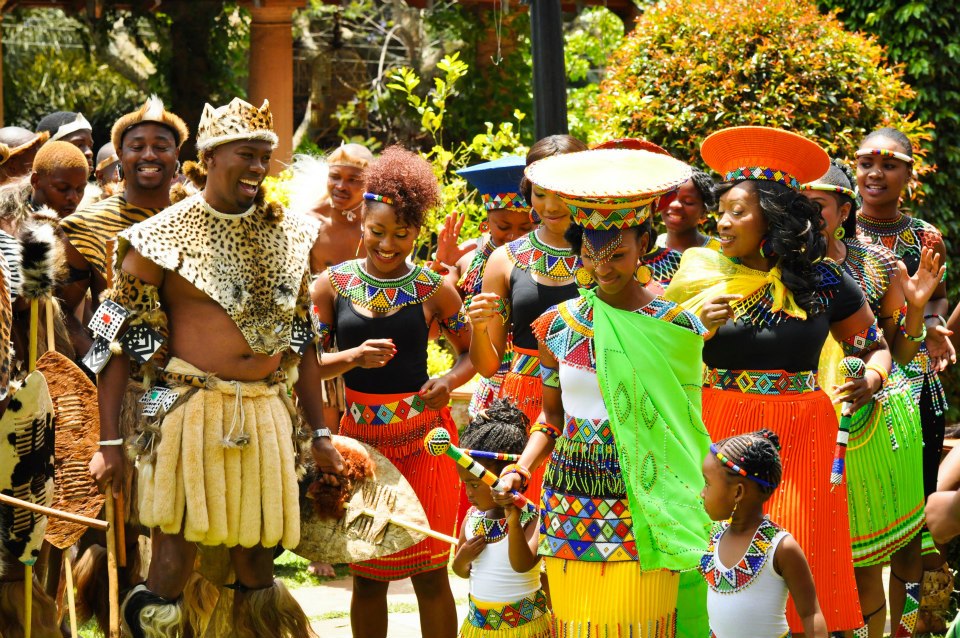
Zulu traditional clothing is vibrant and symbolic. Women wear beaded necklaces, leather skirts, and colorful cloth wraps, with beadwork communicating everything from social status to marital availability. Men wear animal skin garments and carry ceremonial shields during festivals. See how this rich tradition fits into the broader world of African tribal clothing.
Ceremonies
Zulu ceremonies are community events that reinforce belonging and spiritual connection. These include umemulo (a girl’s coming-of-age), traditional weddings with multi-day celebrations, and ancestral feasts known as imisebenzi.
Xhosa Culture
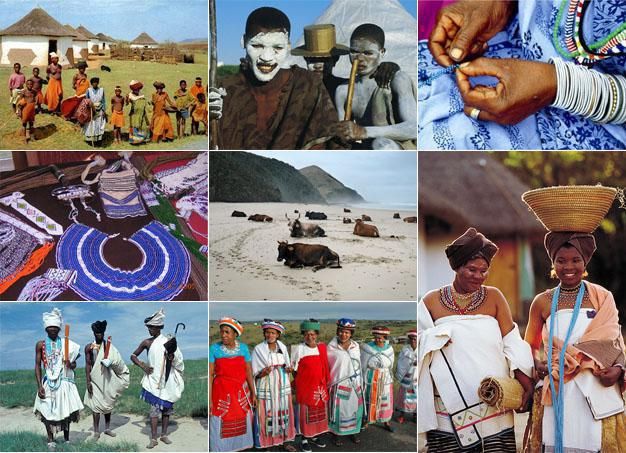
The Xhosa people occupy the Eastern Cape and are the second-largest African ethnic group in South Africa. Nelson Mandela himself was Xhosa, and their cultural influence extends far into the country’s political and artistic life. The Xhosa language is famous for its click consonants, making it one of the most distinctive languages in Africa.
Language
Xhosa is one of South Africa’s 11 official languages and carries deep cultural meaning. Proverbs, poetry, and oral stories are central to how Xhosa communities transmit values across generations. The language itself is considered sacred heritage.
Customs
The ulwaluko (male initiation) and intonjane (female initiation) are among the most important Xhosa rites of passage. Young men undergo a period of seclusion, learning about responsibility, identity, and the expectations of adulthood. These ceremonies are deeply respected and largely kept private within the community.
Heritage
Xhosa beadwork, traditional singing, and iimbongi (praise poetry) are celebrated cultural art forms. Xhosa music traditions have also influenced modern South African jazz and choral music in profound ways.
Sotho Culture
The Sotho people include three main subgroups: the Basotho (Lesotho and Free State), the Bapedi of Limpopo, and the Batswana. Their cultures share common linguistic roots through the Sesotho language family. Sotho culture places enormous emphasis on communal life, with the concept of motho ke motho ka batho (a person is a person through other people) echoing the same Ubuntu philosophy shared across many South African groups.
Tswana Culture
The Tswana people are primarily found in the Northwest Province and neighboring Botswana. They are known for their democratic village governance systems, called kgotla, where community members gather to discuss issues collectively. Tswana oral traditions, praise poetry, and cattle-centered ceremonies remain an important part of cultural life today.
Venda Culture
The Venda people of Limpopo province maintain some of the most spiritually rich traditions in South Africa. The Domba python dance is a famous initiation ceremony performed by young Venda women as they prepare for adulthood. Sacred lakes and forests hold deep spiritual significance, and Venda art, including woodcarving and pottery, is recognized as world-class. The mythological traditions surrounding Venda culture even feature fascinating figures comparable to those found in African folklore creatures.
Tsonga Culture
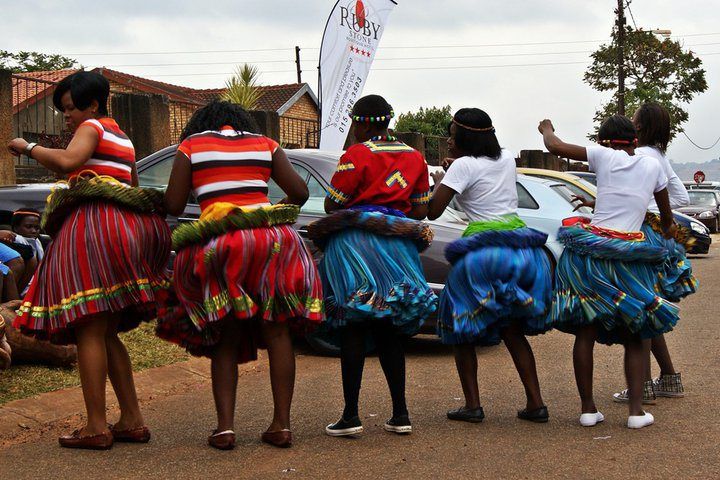
The Tsonga people, primarily in Limpopo and Mpumalanga, are celebrated for their music and dance. The xibelani dance, performed by women in layered skirts that sway dramatically, is one of the most visually striking traditional dances in Africa. Tsonga music, featuring marimbas and percussion, has influenced South African pop music for decades. Learn more about how these traditions connect to the broader world of African dance traditions.
Ndebele Culture
The Ndebele of Mpumalanga and Limpopo are world-famous for their bold geometric art. Ndebele women traditionally paint their homes with striking patterns in vivid colors, a practice that has attracted international attention and influenced global design. Their beadwork is equally distinctive, and Ndebele clothing features layered rings worn around the neck and arms as symbols of beauty and social standing.
Swazi Culture
The Swazi people share cultural ties with Eswatini (formerly Swaziland) and live primarily in Mpumalanga. The Swazi are known for two major national ceremonies: the Incwala (kingship ceremony) and the Umhlanga Reed Dance. Both events reinforce cultural identity, loyalty to the monarchy, and community solidarity. Swazi traditional clothing, music, and dance remain deeply embedded in everyday cultural life.
Languages and Cultural Identity
Official Languages
South Africa has 11 official languages, more than almost any other country on earth. These include Zulu, Xhosa, Afrikaans, English, Sotho, Tswana, Venda, Tsonga, Swati, Ndebele, and Northern Sotho. This multilingualism is both a source of national pride and an ongoing challenge for communication and education policy.
Indigenous Languages
Indigenous languages carry entire knowledge systems within them. Words, proverbs, and naming practices encode history, values, and ecological knowledge that has no direct translation into English or Afrikaans. When a language disappears, that knowledge disappears with it.
Language Preservation
Efforts to preserve endangered indigenous languages are growing. Universities now offer courses in smaller languages, and digital content in Venda, Tsonga, and Ndebele is expanding online. Community radio stations broadcasting in indigenous languages play a particularly important role in keeping these languages alive.
Traditional Customs and Ceremonies
Marriage Traditions
Lobola, or bridewealth, is practiced across many South African cultures. It involves the groom’s family presenting cattle or cash to the bride’s family as a symbol of respect and commitment. The negotiation process is as important as the payment itself, strengthening ties between two families.
Initiation Rites
Initiation ceremonies mark the transition from childhood to adulthood and are taken seriously across Zulu, Xhosa, Sotho, Venda, and many other communities. These rites teach young people about cultural values, responsibility, and their role within the community.
Ancestor Reverence
Ancestral connection is central to many South African spiritual practices. Families perform ceremonies to communicate with and honor their ancestors, seeking guidance, healing, and protection. This practice exists alongside Christianity in many households, reflecting South Africa’s spiritual complexity. For a deeper understanding of these beliefs, explore African traditional religion.
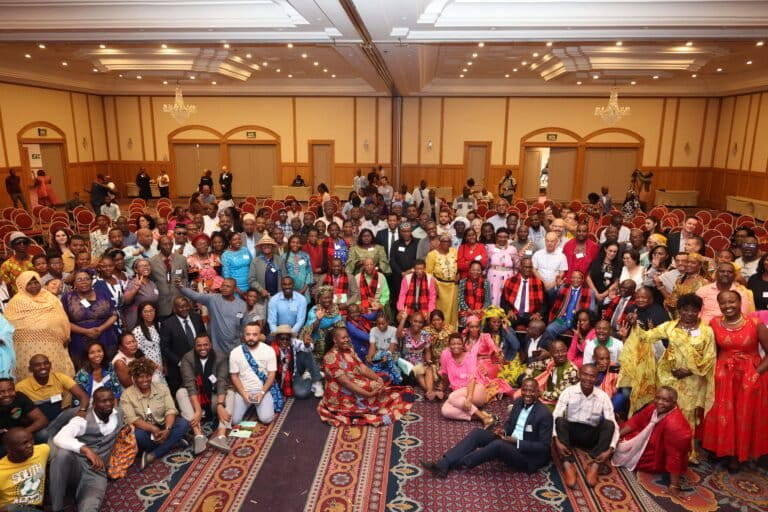
Community Gatherings
Communal feasts, storytelling evenings, and collective farming practices strengthen social bonds across many rural South African communities. These gatherings keep oral traditions alive and reinforce the values of Ubuntu.
Traditional Clothing and Symbolism
Beadwork
Beadwork is not mere decoration in South African cultures. Among the Zulu and Ndebele especially, bead colors and patterns carry specific messages about the wearer’s age, status, relationship, and community. A strand of beads can communicate what words alone cannot. Discover how this tradition connects to the broader world of African outfits for women.
Colors and Meanings
Different cultures assign different meanings to colors. In Zulu beadwork, white symbolizes purity, red represents love or strong emotion, and black can signify marriage. Ndebele geometric patterns use bold primary colors to express cultural identity in the most visual way possible.
Regional Differences
Traditional clothing varies significantly across South Africa’s provinces. What a Zulu woman wears to a ceremony differs entirely from what a Venda or Xhosa woman would wear. This regional variety makes South African fashion one of the most diverse in all of Africa.
Food and Culinary Traditions
Staple Foods
Maize (corn) is the foundation of most South African diets, typically consumed as pap, a thick porridge served at almost every meal. Sorghum porridge, sweet potatoes, and various legumes also feature prominently across different cultures.
Traditional Dishes
Umngqusho (samp and beans), umleqwa (free-range chicken stew), and imifino (wild greens) are beloved across many South African cultures. Braai (barbecue) has transcended cultural boundaries to become a national institution shared by all South Africans. For a fuller picture of what appears on the African table, explore traditional African food.
Modern Influences
Urban migration has blended traditional cooking with global influences, creating exciting food cultures in cities like Johannesburg, Cape Town, and Durban. Yet at weddings, funerals, and family celebrations, traditional dishes always take center stage.
Music, Dance, and Storytelling
Traditional Music
South African music is extraordinarily diverse. Zulu choral singing, Venda drumming, Tsonga marimbas, and Xhosa guitar styles each represent a unique sonic tradition. This variety feeds directly into modern genres from Afrobeats to am piano, one of the most globally influential music movements of the past decade. Explore the full story of African music traditions.
Dance Styles
Traditional dance in South Africa is inseparable from music, ceremony, and community identity. The gumboot dance, originally developed by mine workers, the xibelani of the Tsonga people, and the indlamu of the Zulu are all recognized cultural treasures. Dive deeper into the world of movement and meaning at African dance traditions.
Oral History
Oral storytelling is the original archive of African history. Griots, izimbongi (praise singers), and community elders preserve historical events, genealogies, and moral lessons through performance rather than writing. This tradition is as sophisticated as any written literary form.
Festivals and Celebrations
Heritage Day
Heritage Day, celebrated on September 24 each year, is South Africa’s official recognition of its cultural diversity. Communities across the country hold events showcasing traditional clothing, food, music, and dance. In recent years it has also been popularly celebrated as National Braai Day, reflecting how culture and modernity blend in South Africa.
Cultural Festivals
From the Umkhosi woMhlanga Reed Dance to the Cape Town International Jazz Festival, South Africa’s events calendar is packed with cultural celebrations. The Oppikoppi music festival in Limpopo and the Splashy Fen festival in KwaZulu-Natal also draw crowds celebrating South Africa’s multicultural spirit.
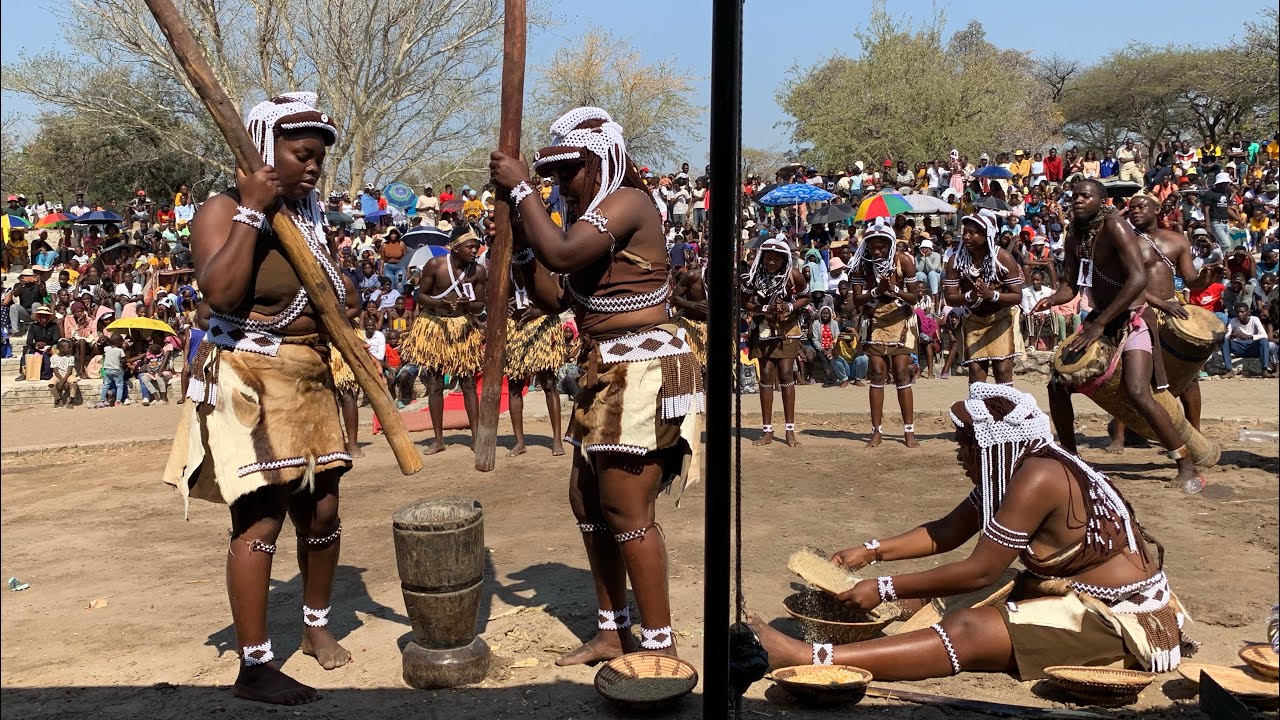
Community Events
Local community events, harvest celebrations, and seasonal ceremonies remain the heartbeat of cultural life, especially in rural areas. These are the moments where traditions are most authentically lived rather than performed.
African Cultures in Modern South Africa
Urbanization
Millions of South Africans have moved from rural areas to cities over the past century, and urban life inevitably reshapes cultural practice. Traditional ceremonies now happen in township backyards. Initiation rites are negotiated around school calendars. Cultural identity adapts without disappearing.
Youth Culture
Young South Africans are finding creative ways to honor their heritage while participating in global culture. Amapiano music, township street fashion, and social media content celebrating African traditions are powerful examples of how the next generation is owning their identity.
Cultural Preservation Efforts
Government agencies, universities, and community organizations are all working to document and preserve South Africa’s cultural heritage. The South African Heritage Resources Agency (SAHRA) leads official efforts, while grassroots groups maintain living traditions through apprenticeships, festivals, and community schools.
Social Media and Heritage
Instagram, TikTok, and YouTube have become unexpected tools for cultural preservation. Young content creators are sharing traditional recipes, explaining initiation ceremonies, and teaching indigenous languages to global audiences, giving ancient traditions a 21st-century platform.
Cultural Tourism in South Africa
Villages
Cultural villages like Lesedi Cultural Village near Johannesburg and Shakaland in KwaZulu-Natal offer visitors a curated introduction to South African traditions. These experiences include traditional music, food, dance, and storytelling.
Museums
The Apartheid Museum in Johannesburg and the Iziko Museums in Cape Town provide powerful historical context for understanding South Africa’s cultural journey. The Museum of the African Diaspora connects these local stories to a global narrative.
Heritage Sites
Robben Island, the Cradle of Humankind, and the Rock Art sites of the Drakensberg are all UNESCO World Heritage Sites that anchor South African cultural tourism. Each tells a different chapter of the country’s extraordinary story.
Cultural Experiences
For travelers who want to experience South African culture authentically, pairing a heritage site visit with time in a rural community, attending a local ceremony (with permission), or exploring township food markets offers a depth that no resort can replicate. South Africa also has some of the world’s most beautiful natural settings that enhance any cultural journey. See the best African countries to visit in 2026 for more inspiration.
Comparison Table of Major South African Cultures
| Culture | Language | Region | Key Traditions | Cultural Highlights |
| Zulu | isiZulu | KwaZulu-Natal | Reed Dance, Lobola, Ukweshwama | Warrior heritage, beadwork, choral music |
| Xhosa | isiXhosa | Eastern Cape | Ulwaluko, Intonjane | Click language, praise poetry, Nelson Mandela |
| Sotho | Sesotho | Free State, Lesotho | Initiation rites, communal governance | Blanket culture, mokorotlo hat |
| Tswana | Setswana | Northwest | Kgotla assemblies, cattle ceremonies | Democratic tradition, proverbs |
| Venda | Tshivenda | Limpopo | Domba dance, sacred sites | Woodcarving, pottery, sacred lakes |
| Tsonga | Xitsonga | Limpopo, Mpumalanga | Xibelani dance, marimba music | Dance culture, joyful celebrations |
| Ndebele | isiNdebele | Mpumalanga | House painting, beadwork rings | Geometric art, bold fashion |
| Swazi | siSwati | Mpumalanga | Incwala, Umhlanga Reed Dance | Royalist traditions, colorful ceremonies |
Frequently Asked Questions
What are the main African cultures in South Africa?
The eight major African cultural groups in South Africa are the Zulu, Xhosa, Sotho, Tswana, Venda, Tsonga, Ndebele, and Swazi. Each has its own language, traditions, and regional identity.
Why is South Africa called the Rainbow Nation?
The term Rainbow Nation was coined by Archbishop Desmond Tutu after apartheid ended in 1994. It reflects the country’s extraordinary cultural, linguistic, and racial diversity coming together under one democratic nation.
What is Ubuntu in South African culture?
Ubuntu is a Nguni Bantu philosophy meaning “I am because we are.” It emphasizes community, compassion, and shared humanity, and it underpins social values across many South African cultures.
How many official languages does South Africa have?
South Africa has 11 official languages, the most of any country in Africa and one of the most in the world. These include Zulu, Xhosa, Afrikaans, English, Sotho, Tswana, Venda, Tsonga, Swati, Ndebele, and Northern Sotho.
What traditional customs are still being practiced today?
Lobola (bridewealth), initiation ceremonies, ancestor reverence rituals, traditional weddings, and communal harvest celebrations are all actively practiced across South Africa today, including in urban areas.
What role does music play in South African culture?
Music is inseparable from ceremony, community, and identity in South African cultures. From Zulu choral singing to Tsonga marimba, traditional music feeds directly into modern genres like amapiano and continues to evolve without losing its roots.
How has modernization affected traditional cultures?
Urbanization has changed how traditions are practiced, but it has not erased them. Ceremonies are adapted to fit city life, and social media is helping younger generations reconnect with and celebrate their cultural heritage.
Conclusion
African cultures in South Africa are not museum pieces. They are alive, dynamic, and constantly evolving as communities navigate modernity while holding onto what matters most. From the beadwork of the Ndebele to the sacred dances of the Venda, from the praise poets of the Xhosa to the drumbeats of the Tsonga, South Africa’s cultural wealth is extraordinary. Understanding these cultures is not just about appreciating history. It is about recognizing the living heartbeat of a nation that has fought hard to celebrate every color of its rainbow.

