
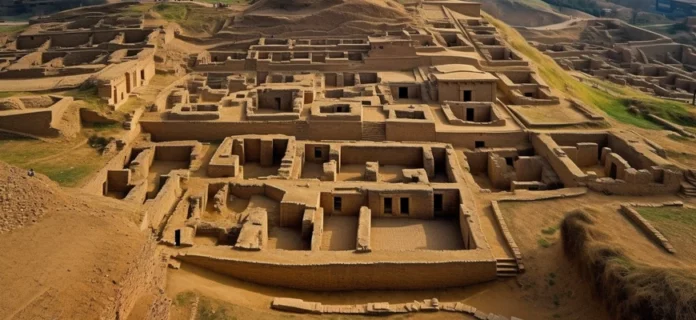
When most people think of ancient civilizations, Egypt comes to mind first. But ancient African civilizations stretch far beyond the Nile Delta across the Sahara, through the rainforests of West Africa, down the Great Rift Valley, and into the stone-walled kingdoms of Southern Africa. Africa was home to some of the most powerful, wealthy, and intellectually sophisticated societies in human history, and their legacies still shape the continent today.
What Were Ancient African Civilizations?
Definition of Civilization
A civilization, in historical terms, refers to a complex society characterized by urban development, social stratification, organized governance, trade systems, and cultural production. By every one of these measures, Africa produced dozens of great civilizations long before European contact. The evidence exists in stone ruins, ancient manuscripts, oral traditions, and archaeological discoveries that continue to expand our understanding of precolonial Africa.
Africa’s Historical Importance
Africa is the birthplace of humanity itself. The oldest known stone tools, the earliest anatomically modern humans, and the first evidence of symbolic thinking all come from African soil. It is therefore no surprise that Africa also produced some of the world’s earliest and most enduring civilizations. Understanding ancient African lifestyle and society is essential for any serious engagement with world history — because African history is world history.
Geographic Diversity and Development
Ancient African civilizations developed in response to extraordinarily varied environments. The Nile Valley supported dense agricultural populations and gave rise to Egypt and Kush. The Saharan trade routes connected West African gold kingdoms to North African and Mediterranean markets. The Ethiopian highlands sustained the Axum Empire. The fertile interior of West Africa nourished the Mali and Songhai empires. Great Zimbabwe rose in the mineral-rich plateau of Southern Africa. Geography shaped each civilization differently and each one found remarkable ways to thrive in their specific environment.

Timeline of Ancient African Civilizations
Early Civilizations (3500 BCE to 500 BCE)
| Civilization | Region | Approximate Period |
| Ancient Egypt | North Africa | 3100 BCE to 332 BCE |
| Kingdom of Kush | Northeast Africa | 2500 BCE to 350 CE |
| Carthage | North Africa | 814 BCE to 146 BCE |
| Nok Civilization | West Africa | 1500 BCE to 200 CE |
Classical Period (500 BCE to 700 CE)
| Civilization | Region | Approximate Period |
| Axum Empire | East Africa | 100 CE to 940 CE |
| Kingdom of Meroe | Northeast Africa | 300 BCE to 350 CE |
| Ife Kingdom | West Africa | 500 CE onward |
Medieval African Empires (700 CE to 1600 CE)
| Civilization | Region | Approximate Period |
| Ghana Empire | West Africa | 700 CE to 1200 CE |
| Mali Empire | West Africa | 1235 CE to 1600 CE |
| Songhai Empire | West Africa | 1464 CE to 1591 CE |
| Great Zimbabwe | Southern Africa | 1100 CE to 1450 CE |
| Kanem-Bornu | Central Africa | 700 CE to 1900 CE |
Ancient Egypt
Origins and Growth
Ancient Egypt is arguably the world’s most famous civilization, and for good reason. Founded around 3100 BCE when Upper and Lower Egypt unified under the pharaoh Narmer, Egypt developed along the Nile into one of the ancient world’s most sophisticated societies. The regular flooding of the Nile created some of the most fertile agricultural land on earth, supporting a population that at its peak numbered in the millions and sustained one of history’s most complex bureaucratic states.
Religion and Society
Egyptian religion was inseparable from governance, science, and daily life. Pharaohs were considered divine intermediaries between the gods and humanity. The elaborate burial practices, the construction of temples, and the development of hieroglyphic writing all served a religious worldview that placed cosmic order called Ma’at at the center of everything. Egyptian society was stratified but fluid, with skilled craftsmen, scribes, and priests occupying respected roles beneath the royal court.
Major Achievements
Egypt’s contributions to human civilization are almost impossible to overstate. The pyramids of Giza remain engineering mysteries that modern architect’s study with genuine admiration. Egyptian medicine documented surgical techniques, pharmaceutical remedies, and anatomical knowledge centuries ahead of other ancient cultures. Egyptian mathematics developed geometry sophisticated enough to calculate the area of circles and the volume of pyramids. The 365-day calendar Egyptians developed is the direct ancestor of the calendar used worldwide today.
Historical Legacy
Egypt’s legacy lives on in architecture, religious symbolism, mathematics, and calendar systems that influenced Greek, Roman, and Arab civilizations and through them, the entire modern world. The cultural traditions of Africa that Egypt anchored continue to resonate across the continent’s identity, and Egypt remains one of the world’s most visited archaeological destinations.
The Kingdom of Kush
Relationship with Egypt
The Kingdom of Kush developed south of Egypt in present-day Sudan, along the upper Nile. Far from being simply an Egyptian satellite, Kush was an independent civilization with its own rulers, religion, and cultural identity. In the 8th century BCE, Kushite rulers conquered Egypt and established the 25th Dynasty, ruling the combined territory as pharaohs for nearly a century. The “black pharaohs” of Kush remain one of ancient history’s most remarkable stories of African political power.
Nubian Kings
Kush’s rulers built their own pyramid complexes at Meroe smaller and steeper than Egyptian pyramids but architecturally distinctive and numerous. Over 200 Meroe pyramids still stand in Sudan today, representing one of Africa’s most extraordinary archaeological sites. Kushite queens called Kandakes wielded significant political authority, and several ruled independently as warrior queens, including the legendary Amanirenas who fought Roman forces to a negotiated treaty in 24 BCE.
Trade and Economy
Kush controlled crucial trade routes connecting sub-Saharan Africa to Egypt and the Mediterranean. Gold, ivory, ebony, and enslaved people moved through Kushite territory, making it one of the ancient world’s important economic hubs. The city of Meroe also became a major iron-smelting center, and Kushite metallurgy influenced iron technology across a wide swath of Africa.
Carthage
Founding of Carthage
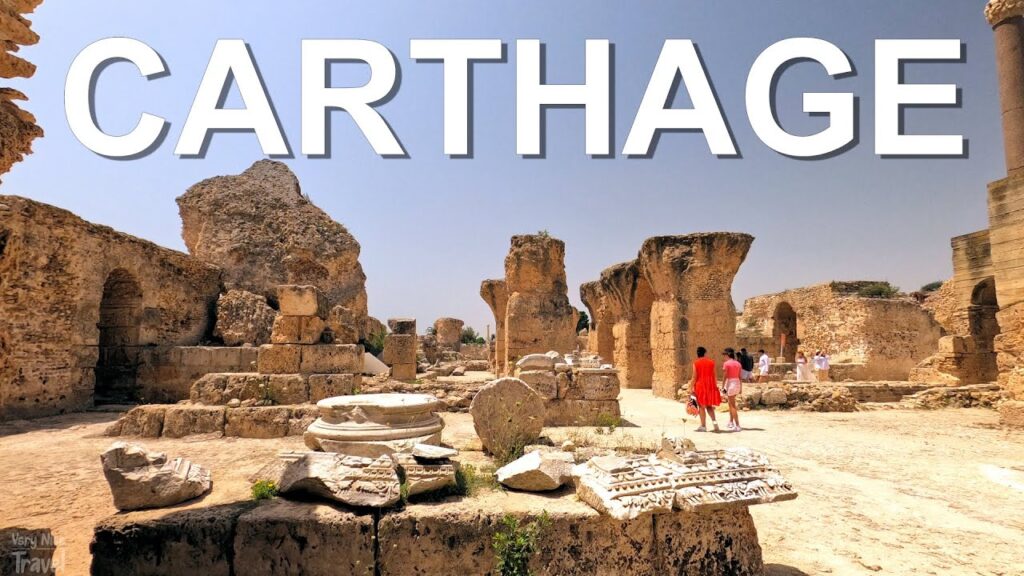
Carthage was founded by Phoenician settlers around 814 BCE on the coast of present-day Tunisia in North Africa. It grew from a trading post into one of the Mediterranean world’s great powers, controlling a commercial empire that stretched from North Africa to Spain and Sicily. At its height, Carthage was one of the most populous cities in the world, with a population estimated at several hundred thousand.
Mediterranean Trade
Carthaginian merchants were among the ancient world’s most sophisticated traders, establishing colonies and commercial networks across the Western Mediterranean. They traded in silver, copper, textiles, pottery, and agricultural products, and developed advanced navigation techniques that allowed them to sail beyond the Strait of Gibraltar into the Atlantic Ocean. Carthage’s merchant fleet was one of the largest in the ancient world.
Wars and Decline
Carthage’s fatal conflict was with Rome. The three Punic Wars, fought between 264 BCE and 146 BCE, ultimately ended with Rome destroying Carthage reportedly salting the earth to prevent its rebuilding. The Carthaginian general Hannibal, who famously crossed the Alps with war elephants to attack Rome from the north, remains one of military history’s most celebrated strategists. Carthage’s destruction represented a deliberate erasure of one of Africa’s greatest civilizations.
The Axum Empire
Rise of Axum
The Axum Empire rose in the highlands of present-day Ethiopia and Eritrea around the 1st century CE, becoming one of the ancient world’s four great powers alongside Rome, Persia, and China. Axum’s strategic location on the Red Sea gave it control over trade routes connecting the Mediterranean world with India, Arabia, and the interior of Africa. The empire minted its own gold, silver, and bronze coins a mark of sophisticated economic organization rare in the ancient world.
Trade Networks
Axum traded in gold, ivory, spices, and textiles, and its port city of Adulis was one of the ancient world’s busiest commercial hubs. Axumite merchants connected Roman merchants with Indian Ocean traders in networks of exchange that moved luxury goods across three continents. The empire’s wealth funded extraordinary monuments, including massive stone obelisks called stelae, some standing over 30 meters tall, that still stand in Aksum today.
Adoption of Christianity
In the 4th century CE, the Axumite king Ezana converted to Christianity, making Axum one of the first states in the world to adopt Christianity as an official religion decades before the Roman Empire did the same. The Ethiopian Orthodox Church, one of the world’s oldest Christian institutions, traces its roots directly to Axumite Christianity. This religious identity became a cornerstone of Ethiopian culture that persists to this day.
Ghana Empire
Gold and Salt Trade
The Ghana Empire, located in present-day southeastern Mauritania and western Mali, was built on one of history’s most lucrative trade relationships: gold from the south exchanged for salt from the Sahara. Salt was as valuable as gold in pre-modern West Africa, which was essential for food preservation and human survival in the tropical interior. Ghana’s rulers controlled both the trade routes and taxed goods passing through their territory, accumulating enormous wealth.
Political Structure
Ghana was a sophisticated feudal state with a central king, called Ghana, who commanded both political and religious authority. The capital city of Kumbi Saleh supported a population of tens of thousands and was divided into a royal city and Muslim merchant quarter evidence of the cosmopolitan nature of West African trading societies long before European contact. African customs and governance traditions in this region were highly developed systems, not the primitive arrangements colonial-era historians falsely described.
Economic Influence
At its peak in the 10th and 11th centuries CE, Ghana was described by Arab geographers as a land of extraordinary abundance. The king reportedly sat on a golden throne, surrounded by horses adorned with gold cloth, and commanded an army of 200,000 soldiers. Ghana’s wealth was not exaggerated by admiring visitors, it was the logical product of controlling the intersection of the world’s most important trade routes for centuries.
Mali Empire
Formation of Mali
The Mali Empire emerged from the ruins of the Ghana Empire in the 13th century, founded by Sundiata Keita whose story recorded in the oral epic Sundiata is one of Africa’s great founding narratives. Sundiata unified the Mandinka people, defeated the Sosso king Sumanguru Kante at the Battle of Kirina in 1235, and established an empire that would eventually stretch from the Atlantic coast to the great bend of the Niger River.
Mansa Musa
No figure in Mali’s history and arguably in all African history captures the imagination quite like Mansa Musa, who ruled from 1312 to 1337. His pilgrimage to Mecca in 1324, accompanied by a reported 60,000 people and carrying so much gold that his passage through Egypt caused inflation in the gold market for over a decade, introduced medieval Europe and the Arab world to the reality of West African wealth. Maps drawn in Europe after his pilgrimage placed his image on the African continent holding a golden orb, a visual acknowledgment that Africa’s richest ruler was the richest person alive.
Timbuktu and Education
Under Mali’s rule, Timbuktu became one of the medieval world’s great centers of learning. The Sankore Mosque and University attracted tens of thousands of students from across Africa and the Arab world, teaching Islamic law, astronomy, mathematics, history, and literature. An estimated 700,000 manuscripts were produced in Timbuktu, many of which survive in private collections and the Ahmed Baba Institute. Timbuktu was not merely a trade city it was a medieval university town of extraordinary intellectual vitality.
Wealth and Trade
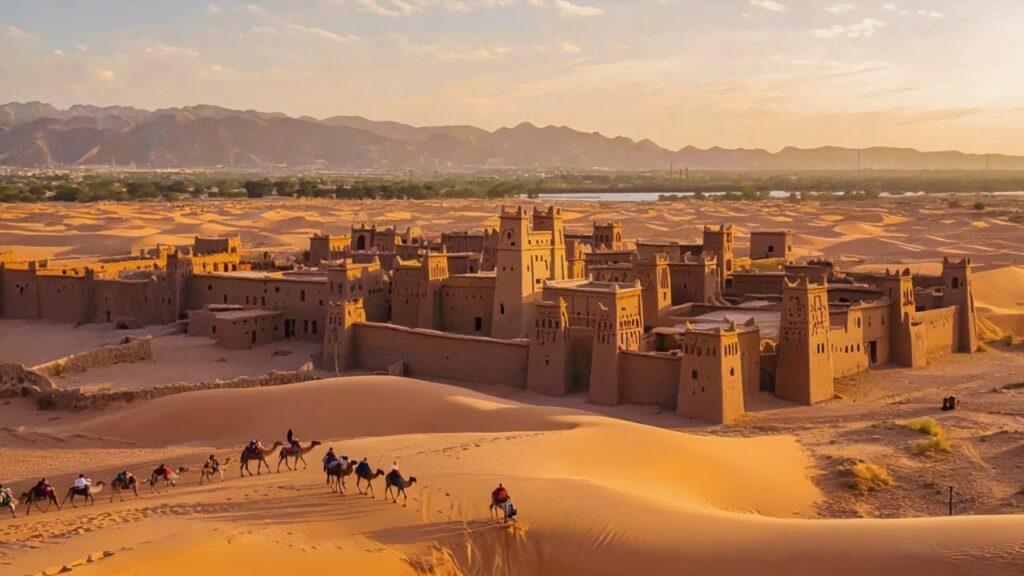
Mali’s economy rested on the same gold-salt axis that had powered Ghana but expanded it dramatically. Mali controlled more territory, more trade routes, and more gold-producing regions than any previous West African state. Under Mansa Musa and his successors, Mali was arguably the wealthiest state in the world.
Songhai Empire
Rise to Power
The Songhai Empire displaced Mali as West Africa’s dominant power in the 15th century under Sunni Ali, who captured Timbuktu in 1468 and built the largest empire in African history by territory. At its peak, the Songhai Empire covered modern-day Mali, Niger, Nigeria, Senegal, Gambia, Guinea, Burkina Faso, and Mauritania, a territory larger than Western Europe.
Administration
The Songhai state was remarkably sophisticated in its governance. Askia Muhammad, who came to power in 1493, reorganized the empire into provinces with appointed governors, standardized weights and measures for trade, established a professional army, and created a system of courts applying Islamic law. This level of administrative complexity rivals contemporary European and Asian states of the same period.
Military Expansion
Songhai’s military power was built on cavalry, war canoes controlling the Niger River, and a professional standing army that replaced the militia systems of earlier empires. This combination gave Songhai projection of force across a vast geographic area. The empire’s eventual collapse came not from internal weakness but from a Moroccan invasion in 1591 using firearms, the first major use of gunpowder weapons in West African warfare.
Great Zimbabwe
Architectural Achievements
Great Zimbabwe is the largest ancient stone structure in sub-Saharan Africa, built without mortar using precisely fitted granite blocks in construction techniques that demonstrate extraordinary engineering skill. The complex covers nearly 800 hectares and includes a massive walled enclosure, the Great Enclosure with walls nearly 11 meters high and 5 meters thick at the base. When European explorers first encountered Great Zimbabwe in the 19th century, some refused to believe Africans had built it, inventing theories about Phoenician or Arab construction that archaeology has conclusively disproven.
Trade Connections
Great Zimbabwe was the capital of a powerful trading state that controlled gold and ivory exports from interior southern Africa to the Swahili coast and from there to Arabia and India. Chinese porcelain, Persian pottery, and Arab glass beads found at Great Zimbabwe confirm its integration into the global trade networks of the medieval Indian Ocean world.
Cultural Importance
Great Zimbabwe gives the modern nation of Zimbabwe its name and remains one of Africa’s most important symbols of precolonial achievement. The Zimbabwe Bird, a carved soapstone eagle found at the site appears on Zimbabwe’s national flag and currency. Understanding Great Zimbabwe means understanding that sophisticated urban civilization existed across all regions of Africa, not only in the north.
Lesser-Known Ancient African Civilizations
Nok Civilization
The Nok people of present-day Nigeria produced some of Africa’s most remarkable ancient art terracotta sculptures of extraordinary sophistication dating from 1500 BCE to 200 CE. They were also among the earliest iron-smelting cultures in Africa, developing metallurgy independently and spreading iron technology across West Africa. The rich cultural history of Nigeria traces roots to Nok and the civilizations that followed.
Kanem-Bornu
The Kanem-Bornu Empire in the region of present-day Chad, Niger, and Nigeria was one of Africa’s longest-lasting states, persisting in various forms for over a thousand years. It controlled Central African trade routes connecting the Sahara to the Lake Chad basin and maintained diplomatic relations with North African states and the Ottoman Empire.
Ife Kingdom
The Ife Kingdom in present-day southwestern Nigeria was the spiritual homeland of the Yoruba people and produced bronze and terracotta sculptures of astonishing naturalistic precision between the 12th and 15th centuries. When these sculptures were first shown to European audiences in the early 20th century, some art historians assumed they must be of classical Greek or Roman origin, a reflection of their own prejudice rather than any quality of the art itself.
Benin Kingdom
The Kingdom of Benin, also in present-day Nigeria, produced the famous Benin Bronzes, a collection of commemorative plaques and sculptures that documented royal history and ceremonies with detailed visual precision. Benin’s metalworking tradition, developed over centuries, created objects of such beauty and historical significance that when British forces looted them in 1897, they became the center of one of the most important cultural repatriation debates in museum history.
Major Achievements of Ancient African Civilizations
Architecture
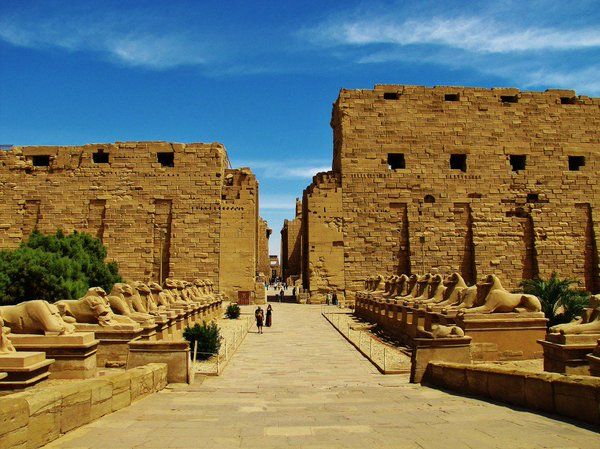
From the pyramids of Egypt and Meroe to the stone walls of Great Zimbabwe and the mosques of Timbuktu, African civilizations built on a monumental scale across every region of the continent. These structures were not built for tourism, they were functional centers of governance, religion, commerce and education.
Trade
African civilizations developed trade networks that connected the continent internally and linked it to Europe, the Middle East, India, and China. The trans-Saharan trade routes, the Indian Ocean network, and the internal river and overland routes created economic systems of continental and global scale.
Education
Timbuktu’s universities, Egypt’s scribal schools, and the oral education traditions of griots across West Africa represent sophisticated systems of knowledge preservation and transmission. African intellectual culture was not limited to the written word oral traditions carried entire libraries of history, science, and philosophy across generations.
Metallurgy
Iron smelting developed independently in Africa possibly earlier than anywhere else in the world and iron technology spread across the continent through trade and migration. African metalworkers in Kush, Nok, and Great Zimbabwe produced tools, weapons, and decorative objects of high technical quality.
Agriculture
African civilizations developed agricultural techniques adapted to their specific environments flood-recession farming along the Nile, terraced agriculture in the Ethiopian highlands, and sophisticated irrigation systems in the Sahel. These innovations supported the large populations that made complex civilization possible.
Comparison of Major African Civilizations
| Civilization | Region | Period | Main Trade | Greatest Achievement | Legacy |
| Ancient Egypt | North Africa | 3100–332 BCE | Grain, papyrus, gold | Pyramids, calendar, medicine | Global cultural foundation |
| Kingdom of Kush | Northeast Africa | 2500 BCE–350 CE | Gold, ivory, iron | Meroe pyramids, Kandake queens | Nubian cultural identity |
| Carthage | North Africa | 814–146 BCE | Silver, textiles, food | Mediterranean trade empire | Hannibal, naval strategy |
| Axum | East Africa | 100–940 CE | Gold, ivory, spices | Christianity adoption, stelae | Ethiopian Orthodox Church |
| Ghana Empire | West Africa | 700–1200 CE | Gold, salt | Trade route control | West African governance model |
| Mali Empire | West Africa | 1235–1600 CE | Gold, salt, slaves | Timbuktu universities, Mansa Musa | Islamic scholarship in Africa |
| Songhai Empire | West Africa | 1464–1591 CE | Gold, salt | Largest African empire | Administrative sophistication |
| Great Zimbabwe | Southern Africa | 1100–1450 CE | Gold, ivory | Mortarless stone architecture | Zimbabwean national identity |
Legacy of Ancient African Civilizations
Cultural Influence
The civilizations covered in this guide did not disappear; they transformed. The Yoruba spiritual traditions that emerged from Ife Kingdom spread across the Atlantic with enslaved Africans and became the foundation of Candomble, Santeria, and Vodou in the Americas. Egyptian religious symbolism influenced Greek philosophy, which influenced Western thought. Mali’s manuscript tradition is being digitized and studied by scholars worldwide. Ancient Africa’s cultural output never stopped shaping the world.
Modern African Identity
For contemporary Africans, the history of ancient civilizations is not merely academic, it is a source of identity, pride, and political argument. The cultures across modern Africa draw direct lines of continuity from these ancient foundations in language, art, governance, and spiritual practice. Reclaiming this history is part of how Africa continues to define itself on its own terms in the 21st century.
Historical Preservation
Archaeological work at sites like Meroe, Great Zimbabwe, Timbuktu, and the Nok culture sites is ongoing and producing new discoveries regularly. UNESCO World Heritage designation protects many of these sites, and African universities and cultural institutions are increasingly leading their own archaeological research, ensuring that the story of ancient African civilizations is told by African voices as much as by outside scholars.
Frequently Asked Questions
What were the major ancient African civilizations?
The major ancient African civilizations include Ancient Egypt, the Kingdom of Kush, Carthage, the Axum Empire, the Ghana Empire, the Mali Empire, the Songhai Empire, and Great Zimbabwe. Beyond these widely known empires, significant civilizations also include the Nok culture, Kanem-Bornu, the Ife Kingdom, and the Benin Kingdom. Africa’s civilizational history spans every region of the continent.
Which African civilization was the oldest?
Ancient Egypt, founded around 3100 BCE, is the oldest well-documented African civilization. However, the Nok culture in West Africa dates to at least 1500 BCE, and human settlements with evidence of complex social organization exist across Africa long before formal civilization markers appear. The Kingdom of Kush developed alongside and often intertwined with Egypt, making them near-contemporaries.
What made ancient African kingdoms so wealthy?
Most great African empires built their wealth by controlling trade routes and taxing goods passing through their territories. The gold-salt trade of West Africa was particularly lucrative, the Ghana, Mali, and Songhai empires all derived their power from controlling the exchange of gold from the south for salt from the Sahara. Axum controlled Red Sea trade. Great Zimbabwe controlled the gold-to-coast trade of Southern Africa.
Who was the richest person in ancient Africa?
Mansa Musa of the Mali Empire is widely considered the wealthiest person in all recorded history when adjusted for modern values. His 1324 pilgrimage to Mecca, during which he distributed so much gold that he caused decade-long inflation in Egypt, demonstrated a scale of wealth that left contemporary observers across three continents struggling for adequate description.
Is Egypt the only advanced ancient African civilization?
Absolutely not. Egypt is the most famous because of extensive historical documentation and spectacular surviving architecture, but it was one of dozens of sophisticated African civilizations. The Mali Empire built universities that drew scholars from across the world. The Axum Empire minted its own coinage and adopted Christianity before Rome. Great Zimbabwe built stone structures of extraordinary engineering. The historical focus on Egypt often reflects the biases of those doing the writing, not the actual distribution of civilization across Africa.
What happened to ancient African empires?
Ancient African empires declined for various reasons. Some, like Carthage, were destroyed by military conquest. Others, like the Ghana Empire, were weakened by drought, internal conflict, and the rise of neighboring powers. The Songhai Empire fell to a Moroccan invasion using firearms. The Mali Empire declined as trade routes shifted and political fragmentation increased. Many of these civilizations did not truly “disappear”, they transformed, with their populations, cultures, and institutions continuing in new political forms.
Discover More African History and Heritage
Ancient African civilizations are the foundation upon which the continent’s living cultures stand today. Every tradition, language, art form, and governance system in modern Africa carries echoes of these great empires. The story of Africa’s past is inseparable from the story of Africa’s present.
Explore more history, culture, and heritage at ILoveAfrica.com and discover how the world’s most ancient continent continues to shape the modern world.

