
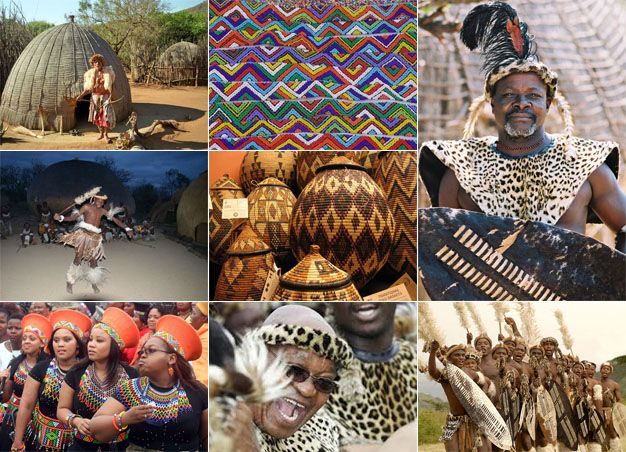
Traditional African stories are among the oldest and most sophisticated narrative traditions on earth. Long before writing systems existed on the continent, African communities preserved their history, wisdom, and cultural values in stories told aloud, performed with music and movement, passed from elder to child across generations without losing their essential meaning. These are not primitive tales that predate real literature. They are real literature, transmitted through voice instead of page, and they remain as alive and culturally vital today as they have ever been.
What Are Traditional African Stories?
Definition
Traditional African stories are orally transmitted narratives folktales, myths, legends, fables, and heroic epics created and preserved by African communities as vehicles for cultural knowledge, moral education, historical memory, and entertainment. They belong to specific ethnic traditions rather than to “Africa” as a monolithic entity: Akan folktales from Ghana are distinct from Zulu legends from South Africa, which are distinct from Yoruba myths from Nigeria, which are distinct from Amhara epics from Ethiopia. Diversity is as important as the common features.
Origins
The origins of traditional African stories are inseparable from the origins of human language itself. Archaeological evidence of symbolic behavior in Southern Africa dates back at least 75,000 years, and the narrative traditions that have been documented across the continent reflect storytelling cultures of extraordinary antiquity. Many stories predate any written historical record, preserved through oral transmission across hundreds of generations. This makes them among the oldest surviving human cultural artifacts in existence.
Importance in African Culture
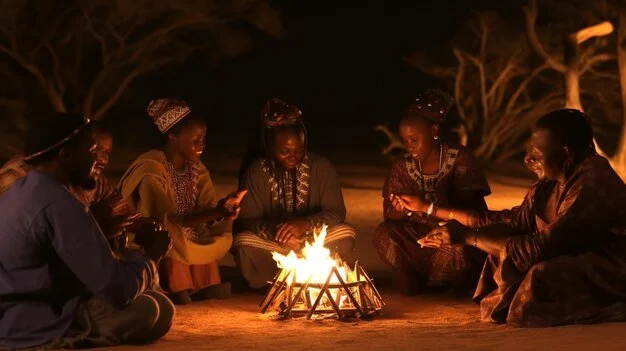
Traditional stories served simultaneously as entertainment, education, moral guidance, historical record, and spiritual practice. They were not told in isolation stories embedded in community life, performed at gatherings, ceremonies, and in the evenings when families came together. African traditions across the continent consistently treat storytelling as a community act rather than a solo performance, reflecting the communal values that the stories themselves teach.
The History of African Oral Storytelling
Storytelling Before Writing
For most of African history, oral storytelling was the primary technology for preserving and transmitting knowledge. This was not a limitation, but sophisticated choice oral traditions are flexible, adaptive, and participatory in ways that written texts are not. A story told aloud can respond to its audience, absorb new details relevant to current circumstances, and create collective emotional experiences that silent reading cannot replicate. African oral literature was as technically sophisticated as any written literature, using complex rhythmic structures, call-and-response audience participation, and carefully crafted narrative architecture.
Role of Elders
In most African communities, elders were the primary custodians of traditional stories. Their authority as storytellers was inseparable from their authority as community leaders to know the stories was to hold the community’s accumulated wisdom, and to tell them Well was to demonstrate the intellectual and moral qualities that leadership required. Elders typically controlled which stories were told, when, and to whom. Some stories were reserved for adult audiences, some for-initiation ceremonies, and some for specific ritual occasions. This was not censorship but curation understanding that different stories serve different developmental and social purposes.
The Tradition of Griots
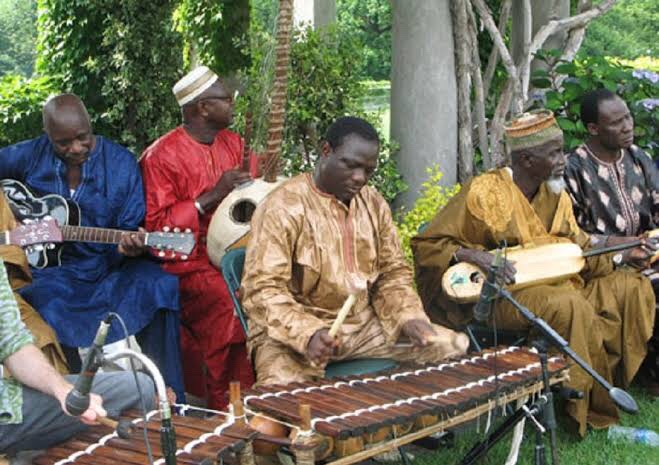
The griot tradition of West Africa represents African oral storytelling in its most formal and professionally developed form. Griots (called jeli in Mande traditions, gewel in Wolof, and other names across the region) are specialist storyteller-historians who serve specific noble families and communities as living libraries. They memorize genealogies extending back dozens of generations, preserve historical narratives of kingdoms and battles, perform praise songs for important occasions, and serve as the community’s primary connection to its own past. The griot tradition has survived for over a thousand years and remains active across Mali, Senegal, Gambia, Guinea, and neighboring countries. African music traditions are inseparable from griot performance the kora, balafon, and ngoni instruments are not accompaniment to the story but part of the story itself.
Main Types of Traditional African Stories
| Story Type | Primary Purpose | Key Feature | Example |
| Folktale | Entertainment + moral education | Animals as characters, clear lesson | Anansi stories |
| Myth | Explain origins and cosmology | Supernatural beings, sacred tone | Yoruba creation myths |
| Legend | Preserve historical memory | Based on real events, heroic figures | Sundiata Keita epic |
| Heroic Epic | Celebrating community identity | Long narrative, warrior themes | Mwindo Epic |
| Fable | Moral instruction | Short, animal characters, explicit lesson | Hare and Tortoise stories |
Folktales
Folktales are the most widely known and widely distributed category of traditional African stories. They typically feature animal characters who embody human qualities the clever spider, the greedy hyena, the slow but wise tortoise and use these characters to explore moral and social questions in ways that entertain while they are educated. Folktales are generally meant for all audiences and function as the most accessible entry point into a community’s value system and worldview.
Myths
African myths are sacred narratives that explain the origins of the world, humanity, animals, and natural phenomena. They typically involve supreme creator beings, lesser deities, and ancestral spirits, and are told with a sacred tone that distinguishes them from everyday storytelling. Yoruba creation myths explain how Olodumare created the world through the Orisha. Akan cosmology describes Nyame as the supreme creator who established the moral order of the universe. These stories are not entertainment they are theological and philosophical texts transmitted through narrative.
Legends
Legends occupy the territory between myth and history stories about real (or believed to be real) people and events, told with heroic embellishment that reflects the community’s values and aspirations. The legend of Queen Nzinga of Angola, who fought Portuguese colonialism for decades in the 17th century, preserves both historical memory and a model of female political strength. The legend of Musa I (Mansa Musa) of Mali encodes both historical fact about his extraordinary wealth and cultural pride in West African civilizational achievement.
Heroic Epics
African heroic epics are the continent’s longest and most formally complex oral narrative tradition. The Epic of Sundiata, preserved for centuries in the griot tradition of Mali and surrounding countries, narrates the life of Sundiata Keita a disabled child who overcame extraordinary obstacles to become the founder of the Mali Empire, one of Africa’s greatest ancient civilizations. The Mwindo Epic of the Nyanga people of the Congo tells of a miraculous hero born against his father’s wishes who travels to the underworld and back. These are long, complex narratives with sophisticated character development, thematic depth, and formal literary qualities that rival the Iliad or Mahabharata.
Fables
African fables are short, didactic stories using animal characters to illustrate specific moral lessons with crystalline clarity. They function as the most portable form of moral education simple enough to remember after a single hearing, compelling enough to stick in the mind, and specific enough in their lesson that the point cannot be missed. The distinction between a fable and a folktale is primarily one of length and didactic explicitness fables deliver their moral lesson directly, while folktales allow more interpretive space.
Common Themes in Traditional African Stories
Wisdom over strength is the most consistent theme across African traditional stories. The spider outsmarts lions. The hare who defeats the elephant. This reflects a profound social philosophy that intelligence and moral strength are more valuable and sustainable than physical domination with relevance for communities that historically faced more powerful external forces.
Community values are reinforced by consistently showing characters who prioritize personal gain at community expense facing consequences that restore collective order. African customs and community life are built on the principle that individual flourishing is only possible within a healthy community, and the stories are one of the primary mechanisms through which this principle is transmitted.
Respect for nature is encoded in narrative form across traditions, sacred groves protected by spirits who punish those who cut their trees, rivers inhabited by beings who harm those who over-fish. This storytelling-as-conservation embeds practical environmental lessons in emotionally compelling narrative that direct instruction cannot match.
Ancestors and spirits populate African traditional stories in ways that reflect the worldview central to African traditional religion a world where the boundary between living and dead is permeable and consequential. Characters who honor spiritual obligations succeed; those who ignore them face consequences that reinforce the community’s understanding of spiritual accountability.
Justice and morality operate as reliable forces in African stories the greedy character who takes more than their share ultimately loses everything; the humble character who helps others receives help when most needed. This is a sophisticated ethical framework using narrative to reinforce moral expectations in ways formal rules alone cannot achieve.
Famous Traditional African Stories and Characters
| Character | Region/People | Story Type | Key Lesson |
| Anansi the Spider | Akan (Ghana) | Folktale/Fable | Cunning defeats power |
| The Clever Hare | East Africa (widespread) | Fable | With over brute strength |
| The Wise Tortoise | West/Central Africa | Fable | Patience and persistence |
| The Jackal | Southern Africa | Fable/Folktale | Trickery, cunning |
| Sundiata Keita | Mali (Mande) | Heroic Epic | Destiny, perseverance |
| Mwindo | Nyanga (Congo) | Heroic Epic | Courage, transformation |
Anansi the Spider
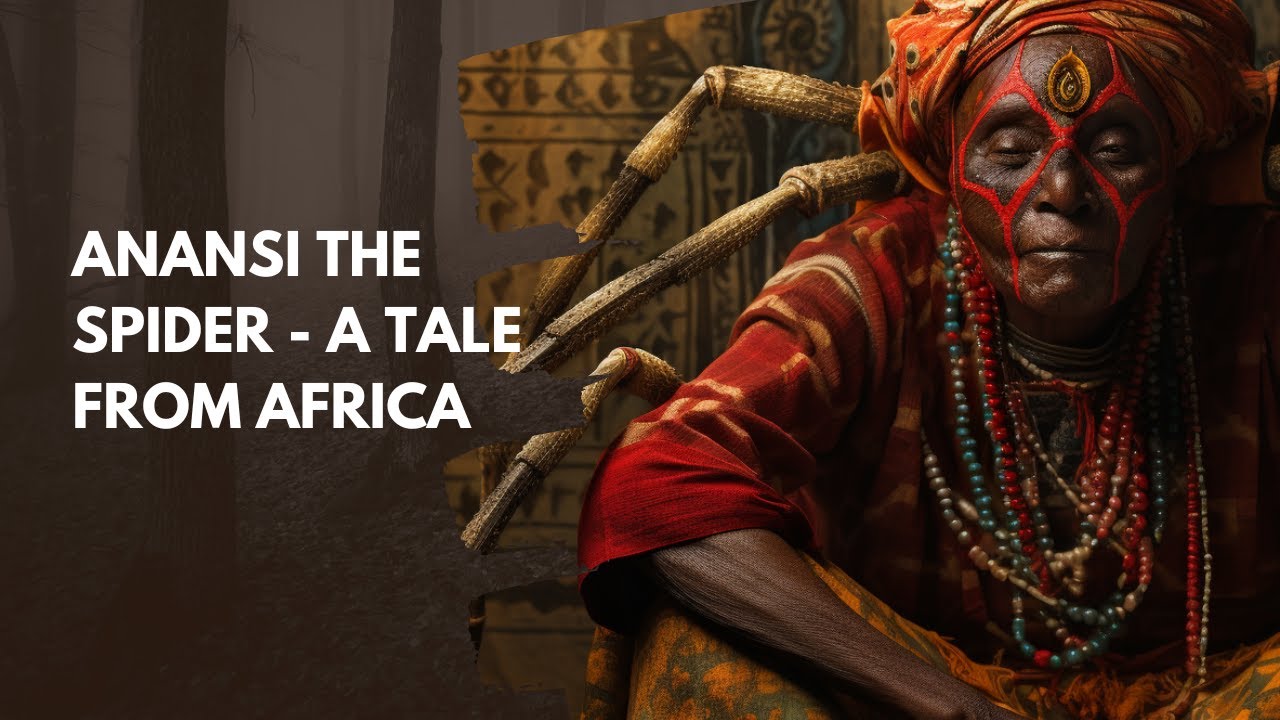
Anansi is the most globally recognized character in African traditional storytelling a spider trickster from the Akan tradition of Ghana and Côte d’Ivoire whose stories have spread across the entire African diaspora to become embedded in Caribbean, African American, and South American folklore traditions. The core Anansi dynamic is consistent across thousands of story variations: Anansi is small, physically weak, and apparently vulnerable yet through cleverness, creativity, and a complete willingness to bend social conventions, he consistently outsmarts larger, stronger, and more powerful opponents. One famous story cycle explains how Anansi obtained all the stories in the world from Nyame, the sky god, paying with seemingly impossible tasks that Anansi completed through cunning rather than force.
The Clever Hare
The Hare is East and Southern Africa’s answer to Anansi a trickster figure across Kenya, Tanzania, Uganda, and Zambia who consistently outwits Elephant, Lion, and Hippopotamus through speed of mind rather than physical power. The Hare’s stories spread through the diaspora and became the Br’er Rabbit tales of the American South one of the clearest examples of African narrative traditions surviving across the Atlantic.
The Wise Tortoise
The Tortoise appears across West and Central African traditions as a figure of paradoxical wisdom slow and physically unimpressive yet consistently achieving outcomes that speed and power cannot. Tortoise stories explicitly teach patience, persistence, and long-term thinking over impulsive action, making the character one of African storytelling’s most effective educational tools for children.
Jackal, Sundiata Keita, and Mwindo
In Southern African traditions, the Jackal plays the trickster role with a sharper satirical edge than Hare or Tortoise San and Khoikhoi storytelling feature Jackal outwitting Lion through flattery, misdirection, and creative problem-solving, sometimes crossing into moral ambiguity that makes these some of folklore’s most psychologically interesting stories.
The Epic of Sundiata is West Africa’s most celebrated oral narrative the story of Sundiata Keita, born with a physical disability, mocked and marginalized, who rose to defeat the sorcerer-king Sumanguru Kante in 1235 and found the Mali Empire. Preserved in the griot tradition for approximately 800 years, its themes of destiny and perseverance over adversity resonate across cultures and have drawn comparison to everything from the Iliad to The Lion King.
The Mwindo Epic of the Nyanga people (Democratic Republic of Congo) tells of a miraculous child born against his father’s wishes who descends into the underworld, encounters supernatural beings, and transforms from reckless power-wielder into a wise leader. Its performance by specialist performers can last days and incorporates music, dance, and audience participation in a complete theatrical event.
Traditional Stories from Different Regions of Africa
| Region | Famous Stories | Key Themes | Notable Characters |
| West Africa | Anansi, Sundiata, Yoruba creation myths | Trickery, empire founding, divine creation | Anansi, Sundiata, Olodumare |
| East Africa | Hare stories, Maasai legends, Swahili tales | Cleverness, pastoral life, coastal culture | Hare, Liongo |
| Central Africa | Mwindo Epic, Kongo creation stories | Heroic transformation, ancestral power | Mwindo |
| Southern Africa | Jackal stories, Zulu legends, San stories | Trickery, warrior heritage, nature spirits | Jackal, Anansi variants |
| North Africa | Berber legends, ancient Egyptian mythology | Desert life, ancient gods, historical epics | Ra, Osiris, Berber heroes |
West Africa has the most internationally recognized oral storytelling tradition, anchored by the griot system, the Anansi trickster cycle, and Yoruba mythology’s elaborate Orisha pantheon. The Epic of Sundiata, preserved across Mali, Senegal, Guinea, and Gambia, is West Africa’s defining heroic narrative. The diverse cultures of West Africa maintain distinct story traditions that reward deep exploration beyond the internationally famous examples.
East Africa’s oral traditions reflect the centrality of cattle in pastoral life Maasai oral literature includes initiation narratives, cattle-raiding legends, and warrior heroism stories told within the moran tradition. Hare stories spread across the region in hundreds of variations, adapting to local landscapes while maintaining the core trickster dynamic. The Swahili coast has its own distinct literary tradition, including the medieval warrior-poet epic of Fumo Liyongo.
Central Africa’s Kongo cosmological stories describe a universe structured around a mountain of the dead and the circulation of souls a philosophically sophisticated framework. Forest peoples of the Congo Basin maintain oral traditions reflecting intimate rainforest ecology, encoding detailed environmental knowledge about specific trees, animals, and waterways in narrative form.
Southern Africa’s oral heritage includes the San people’s ancient storytelling among the oldest continuous traditions in human history alongside Zulu, Xhosa, and Ndebele heroic and ancestral narratives. San stories feature /Kaggen (the Mantis) as a trickster-creator of remarkable sophistication. Zulu heroic narratives celebrate warrior excellence in ways that connect to the living warrior traditions of Southern Africa.
North Africa’s Berber (Amazigh) storytelling heritage desert heroes, mountain spirits, and ancestral figures predates the Islamic tradition that arrived in the 7th century CE. Ancient Egyptian mythology, including the Osiris death-and-resurrection cycle orchestrated by Isis, is one of the ancient world’s most powerful and widely influential mythological narratives.
How Traditional African Stories Influence Modern Culture
African traditional stories have shaped modern culture across multiple domains. In literature, writers including Chinua Achebe, Ngugi wa Thiong’o, and Ben Okri drew explicitly on traditional storytelling structures Achebe’s Things Fall Apart incorporates Igbo proverbs and oral narrative rhythms that give the novel its distinctive cultural authenticity. Neil Gaiman’s Anansi Boys draws on the Akan trickster tradition preserved through the African diaspora. In film and media, African folklore creatures and storytelling traditions appear increasingly in global productions with authentic treatment from The Lion King’s ancestral spirit themes to Kizazi Moto’s all-African animated anthology on Disney+. In education, organizations across Africa are digitizing oral performances, creating children’s book adaptations, and developing school curricula that treat traditional storytelling as literature. UNESCO recognition of specific traditions including the Epic of Sundiata and Ifa divination literature as Intangible Cultural Heritage provides institutional support for preservation work communities have been doing independently for centuries.
Why Traditional African Stories Still Matter Today
Traditional African stories are not historical artifacts they are living cultural resources that continue to serve the functions they have always served. They teach moral values to children in ways that abstract instruction cannot. They preserve historical memory in communities where written documentation is incomplete. They create emotional bonds between community members through shared narrative experience. And they provide African writers, filmmakers, and artists with a deep well of sophisticated source material that Western traditions cannot offer.
The global spread of Afrobeats music, African fashion, and African film has created international audiences hungry for authentic African cultural content. Traditional stories are the foundation beneath all of it the cultural substrate from which contemporary African creative expression grows. Understanding them is not merely an academic exercise but an entry point into one of the world’s richest and most dynamic living cultural systems.
Frequently Asked Questions
What are traditional African stories?
Traditional African stories are orally transmitted narratives folktales, myths, legends, fables, and heroic epics created and preserved by specific African ethnic communities as vehicles for cultural knowledge, moral education, historical memory, and entertainment. They are not a single unified tradition but hundreds of distinct regional storytelling cultures, each with their own characters, themes, and performance conventions.
Who is Anansi the Spider?
Anansi is a trickster spider character from Akan tradition in Ghana who has become the most internationally recognized figure in African folklore. He typically appears as a small, physically weak figure who defeats larger opponents through intelligence, creativity, and cunning. His stories spread through the African diaspora to become embedded in Caribbean and African American folklore, and he has appeared in contemporary literature, animation, and film.
Why are African folktales important?
African folktales serve multiple simultaneous functions entertainment, moral education, historical preservation, community bonding, and spiritual instruction. They teach community values, ecological knowledge, and social norms in ways that are more memorable and emotionally compelling than direct instruction. They also preserve cultural memory and identity across generations in communities where oral transmission has historically been the primary knowledge management technology.
What is oral tradition in Africa?
African oral tradition refers to the practice of transmitting cultural knowledge stories, histories, laws, genealogies, and philosophical wisdom through spoken performance rather than written text. It is not a primitive substitute for writing but a sophisticated knowledge management system with its own formal structures, performance conventions, and specialist practitioners (including griots in West Africa). Oral traditions have preserved accurate genealogical and historical information across hundreds of generations.
What lessons do African stories teach?
The most consistent lessons across African traditional stories include wisdom and cunning are more valuable than physical strength; community well-being takes precedence over individual ambition; honesty produces better long-term outcomes than deception; humility prevents the overconfidence that leads to defeat; and generosity creates the social bonds that provide support in times of need. These lessons are not unique to Africa but are encoded in African stories with consistency and elegance.
Key Takeaways
- Traditional African stories are sophisticated literary traditions transmitted through oral performance rather than written text not primitive precursors to “real” literature but real literature in their own right
- The griot tradition of West Africa is one of the world’s most remarkable professional storytelling institutions, preserving genealogies and historical narratives across more than a thousand years
- Anansi the Spider, the Clever Hare, the Wise Tortoise, and the Jackal are African folklore’s most important trickster characters, celebrating intelligence over physical power
- The Epic of Sundiata is West Africa’s defining heroic narrative preserved continuously for approximately 800 years in living griot performance
- Traditional stories differ significantly by region West African, East African, Central African, Southern African, and North African traditions each have distinct characters, themes, and performance styles
- African traditional stories directly influence contemporary African literature, Nollywood film, global animation, and the broader cultural wave of African creative expression
Explore More African Culture and Heritage
Traditional African stories are the root system beneath all African cultural expression the source from which music, dance, clothing traditions, religious practice, and community values grow. Understanding them deepens every other engagement with African culture.
Explore more at ILoveAfrica.com to discover the full richness of Africa’s cultural heritage across all its extraordinary diversity.

