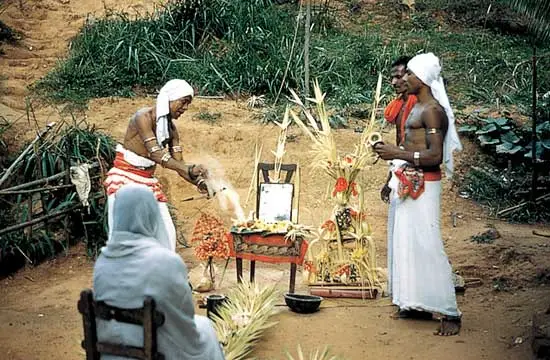
African Traditional Religion is one of the world’s oldest living spiritual systems, yet it remains one of the most misunderstood. Practiced by hundreds of millions of people across the continent, it encompasses a rich set of beliefs about creation, ancestors, spirits, and the relationship between human beings and the divine. Far from being a relic of the past, African Traditional Religion continues to shape daily life, community governance, healing practices, and cultural identity across Africa today.
What Is African Traditional Religion?
Definition
African Traditional Religion, commonly abbreviated as ATR, refers to the indigenous spiritual beliefs and practices of African peoples that developed before the arrival of Christianity and Islam on the continent. It is not a single unified religion but a family of related belief systems sharing common features, a supreme creator, veneration of ancestors, interaction with spirits, and the use of ritual to maintain harmony between the human and spiritual worlds. ATR is oral rather than scriptural, transmitted through practice, ceremony, and storytelling rather than written texts.
Key Characteristics
The defining features of African Traditional Religion include:
- Belief in a supreme creator deity who is the ultimate source of all existence
- Veneration of ancestors as active participants in the lives of the living
- Recognition of a spirit world that intersects with the physical world
- Use of ritual, prayer, sacrifice, and divination to communicate with spiritual forces
- Strong emphasis on community, collective well-being, and moral accountability
- Oral transmission of religious knowledge through elders, priests, and community practice
Origins and Historical Background
Ancient African Spiritual Traditions
African Traditional Religion is among the oldest spiritual systems in human history. Archaeological evidence of ritual behavior ochre-stained objects used in ceremony, intentional burials with grave goods, and cave paintings depicting spiritual scenes date back over 70,000 years in Southern Africa alone. The religious worldview that underlies modern ATR did not emerge suddenly; it developed gradually across tens of thousands of years as African communities made sense of their relationship to the cosmos, to death, and to the forces that governed life and nature.
Development Across Regions
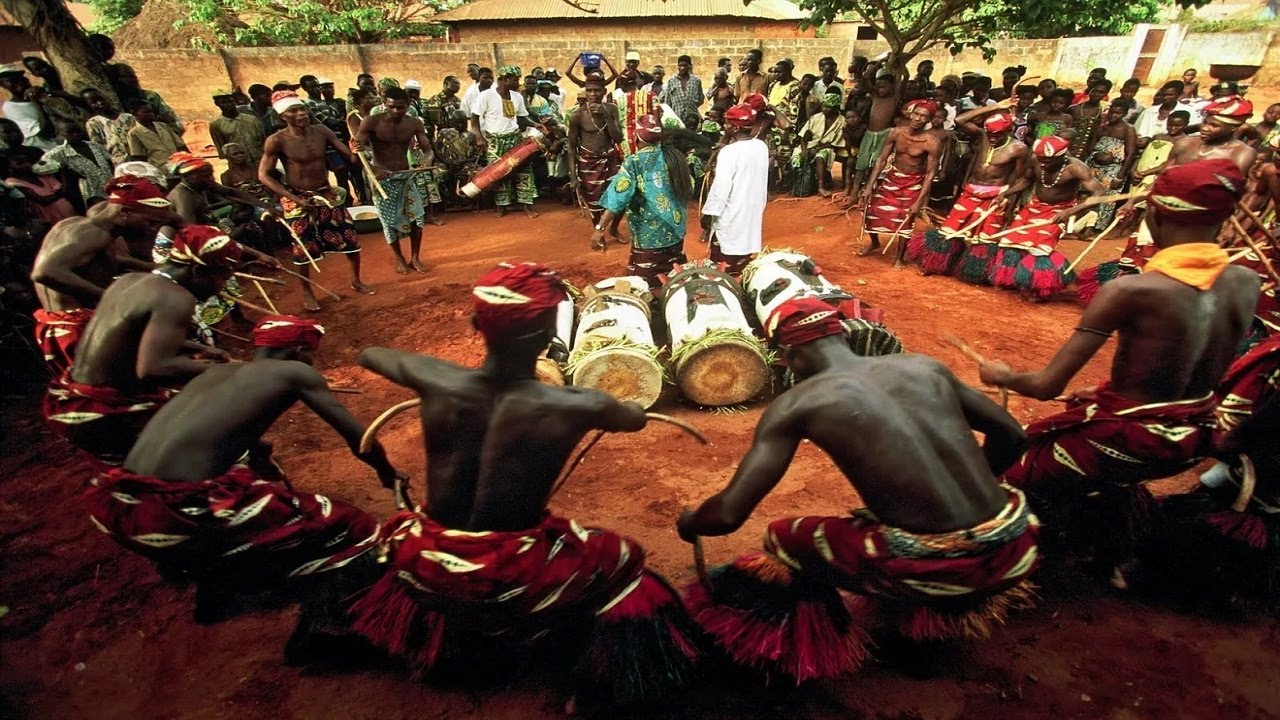
As African populations spread across the continent’s diverse ecological zones, regional variations in spiritual practice developed naturally. West African communities developed elaborate pantheons of deities tied to natural forces rivers, thunder, iron, and fertility. East African pastoralist communities developed ancestor-focused traditions tied to cattle, land, and clan identity. Central African forest communities developed spiritual practices centered on the relationship between humans and the forest ecosystem. Each regional tradition is distinct, yet all share the foundational framework that defines ATR as a coherent family of beliefs.
Core Beliefs of African Traditional Religion
Belief in a Supreme Creator
Every African Traditional Religion recognizes a supreme creator being an all-powerful, all-knowing deity who created and sustains the universe. This supreme being goes by different names in different traditions: Olodumare among the Yoruba, Nyame among the Akan, Mulungu in parts of East Africa, and Modimo among the Tswana. Importantly, this supreme being is generally not approached directly in everyday practice, the creator is understood as too vast and remote for direct human petition. Instead, communication flows through intermediaries’ ancestors, lesser deities, and spirits who are closer to human experience and more accessible to prayer and ritual.
Ancestors and Their Role
Ancestor veneration is the heartbeat of African Traditional Religion. Ancestors are not dead in the Western sense, they have transitioned to a spiritual state from which they continue to watch over, guide, and sometimes interfere in the lives of their living descendants. They reward right behavior and community harmony, and they can cause misfortune when they are neglected, disrespected, or when living violate community norms. Regular offerings, libations, and ceremonies maintain the relationship between living and ancestral family members, keeping the community whole across the boundary of death. Understanding African traditions in their fullest sense requires understanding how central this relationship with ancestors is to virtually everything governance, healing, agriculture, and family life.
Spirits and Supernatural Forces
Beyond ancestors, ATR recognizes a complex world of spirits associated with natural forces, geographic features, and specific domains of life. River spirits, mountain spirits, forest spirits, and spirits of the wind are recognized across many traditions. Some are benevolent protectors; others are dangerous forces requiring careful management. Specific deities in Yoruba religion the Orisha each govern specific domains: Shango rules thunder and justice, Oshun governs rivers and love, Ogun presides over iron and warfare. These are not myths or metaphors in ATR; they are real spiritual forces that operate in and affect the physical world.
Human Connection with Nature
African Traditional Religion places human beings within the natural world rather than above it. Rivers, mountains, forests, animals, and seasonal cycles are understood as inhabited by spiritual forces and deserving of respect. This worldview produces environmental ethics embedded in religious practice sacred groves that must not be cut, rivers that must not be polluted, animals that certain communities may not harm. The ecological wisdom encoded in ATR is increasingly recognized by environmental scholars as an indigenous conservation system of real practical value.
Community and Collective Identity
ATR is fundamentally communal rather than individualistic. Religious practice is not primarily a private transaction between an individual and God; it is a community activity that reinforces collective bonds, maintains social norms, and keeps the entire group in right relationship with the spiritual world. Individual misfortune is often understood as having community dimensions conflict within the family, neglected ancestors, or violated taboos that affect everyone, not just the individual involved. African customs and community life are inseparable from this religious framework.
The African Spiritual Worldview
Physical and Spiritual Realms
In African Traditional Religion, the physical and spiritual worlds are not separate domains; they are two dimensions of a single reality that constantly interact. The spiritual realm is not “beyond” the physical world in a distant heaven; it coexists with it, overlapping and interpenetrating at specific places, times, and through specific practices. Certain locations ancient trees, river confluences, hilltops, ancestral graves are understood as places where the boundary between worlds is thin and communication with spiritual forces is more direct.
African Cosmology
African cosmology describes a universe created and sustained by a supreme being, populated by a hierarchy of spiritual forces, and dependent on the active participation of human communities to maintain harmony. This is not a passive universe where humans simply respond to divine will humans have a creative role in sustaining cosmic order through right action, proper ceremony, and the maintenance of community ethics. When that order is disrupted by moral failure, neglected ritual, or social conflict; the imbalance manifests as illness, drought, conflict, or misfortune.
Sacred Places and Objects
Physical objects and locations serve as focal points for spiritual power in ATR. Shrines ranging from elaborate constructed temples to simple arrangements of objects at the base of a tree mark places where spiritual forces are particularly accessible. Sacred objects including carved figures, specially prepared medicines, and inherited items from ancestors carry spiritual potency that can be accessed for healing, protection, and divination. These objects are not idols in the sense of being worshipped as gods; they are more accurately understood as antennae through which spiritual communication flows.
Deities, Spirits and Ancestors
Supreme Being
The supreme being in African Traditional Religion is creator, sustainer, and the ultimate source of all existence and moral order. This being is universally recognized across ATR traditions, though approached differently by different communities. Some traditions emphasize the supreme being’s transcendence; so vast that no human being can have a direct personal relationship with them. Others, like some Akan traditions, include more direct supplication to Nyame in everyday prayer. The supreme being is never depicted with idols in most ATR traditions, reflecting an understanding that ultimate divinity is beyond physical representation.
Lesser Deities
Between the supreme creator and human beings, most West African ATR traditions recognize a layer of lesser deities’ intermediary divine beings who govern specific domains of nature and human life. The Yoruba Orisha, the Akan Abosom, and the Vodun spirits of Dahomey (present-day Benin) are some of the most elaborately developed divine hierarchies in ATR. These deities have personalities, preferences, and histories; they can be approached through specific rituals, offerings, and ceremonial practices. The priests and priestesses who serve these deities undergo extensive training in their specific requirements and communication protocols.
Ancestor Veneration
Ancestors occupy a privileged position in ATR’s spiritual hierarchy; they are family members who have crossed into the spiritual realm and therefore have access to spiritual forces while retaining their connection to and interest in their living descendants. Libations, the pouring of water, palm wine, or other liquids onto the ground are among the most widespread practices of ancestor veneration across the continent. Calling the names of ancestors, maintaining their shrines, and performing ceremonies at significant life transitions keeps the relationship active and the ancestral support available.
Spirit Guardians
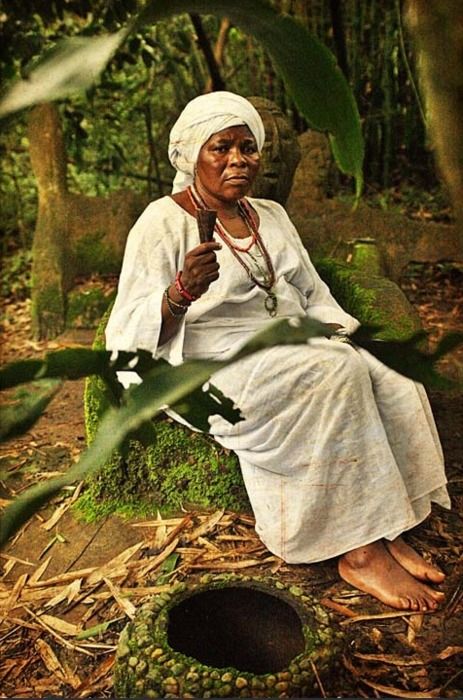
Many ATR traditions recognize personal or clan-specific spirit guardians protective spiritual forces attached to specific individuals, families, or communities. These guardians may be ancestral figures, nature spirits, or protective deities that have a special relationship with a particular lineage. Maintaining a relationship with one’s spirit guardian through regular offerings, avoiding specific taboos, and honoring the guardian’s requirements is a fundamental aspect of individual and family spiritual practice in many traditions.
Major Rituals and Religious Practices
Prayer
Prayer in ATR is direct, practical, and often communal. Practitioners address ancestors, deities, and spirits with specific requests for health, fertility, protection, rainfall, or resolution of conflict while also offering gratitude for blessings received. Libations accompany prayer in most traditions, with the liquid serving as both a physical offering and a medium through which spiritual communication flows. Prayer is not confined to formal ceremonial contexts, it is woven into daily activities like walking, eating, beginning a journey, or starting agricultural work.
Sacrifices and Offerings
Animal sacrifice and food offerings are central ritual practices in ATR, functioning as gifts to spiritual forces that maintain the relationship between human and spiritual communities. The sacrifice is not about appeasement of angry deities; it is a reciprocal exchange in a relationship of ongoing mutual obligation. The type of offering required depends on the spiritual force being addressed, the purpose of the ritual, and the specifications of the diviner who prescribes it. Across many traditions, the sacrificed animal is also eaten communally, making the ritual simultaneously a spiritual act and a community feast.
Divination
Divination is one of ATR’s most sophisticated and widely practiced ritual systems. It is the primary mechanism through which human beings determine what the spiritual world requires, what ancestors are unhappy, what spirits need to be propitiated, and what ritual will resolve a specific problem. Systems of divination include Ifa among the Yoruba (a system so complex it has been recognized by UNESCO as Intangible Cultural Heritage), throwing of bones among Southern African healers, and reading of natural signs and omens across many traditions. Diviners undergo years of training and are among the most respected and consulted members of their communities.
Initiation Ceremonies
Initiation marks the most significant religious and social transitions in ATR communities. Initiation into adulthood, into specific religious roles, and into leadership positions all involve ceremonial processes that separate the individual from their previous status, transform them through ritual experience, and reintegrate them into the community in a new role. These ceremonies are among the most carefully maintained and ritually precise in ATR practice, they are considered genuinely dangerous if performed incorrectly, which reinforces both their serious treatment and the importance of trained ritual specialists.
Healing Rituals
Traditional healing in ATR operates on the understanding that physical illness has spiritual dimensions. A person who is sick may be experiencing the consequences of ancestor displeasure, spirit interference, or community conflict and physical treatment alone cannot address these root causes. Traditional healers called sangoma in Southern Africa, babalawo among the Yoruba, and by many other regional names combine herbal medicine with spiritual diagnosis and ritual treatment. This integration of physical and spiritual healing is one of ATR’s most distinctive and practically oriented contributions to human wellbeing.
Festivals and Celebrations
Religious festivals in ATR are among the most elaborate and communally significant events in African community life. The Homowo harvest festival of the Ga people in Ghana, the Odwira festival of the Ashanti, the Egungun masquerade festivals of the Yoruba, and the Umkhosi Wokweshwama first fruits festival of the Zulu all involve specific ritual sequences, prescribed food and dress, communal feasting, and ceremonies that renew the community’s relationship with its spiritual foundations. These African cultural traditions serve simultaneously as religious observance, agricultural calendar, community governance, and celebration.
Traditional Religious Leaders
Priests
Priests in ATR serve specific deities or spiritual forces, maintaining their shrines, performing their ceremonies, and serving as intermediaries between the deity and the community. Priesthood is often hereditary certain families carry the responsibility for specific shrines and deities across generations. Training is long and demanding, involving the memorization of extensive ritual knowledge, the mastery of specific ceremonial languages, and often a period of initiation involving withdrawal from normal community life.
Priestesses
Women hold significant religious authority in many ATR traditions, often as priestesses of specific deities associated with water, fertility, and feminine power. Among the Yoruba, the priestesses of Oshun are some of the most respected religious specialists. Dahomean Vodun traditions include powerful female religious leaders. The assumption that African religious authority is exclusively male reflects colonial misrepresentation rather than historical reality women’s religious roles in ATR are both ancient and highly developed.
Diviners
Diviners occupy a unique position in ATR as specialists in reading spiritual communication and prescribing appropriate ritual responses to problems. A diviner’s consultation is typically the first step in addressing any significant personal, family, or community difficulty. The Ifa divination system of the Yoruba is one of the world’s most sophisticated oral knowledge systems, a corpus of over 250 chapters (Odu) containing thousands of narratives, prescriptions, and philosophical teachings that a trained Babalawo must memorize and apply.
Traditional Healers
Traditional healers combine spiritual and herbal knowledge in ways that make them the most practically engaged religious specialists in ATR communities. In many African communities, the traditional healer is the first point of contact for illness, family conflict, and spiritual disturbance. Their knowledge of medicinal plants is extensive and empirically grounded; African traditional medicine has contributed numerous pharmaceutical compounds to modern medicine, including the antimalarial properties of several plants that African healers identified centuries before Western science documented them.
Regional Variations Across Africa
| Region | Major Traditions | Key Features | Notable Examples |
| West Africa | Yoruba, Akan, Vodun, Igbo | Elaborate deity pantheons, divination | Ifa, Orisha, Vodun |
| East Africa | Kikuyu, Maasai, Luo, Dinka | Ancestor-centered, pastoralist | Ngai (Kikuyu), Enkai (Maasai) |
| Central Africa | Kongo, BaYaka, Mongo | Forest spirits, ancestral masks | Nkisi, Minkisi figures |
| Southern Africa | Zulu, Xhosa, Shona, San | Sangoma healing, mbira ceremonies | Ubuntu spirituality, Bira |
| North Africa | Berber, Gnawa, Tuareg | Pre-Islamic indigenous traditions | Gnawa healing ceremonies |
West Africa
West African ATR is the most globally influential regional tradition, largely because West Africans made up the majority of those enslaved and transported to the Americas. The Yoruba religious system, with its elaborate Orisha pantheon and sophisticated Ifa divination, is one of the most complex indigenous religious systems in the world. The Akan traditions of Ghana, centered on Nyame as supreme creator and the Abosom as intermediary deities, support sophisticated practices of ancestor veneration and community ceremony. Dahomean Vodun; the ancestor of Haitian Vodou involves a pantheon of spirits called Lwa governing every aspect of natural and human life.
East Africa
East African ATR traditions tend to be less focused on elaborate deity pantheons and more centered on a supreme creator and ancestor veneration within pastoral and agricultural communities. The Kikuyu of Kenya recognize Ngai as supreme creator, associated with Mount Kenya as a sacred dwelling place. The Maasai’s spiritual relationship with their god Enkai is tied intimately to cattle, the rain that grows the grass that feeds the cattle is understood as divine gift. The Dinka of South Sudan maintain one of the most elaborate cattle-sacrifice traditions in Africa, with religious ceremony deeply integrated into every aspect of pastoral life.
Central Africa
Central African ATR traditions are distinguished by elaborate traditions of carved figures and masks that serve as containers for spiritual power. The Kongo concept of Nkisi objects charged with spiritual force and used for healing, protection, and harm influenced material culture across the region and into the diaspora, where its influence can be traced in African American folk traditions. Forest communities like the Aka and Bayaka maintain spiritual practices that emphasize the sacred character of the forest itself as a living presence deserving respect and reciprocal relationship.
Southern Africa
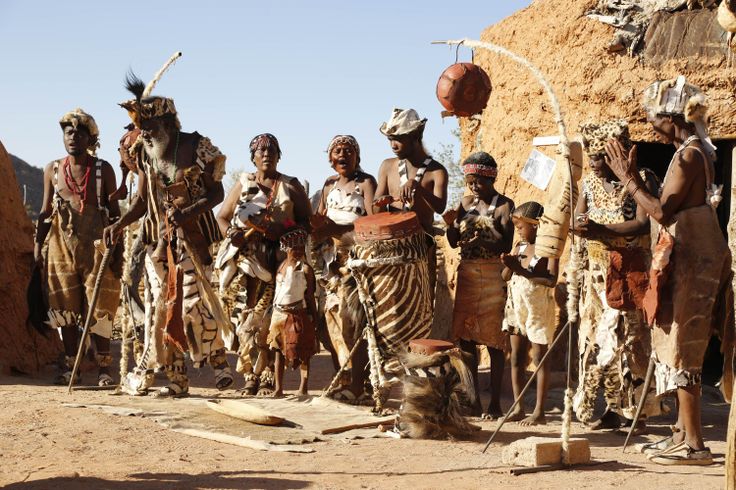
Southern African ATR is perhaps best known for the sangoma tradition, the calling and training of spiritual healers who work with ancestral spirits to diagnose and treat illness, conflict, and misfortune. The indigenous communities of South Africa maintain sophisticated spiritual traditions including the Zulu’s deep ancestor veneration, the Shona’s mbira-based bira ceremonies for communicating with spirits, and the San’s ancient trance healing traditions that represent some of the oldest documented spiritual practices in human history.
North Africa’s Indigenous Traditions
North Africa’s indigenous spiritual traditions predate Islam by thousands of years and persist in modified forms within nominally Muslim communities. The Gnawa people of Morocco carry spiritual traditions rooted in sub-Saharan African ancestry, with healing ceremonies that use specific music, dance, and spirit invocation to treat illness and spiritual disturbance. Berber communities across North Africa maintain pre-Islamic practices tied to sacred springs, mountains, and agricultural seasons that represent the region’s indigenous spiritual heritage.
Frequently Asked Questions
What is African Traditional Religion?
African Traditional Religion refers to the indigenous spiritual belief systems of African peoples, developed before the arrival of Christianity and Islam. It encompasses belief in a supreme creator, veneration of ancestors, interaction with spirits and lesser deities, and the use of ritual, prayer, and divination to maintain harmony between human and spiritual communities. It is not one single religion, but a family of related traditions practiced across the continent.
Does ancestor worship the same as African Traditional Religion?
Ancestor veneration is one of the most important practices within ATR, but it does not define the entire tradition. ATR also includes belief in a supreme creator, recognition of lesser deities, elaborate systems of divination, traditional healing, and community ceremonies. Calling ATR “ancestor worship” is a simplification that misses the full depth and complexity of these traditions.
How many people practice African Traditional Religion?
Estimates vary, but between 100 million and 300 million people across Africa practice some form of ATR, either exclusively or alongside Christianity or Islam. The real numbers may be higher, as many practitioners do not identify as ATR in surveys due to social stigma or dual religious identity. In Benin, ATR is officially recognized as a state religion.
How does African Traditional Religion differ from witchcraft?
ATR is fundamentally oriented toward healing, protection, community harmony, and the maintenance of right relationships with spiritual forces. Witchcraft in the ATR understanding is the malicious use of spiritual power to harm others and is condemned within ATR practice, not celebrated. The colonial characterization of all African spiritual practice as “witchcraft” was a deliberate misrepresentation that ATR communities themselves strongly reject.
Is African Traditional Religion practiced outside Africa?
Yes, significantly. West African ATR traditions were carried to the Americas through the slave trade and transformed into Haitian Vodou, Cuban Santeria, Brazilian Candomblé, and Trinidadian Orisha traditions all with millions of practitioners worldwide. There is also a growing global revival of Yoruba ATR practice in North America, Europe, and Latin America among both African diaspora communities and non-Africans attracted to the tradition’s philosophical depth.
Explore More African Heritage and Culture
African Traditional Religion is the spiritual foundation beneath Africa’s extraordinary cultural diversity. Understanding it opens doors to deeper appreciation of African art, music, governance, healing, and community life across the continent. It is not a museum piece, it is a living, evolving tradition that continues to shape how hundreds of millions of people understand themselves and their world.
Explore more at ILoveAfrica.com to discover the full depth of Africa’s cultural and spiritual heritage.

