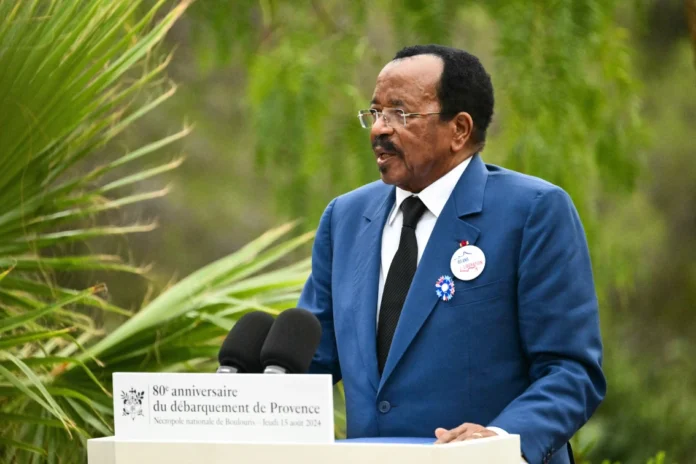
In a move that has shocked few but stirred fresh debate about the state of democracy in Central Africa, Cameroon’s 92-year-old President Paul Biya announced on Sunday that he will run for an eighth term in the country’s upcoming October elections.
Biya, who has held power since 1982, took to social media to declare his intent, writing, “Rest assured that my determination to serve you is commensurate with the serious challenges facing us.” With those words, he confirmed months of speculation that he would once again throw his hat into the ring, despite concerns over his health and the growing demand for leadership renewal in the West African nation.
Often abroad for medical treatment and rarely seen in public, Biya remains Africa’s second longest-serving president—trailing only Equatorial Guinea’s Teodoro Obiang. His nearly 43-year rule has left a complicated legacy, marked by both relative stability and deep political stagnation.
Last year, widespread rumors of Biya’s death forced the Cameroonian government to issue a public denial. That episode only reignited questions about succession and the country’s readiness for a post-Biya future. Now, with his latest announcement, many believe Biya is clinging to power in a political system that increasingly favors endurance over evolution.
“President Biya’s announcement to run again is a clear sign of Cameroon’s stalled political transition,” said Nkongho Felix Agbor, a Cameroonian human rights lawyer and advocate. “After over 40 years in power, what the country needs is renewal — not repetition. Cameroonians deserve democratic change and accountable leadership.”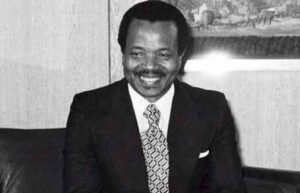
His concerns echo a growing chorus within and outside the country that views Biya’s continued grip on power as symptomatic of a broader democratic backslide across Africa. In Cameroon, where presidential terms seem more symbolic than binding, Biya’s reign has become synonymous with centralized power and limited space for political opposition.
Recent defections from within his ruling party have added to the shifting landscape. Several former allies have publicly broken ranks, announcing their own bids for the presidency. While Biya still holds a tight grip on state institutions, these emerging challengers have brought a new sense of urgency to the election.
Also, read: “We Have Enough Problems,” Nigeria Says as It Rejects U.S. Push to Accept Venezuelan Deportees
Biya’s administration has long battled twin crises: the ongoing separatist conflict in Cameroon’s Anglophone regions, and the spillover violence from Boko Haram militants along its northern border with Nigeria. Both issues have significantly shaped his presidency—and the daily lives of Cameroonians.
In the English-speaking Northwest and Southwest regions, frustration over political and cultural marginalization has escalated into a secessionist movement, with deadly consequences. Schools have closed, villages have been burned, and civilians have borne the brunt of clashes between rebels and government forces.
At the same time, Boko Haram continues to pose a threat in the Far North, complicating efforts to maintain security and stability across the country. The persistent violence and government crackdowns have displaced thousands and left many wary of Biya’s ability to lead the nation through its most pressing challenges.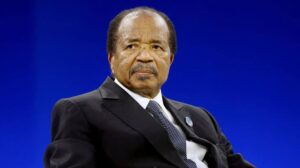
Election History Repeats?
In 2018, Biya secured re-election with over 70% of the vote in an election widely criticized for irregularities and low voter turnout—especially in regions affected by violence. With history poised to repeat itself, many Cameroonians fear that another Biya win will merely extend the status quo.
“The truth is, many people don’t vote anymore because they feel it won’t change anything,” said one resident of Douala, Cameroon’s economic capital. “We need leaders who will listen, who are present, and who understand today’s problems—not just old promises.”
Across the continent, Biya’s move mirrors a troubling pattern. Just last month, Ugandan President Yoweri Museveni also launched a bid for a seventh term, bringing his own presidency close to the 50-year mark. Critics warn that such extended rule—enabled by weakened institutions, constitutional amendments, and tightly controlled media—erodes trust in democracy and breeds long-term instability.
While Biya’s message of continued service may find favor among loyalists, for many Cameroonians, the October election is shaping up as more than a ballot—it’s a referendum on whether power in their country can finally pass from one generation to the next.
As one young activist put it on social media shortly after the announcement: “Mr. President, we hear you. But Cameroon is not a retirement plan.”

